HERZLIYA CAVES
Exhibition, essay
Noch artist-run space
Odesa, Ukraine
In collaboration with Nikolay Karabinovych
An exhibition in the form of a poetry collection, a May Day song, which was sung the next night after the second of May.
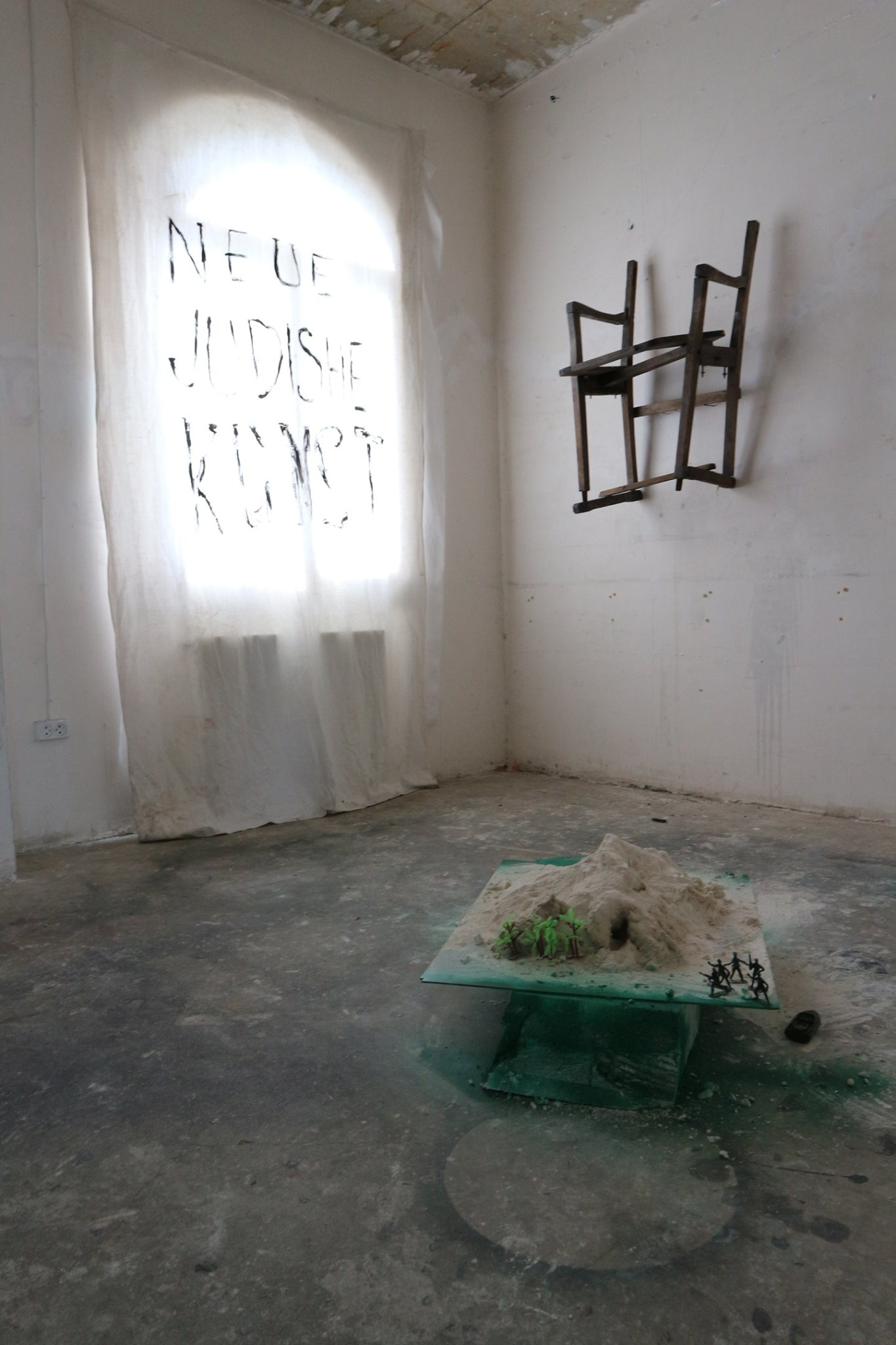
This is an essay written by one of the participants of the movement after his prolonged stay in the sacred cave where our founding fathers had been given the secret knowledge.
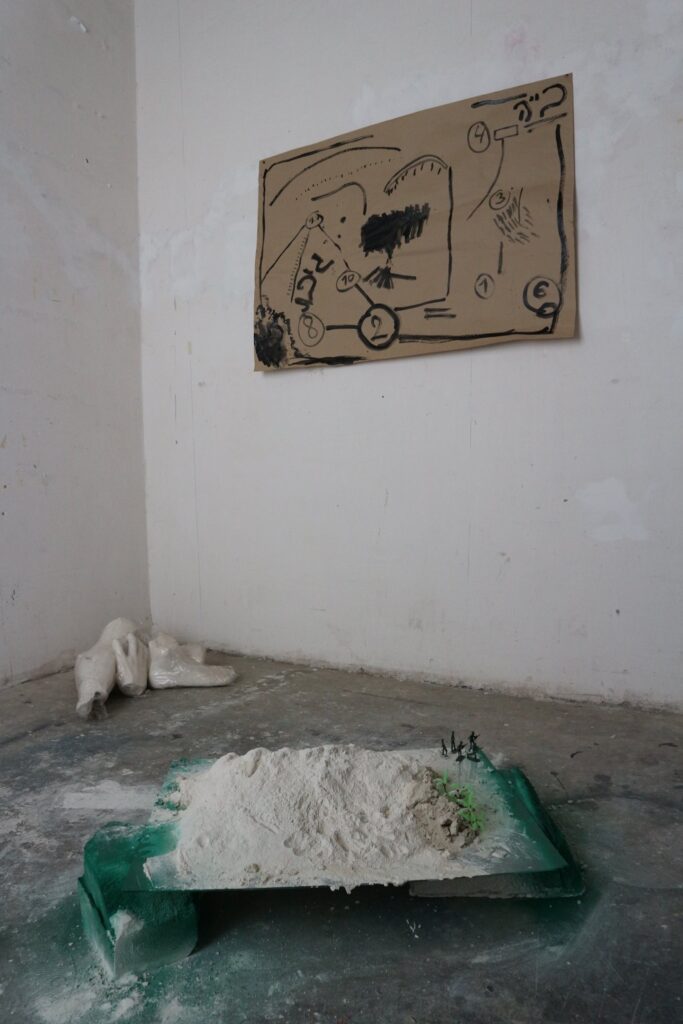
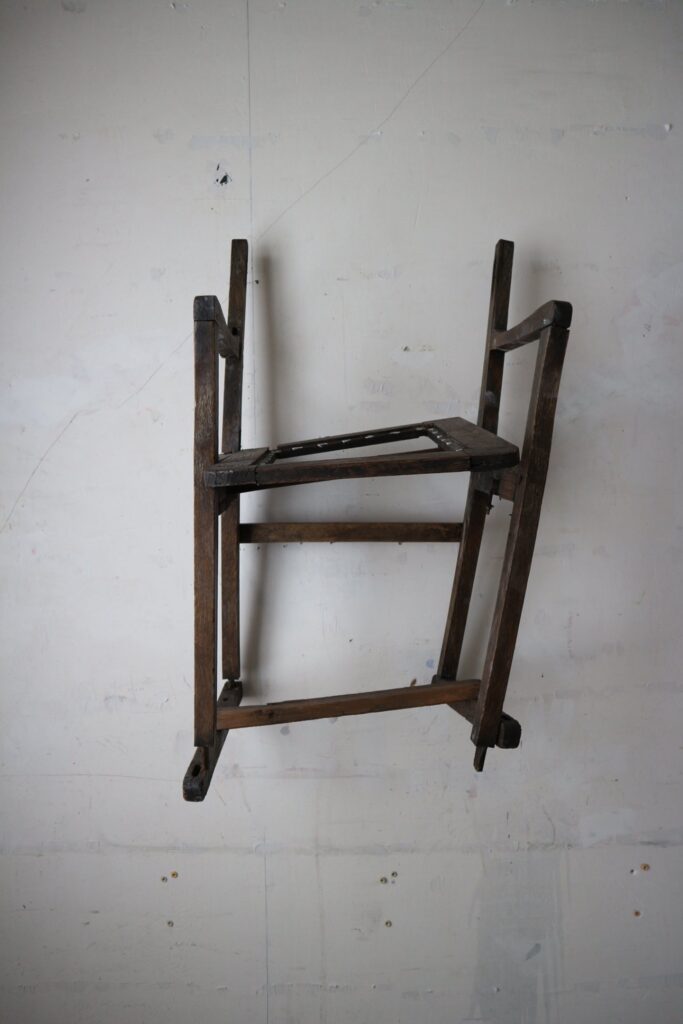
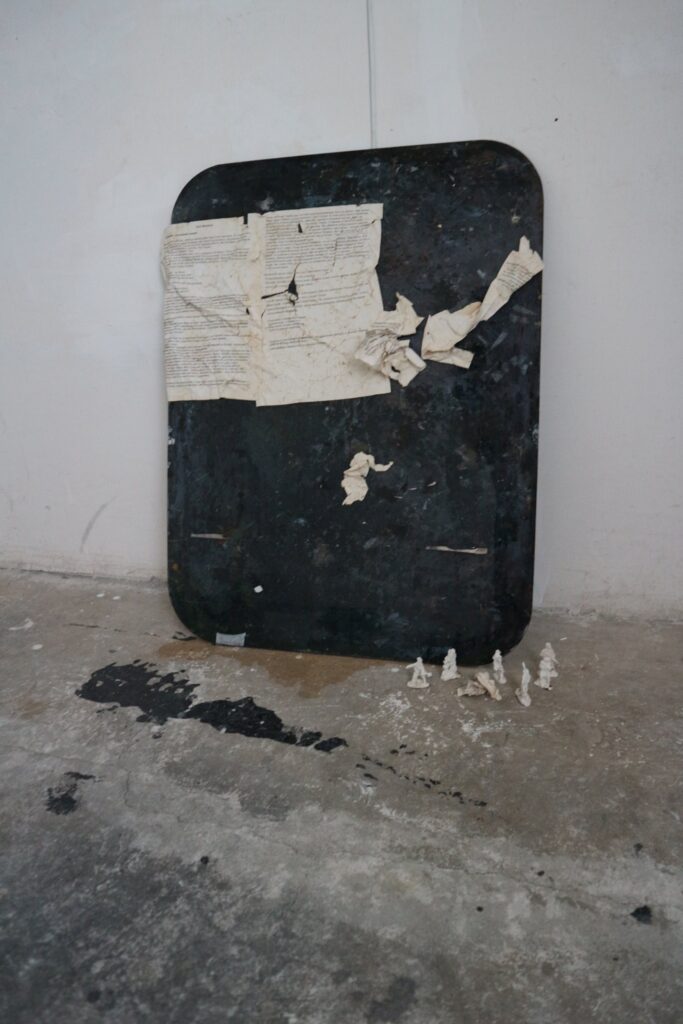
Details of exhibition
The anonymity and universality of the movement will result in war. War will give birth to freedom. Freedom will create a union. The union will praise us.
Neue Judische Kunst
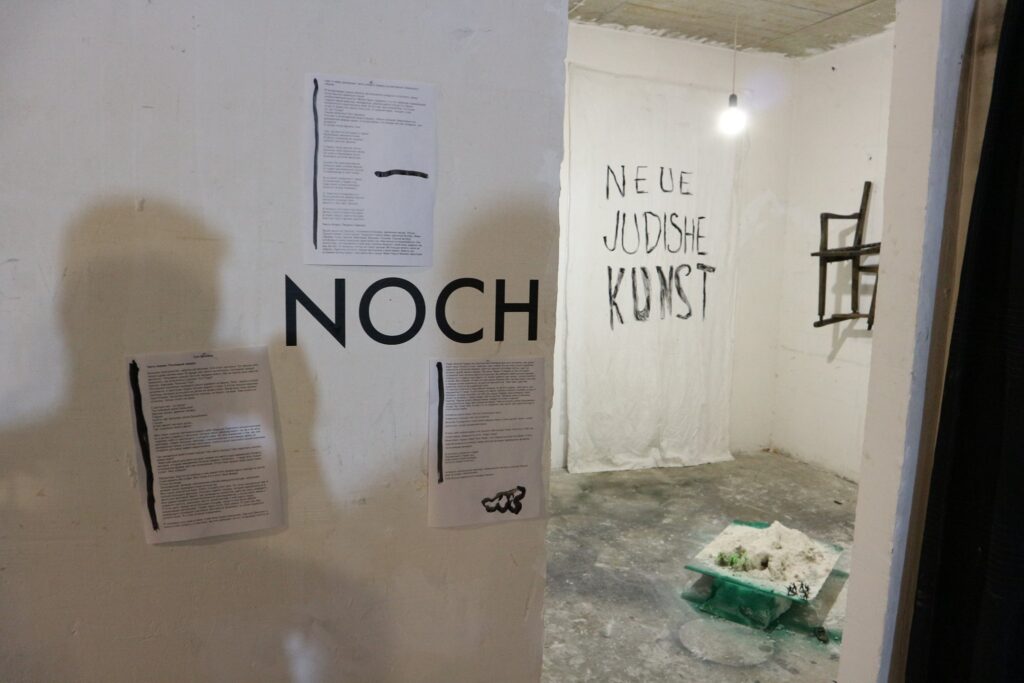
The cave of Dyonisius
Part one. The sacred frontier.
Original version of the text: https://syg.ma/@njk/grot-dionisa
A big space it is. Buses around standing chaotically. No sand, no smell of sea. Nobody left in the city. The last frontier’s been reached. The patriarchs died, failing to keep the succession of power. We didn’t manage to seize it and left. Who? Where?
Berlin, Warsaw, Netanya, Ghent…
The last generation spent a lot of time on the coast. They would drink, lose their papers in the sand, dive into the sea naked, seized by sudden attacks of terror. Then the millstones of freedom appeared, pressing the children towards the brink of the land. Having scattered their mats along the beach, they erected edifices on the slopes of hills, on the coast, on water itself. We were left with no choice but to stand on the edge, squeezed up against one another.
When I was young — I do confess! —
I loved my city very much.
Aryks would ripple, plane trees stood in rows
So proud.
Dushanbe river’s splashing thread
High up among the rocky cliffs.
And fields of tulips sang oh soft
Their songs of blossom and delight.
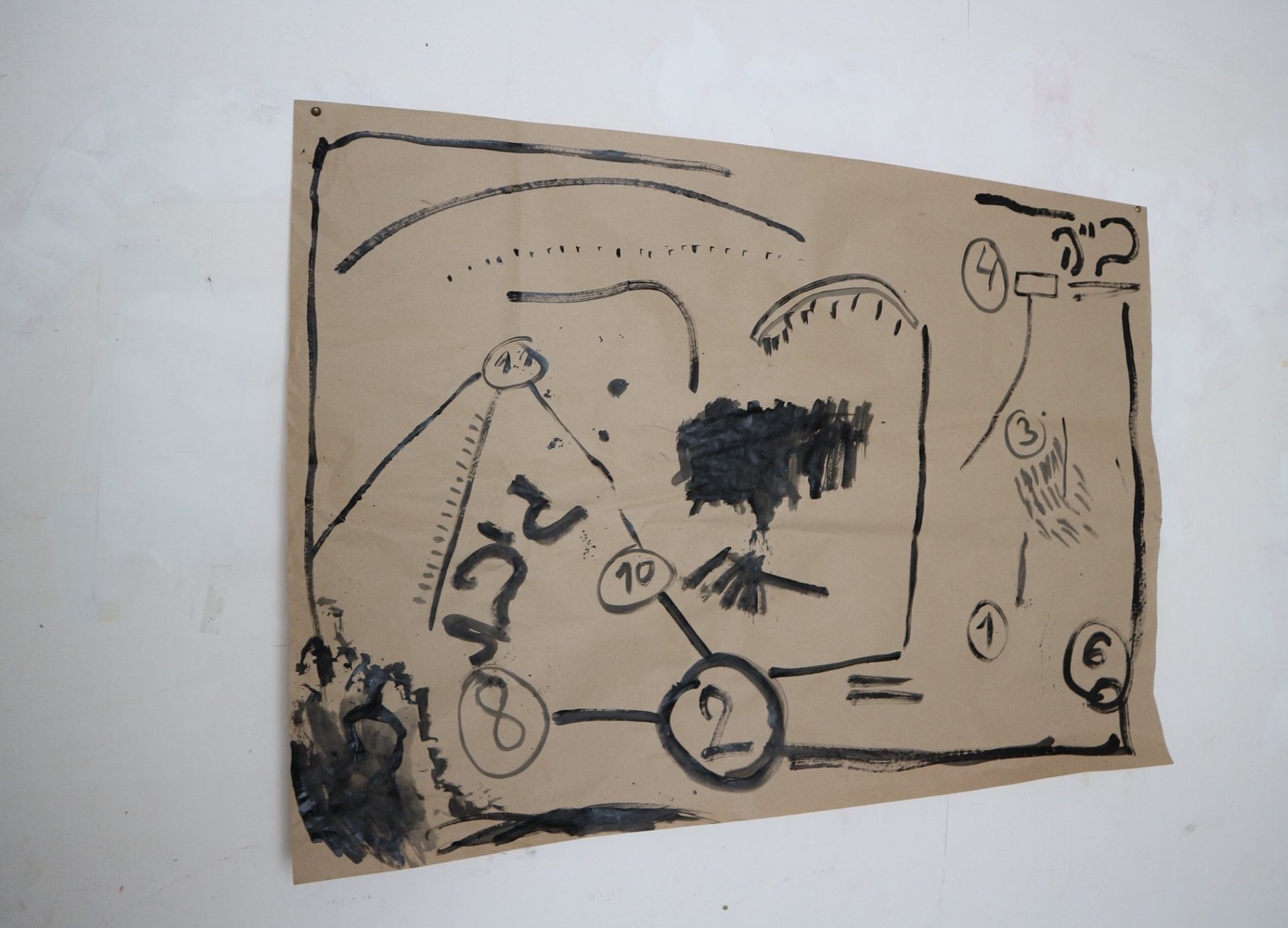
I would like to counter the tradition of Odesa conceptualism, but I can’t break with the past that shaped me. Neither can I separate myself from the present I live in. But my ignorance of the ways they used to pray is a considerable obstacle for me to understand the intimate details of their religious lives. That is the reason why some depths of Odesa conceptualism will remain unreachable to me forever.
Where are the outskirts of my city? How can I find the border? How to stop considering the sea to be that border?
It’s been ages since the sea ceased to be a border for me. It’s rather a place I can’t get to, the matter I’m not able to see or touch anymore. What I’ve got is an illusionary form, that is, illusionary to me. The lack of a perceptible form of the sea frightens me. I’m scared.
Formalism. Has it ever existed here? Or the form has always been inseparable from the word? Or the word itself is our form?
Kostandi street.
No fresh air but clouds of exhaust. Green. Resounding with lament of Bohdan buses, surrounded by clumsy buildings, endless wires twisting round. Ever more riddled with potholes.
I’ve got to descend to find that cave. It’s definitely located somewhere there, on the hills of Bolshoi Fontan. I’ve got to find the mouth of that cave that would transfer them to the place where mysteries took place. The place where they were once initiated into, given the power to create. My goal is to conduct an anthropological investigation and then take the broom and sweep out all the emptiness, tidy up a bit, and surrender the city without a word.
I’m standing alone, a big square in front of me. Back in the day, it was scattered with ugly looking buses. Now it’s empty. Everybody’s gone. A sharp horn of the last bus leaving honks. My mission is to see them out and then sweep the dust away. I’m great at it.
I descend ever lower. Now I see heaps of shelly limestones ahead. There’s the cave of Dyonisius. I’ll manage to get in somehow. I know it, I feel it. Everything around tells me. I’m climbing up the mountain. I’ll find the scenery. I’ll grasp the symbol of collective creative impetus.
I’ve felt damp warmth of the still air and found myself in front of a natural wall of stone of a tremendous height. One might think it’s a gray waterfall from the cloudless sky of Sicily suddenly turned into smooth stone. At that moment, I thought I’d seen this gray wall before, or at least had heard of it…
But where? When?
The cave of Dyonisius is gaping in front of me.
I stepped in. Felt a draught. Turquoise floor, decadent shapes. I suddenly realized there was no return from here… I could never ever return!
Where the ledge is cold and gray
Falls down like a waterfall
I scream at the silent cave:
– Dionysus! Dionysus! Dionysus!
Tired after a long hunt
Dusty purple outfit,
He went to the turquoise grottoes
Squeeze golden grapes…
Dionysus! On a gilded shield —
Faded snakes blue fight,
And weeps with a torn groan
A pipe directed to the sky …
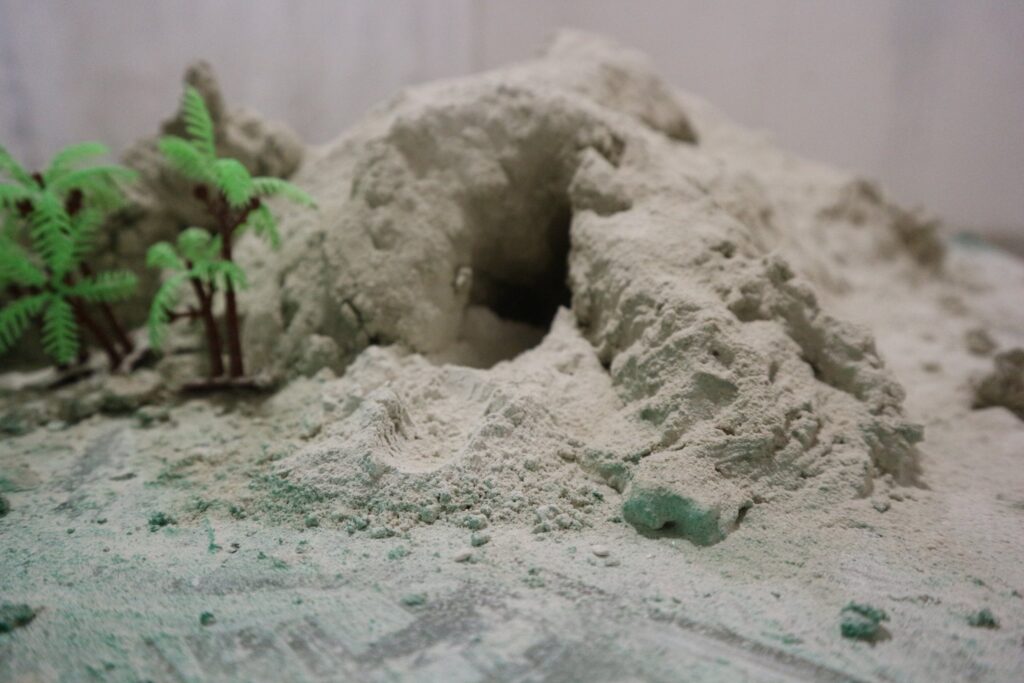
Part II. The caves of Herzliya
Higher, ever higher, up to Herzliya. An impromptu stop, in the middle of nowhere. A plan. It’s time. A pure, cold calculation. A precursor of the ancient world, a bus running wild. Riding past Ofakim, Urim, Tze’elim, Mivtahim, Revivim, Tlalim. A mountain bus won’t stand against the stone features of the mountains. We mustn’t stop. They betrayed Gena, they broke into my house, ripped decorations off from my Christmas tree, they saw everything. Yet no food for the rats in an empty warehouse. They won’t take anything from me anymore. Lonely strangers, they know nothing about my army. Together, we will raise our eyes up high. We must get higher. Riding past Kiryat Malakhi, Bnei Re’em… Having left Gedera behind, we finally were able to put our weary feet to the ground. We only must get to the port, to dabble our feet in water. There are lots of ships in this port, lots of airplanes, and a big caravan laden with brocade and ivory heading towards the destiny of our people. Three Greeks, who were Yanaki, Stavraki, and Papasatyros, expressed their desire to get moving further. We will take the Russian physicist with us; we will save him from the greedy clutches of Tzfat. He will pitch a camp full of tents and bread for us. And we will refuse, since we must get to the caves. We will stay for a night there, and leave with the first ray of sunlight, not willing to stay any longer. Woe is us! Woe! We felt yearning for the fields of Bessarabia.
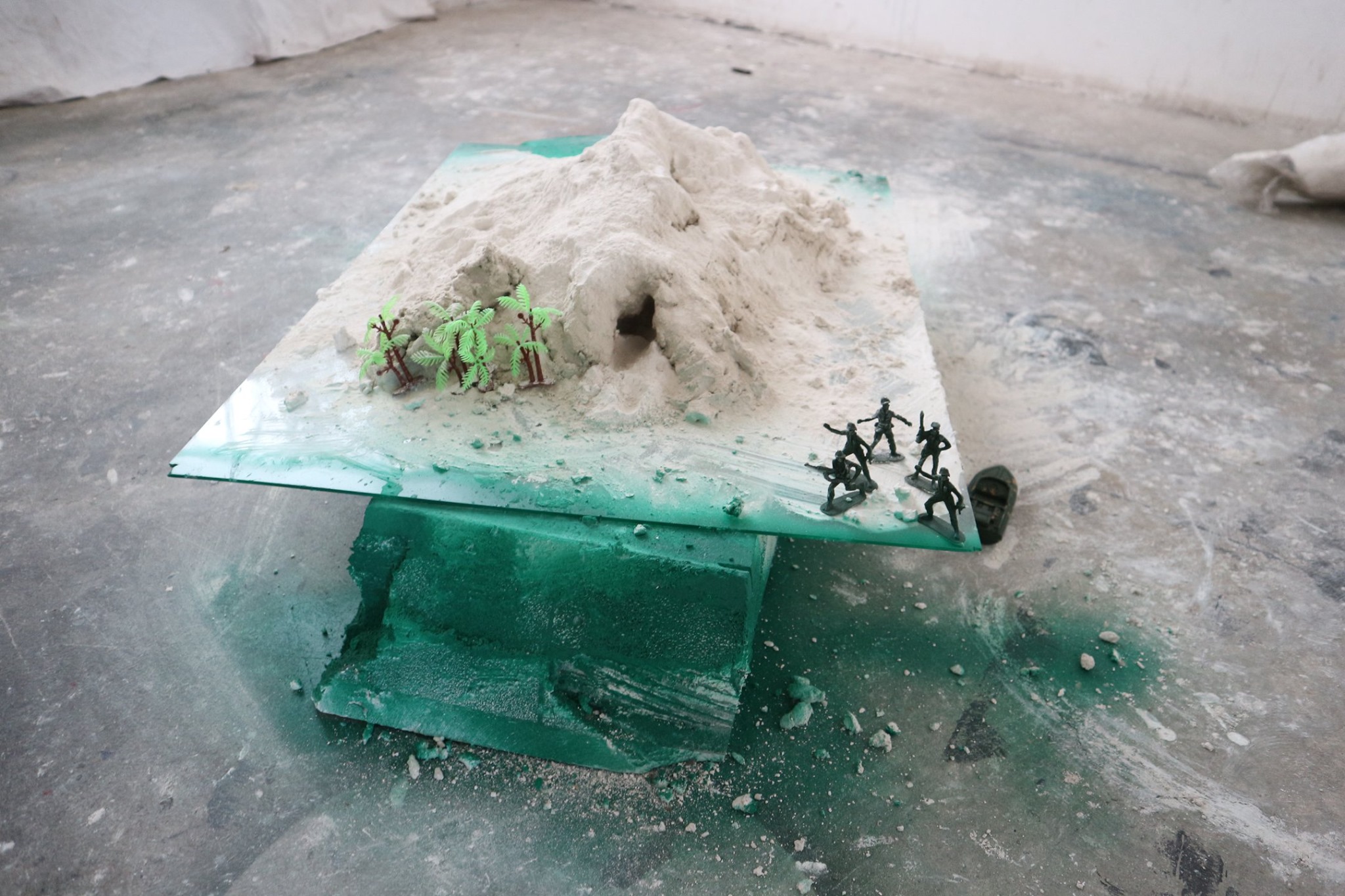
You wanted to stay in the caves of Herzliya. You didn’t turn into a sea. Your veins are pulsing with rage. You failed to learn this land, you wanted to return to the hills. You grew tired of the burden our people laid upon you. You betrayed our cypress trees. Run. You still might manage to get away from our soldiers. Brave warriors in green berets. A black sword called ‘The star of Cairo’ will spring out of its sheath and make a forceful thrust once more. Run, you crazy Armenian. You won’t learn the secrets of the caves of Herzliya. We are expelling you; you desecrated these halls; you spilt poison on this thriving land.
Blessed are the merciful: for they shall obtain mercy.
Blessed are ye that weep now: for ye shall laugh.
Thou shalt love the Lord thy God with all thy heart, and with all thy soul, and with all thy mind.
Thou shall live by bread alone, and thou shall drink no glass of wine. I will smite you, as the people smites its enemies, for you are a guest uninvited! Leave! Leave!
Riding past Bnei Brak, Ramat Gan, Ramat HaSharon, and towards Ahi Dakar Street. Kneel there, under the red sign, before the red light, the porcelain light, the half-decayed light.
Midst the ashes of nard burning red
I did kneel. I have never felt merrier.
Leopard’s head hover’d high overhead —
Golden chief in his splendid swift chariot!
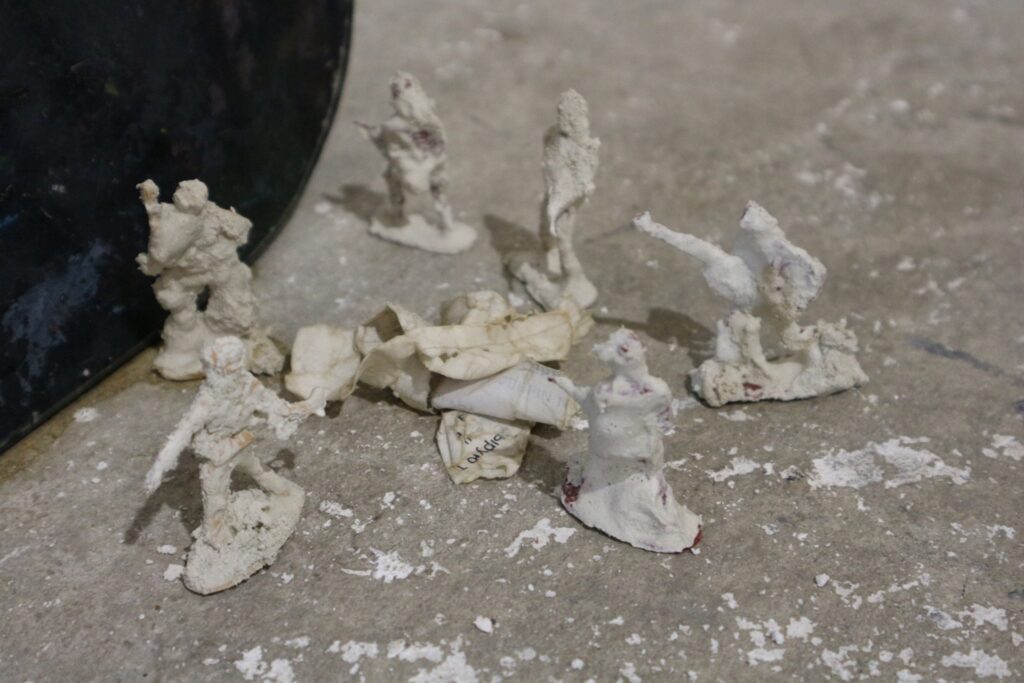
A cupboard in a cluttered apartment, a familiar tablecloth, a dreary dark yard behind the window. Inexplicable.
You will never return to the caves of Herzliya.
Harri Kraievets
Odesa, April 2019.