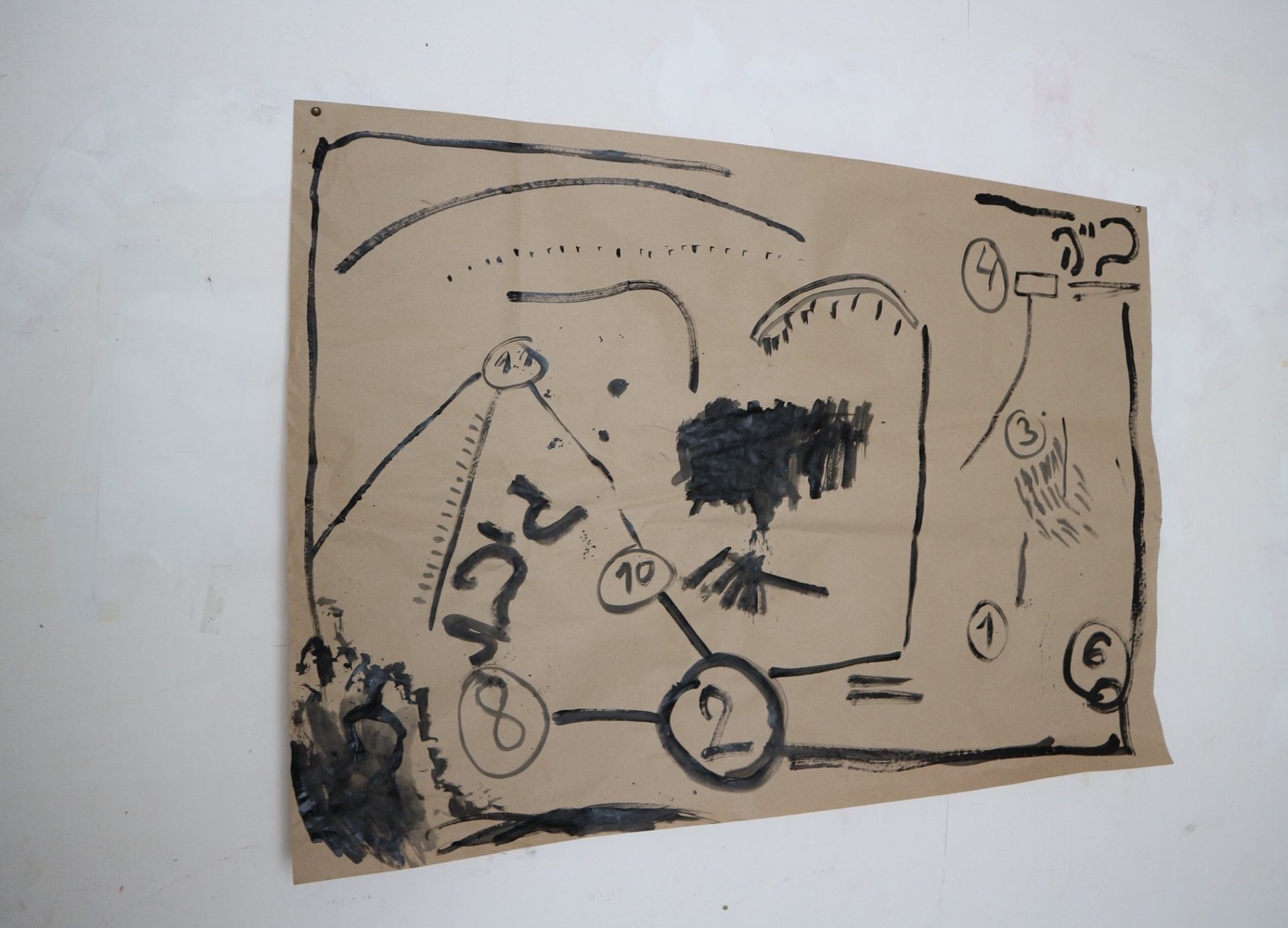
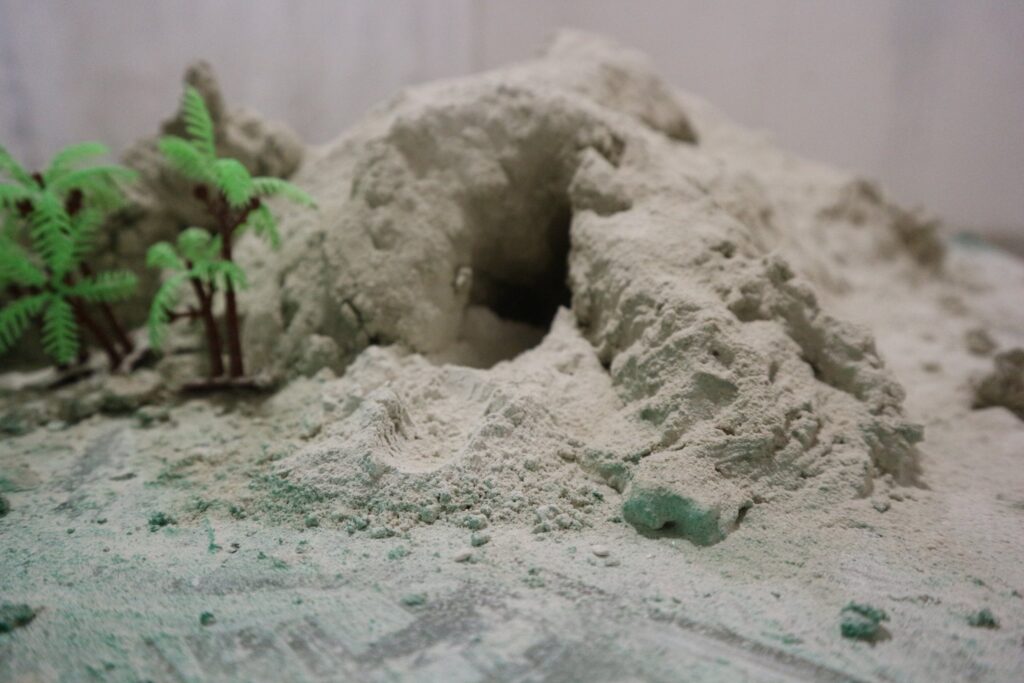
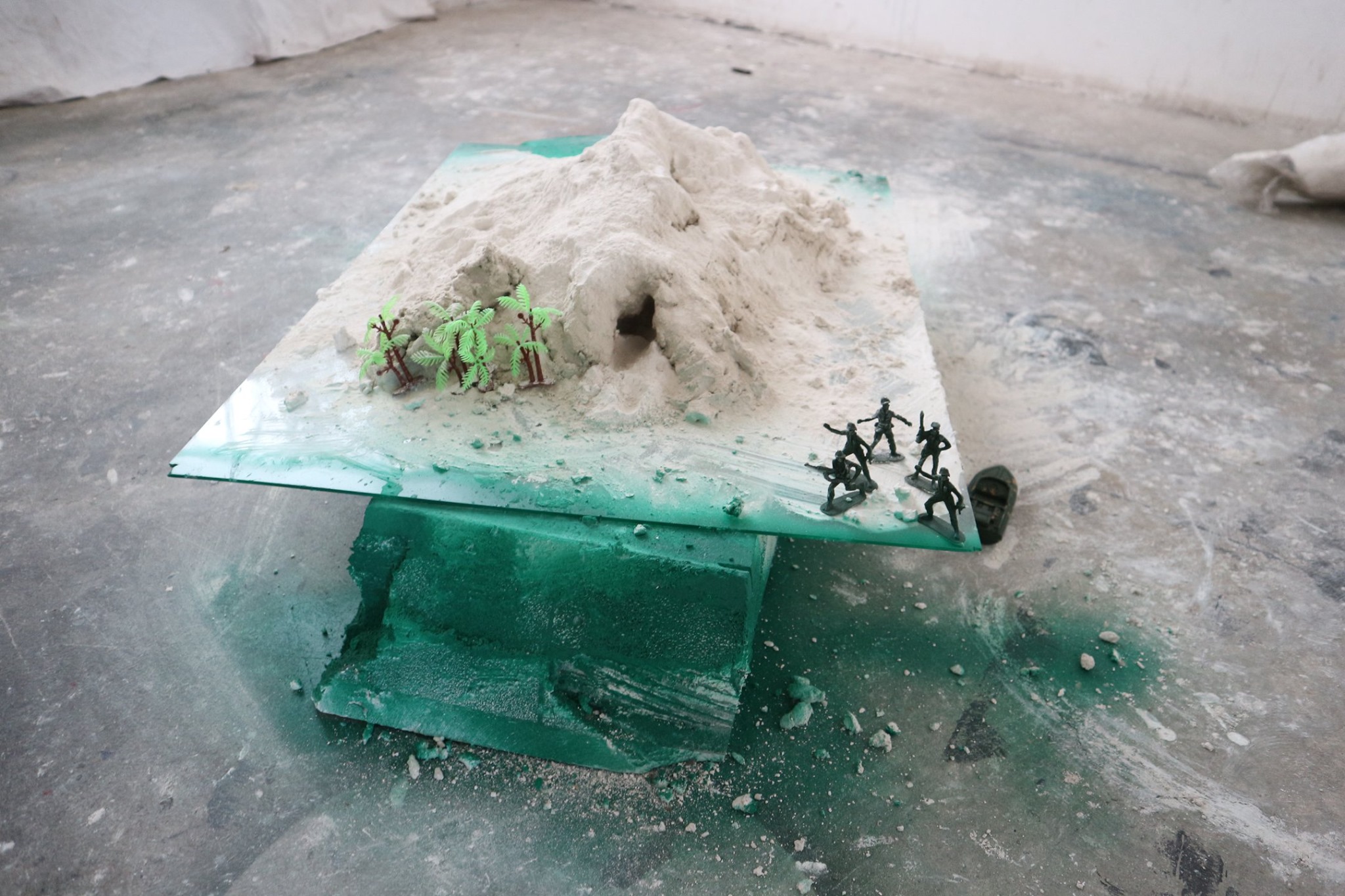
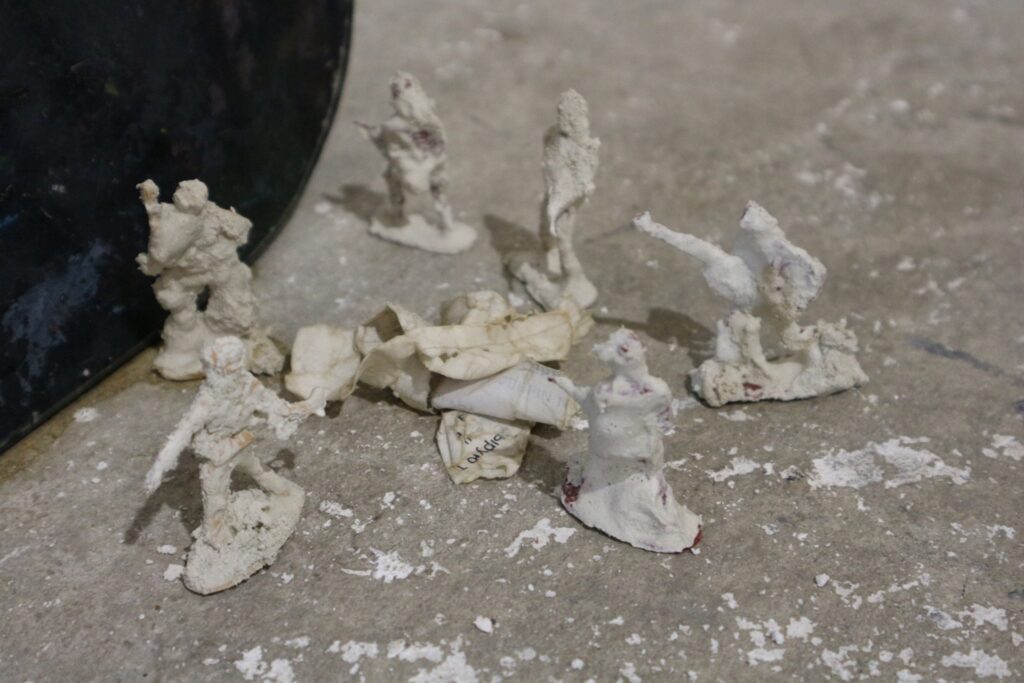
Text written as part of the exhibition
Black Books by Nikita Kadan

Noch artist-run space, 2021
Odesa, Ukraine

Link to exhibition documentation: http://www.noch.space/chyornye-knigi-nikita-kadan/

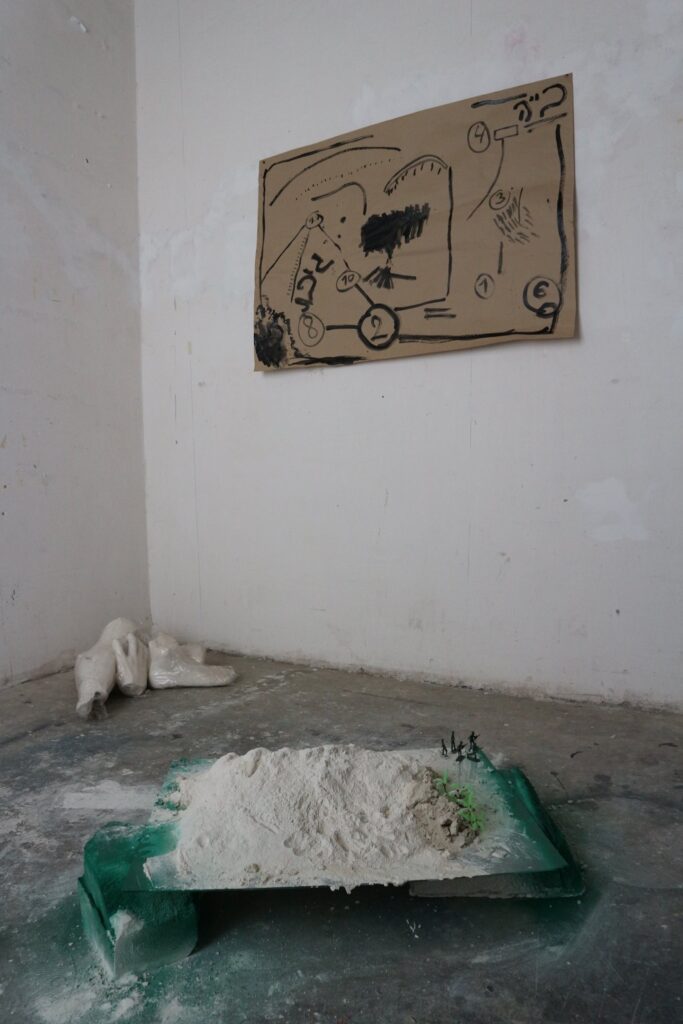
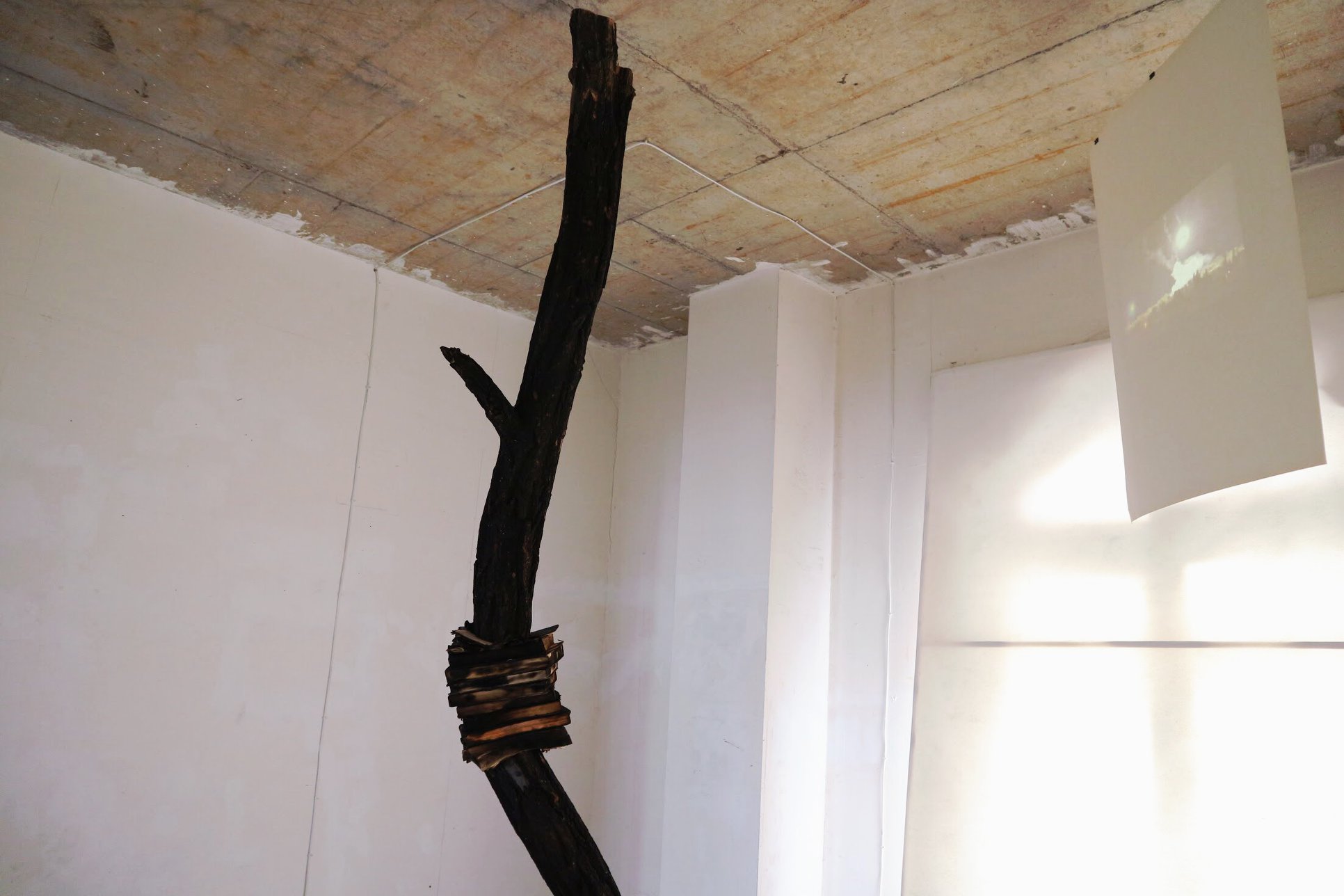
Выставка «Черные книги» наполнена образами огня и пепла. Веселое пламя охватывает пространство мирной жизни, а груда горелого материала занимает место записанной истории. В зазор между сожженными книгами и сожженными людьми, как порой кажется, можно вместить вполне комфортно проживаемую повседневность.

Вот артиллерийский обстрел, факельное шествие, сожженные галерея и кинотеатр, а также некоторые пожарища, о которых предпочтительно не вспоминать лишний раз.

Ценой мирной жизни в горящих домах является молчание. «Черные книги» не стремятся превратить описание этого состояния в траурную песнь. Скорее они пытаются обнаружить в языке молчания внутреннюю сложность, услышать скрытые сообщения.

Те, кто придут разгребать оставшиеся от нас угольки, будут лучше нас.

Размышления. Гарри Краевец

Образный ряд данной выставки подобен молчаливой демонстрации выгоревшего материала. Этот материал обречен на распад, но на процесс энтропии мы не в силах повлиять. В этом заложены основные принципы бытия, заключенные в Закон и являющиеся настолько загадочными, что любая попытка их разрешить не оставляет времени для разбирательств, ведь пламя дышит нам в спину.

Передо мной стоит сложная задача — обрисовать место «фигуры замалчивания» с помощью слов.

Аналитический взгляд предполагает, что любое движение тела, отказ артикулировать проблему, или нервное подергивание ноги становятся частью речи. В то же самое время, если взглянуть с политической позиции, мы обнаруживаем, что молчание приравнивается к исчезновению, когда в кабинете аналитика — это всегда предъ-явление.

В анализе акт молчания может стать наиболее живым местом в контакте с анализантом, состоянием, в котором обнажается его истинное лицо.

Но что происходит, если общество замалчивает событие, а идеологическая гегемония воинственно требует подчиниться? Любые попытки прояснить и артикулировать неизбежно оборачиваются приписыванием тебя к одному из лагерей и блокируют диалог.

В таком случаем мне нужно не стоять в стороне, а придать иную структуру молчанию и дать возможность вербализовать то психическое состояние, которое стало в нашей стране и особенно в нашем регионе массовым.

Время действия не может быть названо, так как практика называния всегда выбрасывает нас в психический регистр реальности, а вместе с ним и в темпоральный контекст. В него нам не следует окунаться, ведь каждый раз, когда ты входишь в реку истории, тебе не удается выйти из нее, не оказавшись на одном из берегов.

Допустим, я создам нечто вроде либретто оперы, на самом деле существующей только в моем воображении.

Этим парадоксальным ходом я смогу усмирить местных политических «нептунов», снимая с себя ответственность бредовым состоянием, напоминающим умы населения Украины, которое не замечает, что бежать от пожара больше некуда.

Тем самым я создаю реконструкцию реальности и позволяю себе избежать отождествления с какой-то из позиций, что в свою очередь позволит читателю, не приближаясь к реальному, оставаться в топике происходящего. Вся опера будет состоять из монолога главного героя, тем самым демонстрируя основную сегодняшнюю проблему — отсутствие диалога и монотонный внутренний конфликт, наполненный метонимиями и то разгорающимся, то затухающим пламенем Логоса.
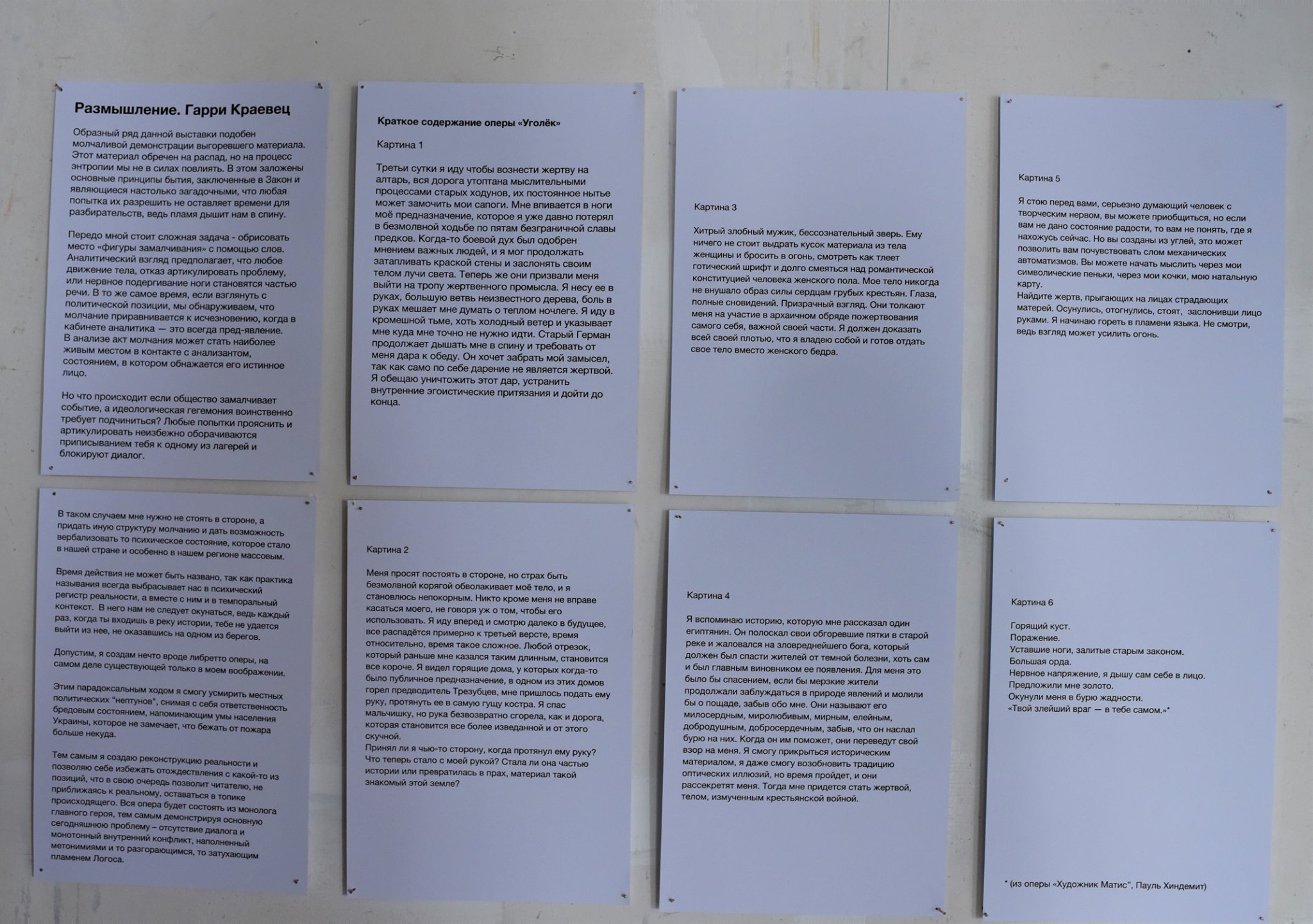
ТВОРЧЕСКИЙ АКТ. КРАТКОЕ СОДЕРЖАНИЕ ОПЕРЫ
«УГОЛЁК»КАРТИНА 1

Третьи сутки я иду, чтобы вознести жертву на алтарь, вся дорога утоптана мыслительными процессами старых ходунов, их постоянное нытье может замочить мои сапоги. Мне впивается в ноги моё предназначение, которое я уже давно потерял в безмолвной ходьбе по пятам безграничной славы предков. Когда-то боевой дух был одобрен мнением важных людей, и я мог продолжать затапливать краской стены и заслонять своим телом лучи света. Теперь же они призвали меня выйти на тропу жертвенного промысла. Я несу ее в руках, большую ветвь неизвестного дерева, боль в руках мешает мне думать о теплом ночлеге. Я иду в кромешной тьме, хоть холодный ветер и указывает мне куда мне точно не нужно идти. Старый Герман продолжает дышать мне в спину и требовать от меня дара к обеду. Он хочет забрать мой замысел, так как само по себе дарение не является жертвой. Я обещаю уничтожить этот дар, устранить внутренние эгоистические притязания и дойти до конца.

КАРТИНА 2

Меня просят постоять в стороне, но страх быть безмолвной корягой обволакивает моё тело, и я становлюсь непокорным. Никто кроме меня не вправе касаться моего, не говоря уж о том, чтобы его использовать. Я иду вперед и смотрю далеко в будущее, все распадётся примерно к третьей версте, время относительно, время такое сложное. Любой отрезок, который раньше мне казался таким длинным, становится все короче. Я видел горящие дома, у которых когда-то было публичное предназначение, в одном из этих домов горел предводитель Трезубцев, мне пришлось подать ему руку, протянуть ее в самую гущу костра. Я спас мальчишку, но рука безвозвратно сгорела, как и дорога, которая становится все более изведанной и от этого скучной.

Принял ли я чью-то сторону, когда протянул ему руку? Что теперь стало с моей рукой? Стала ли она частью истории или превратилась в прах, материал такой знакомый этой земле?

КАРТИНА 3

Хитрый злобный мужик, бессознательный зверь. Ему ничего не стоит выдрать кусок материала из тела женщины и бросить в огонь, смотреть как тлеет готический шрифт и долго смеяться над романтической конституцией человека женского пола. Мое тело никогда не внушало образ силы сердцам грубых крестьян. Глаза, полные сновидений. Призрачный взгляд. Они толкают меня на участие в архаичном обряде пожертвования самого себя, важной своей части. Я должен доказать всей своей плотью, что я владею собой и готов отдать свое тело вместо женского бедра.

КАРТИНА 4

Я вспоминаю историю, которую мне рассказал один египтянин. Он полоскал свои обгоревшие пятки в старой реке и жаловался на зловреднейшего бога, который должен был спасти жителей от темной болезни, хоть сам и был главным виновником ее появления. Для меня это было бы спасением, если бы мерзкие жители продолжали заблуждаться в природе явлений и молили бы о пощаде, забыв обо мне. Они называют его милосердным, миролюбивым, мирным, елейным, добродушным, добросердечным, забыв, что он наслал бурю на них. Когда он им поможет, они переведут свой взор на меня. Я смогу прикрыться историческим материалом, я даже смогу возобновить традицию оптических иллюзий, но время пройдет, и они рассекретят меня. Тогда мне придется стать жертвой, телом, измученным крестьянской войной.

КАРТИНА 5

Я стою перед вами, серьезно думающий человек с творческим нервом, вы можете приобщиться, но если вам не дано состояние радости, то вам не понять, где я нахожусь сейчас. Но вы созданы из углей, это может позволить вам почувствовать слом механических автоматизмов. Вы можете начать мыслить через мои символические пеньки, через мои кочки, мою натальную карту.

Найдите жертв, прыгающих на лицах страдающих матерей. Осунулись, отогнулись, стоят, заслонив лицо руками. Я начинаю гореть в пламени языка. Не смотри, ведь взгляд может усилить огонь.

КАРТИНА 6

Горящий куст.

Поражение.

Уставшие ноги, залитые старым законом.

Большая орда.

Нервное напряжение, я дышу сам себе в лицо.

Предложили мне золото.

Окунули меня в бурю жадности.

«Твой злейший враг — в тебе самом». *

* (из оперы «Художник Матис», Пауль Хиндемит)
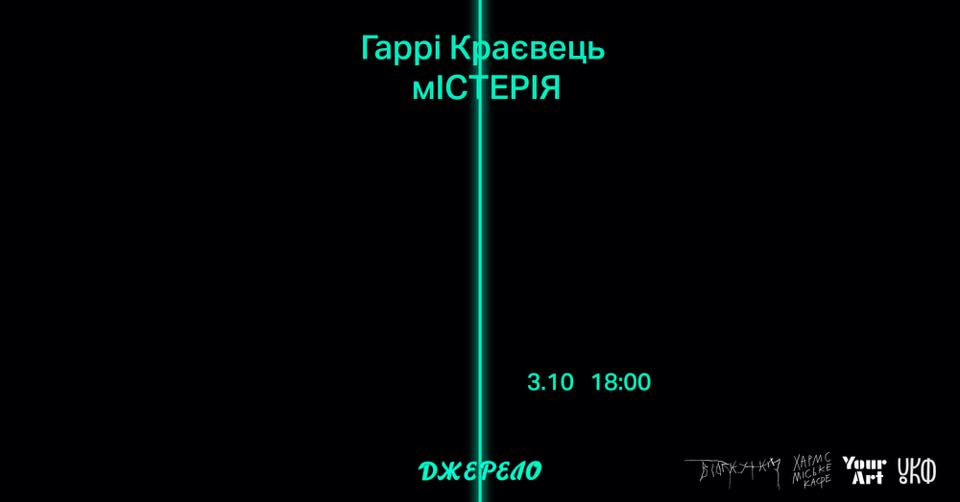
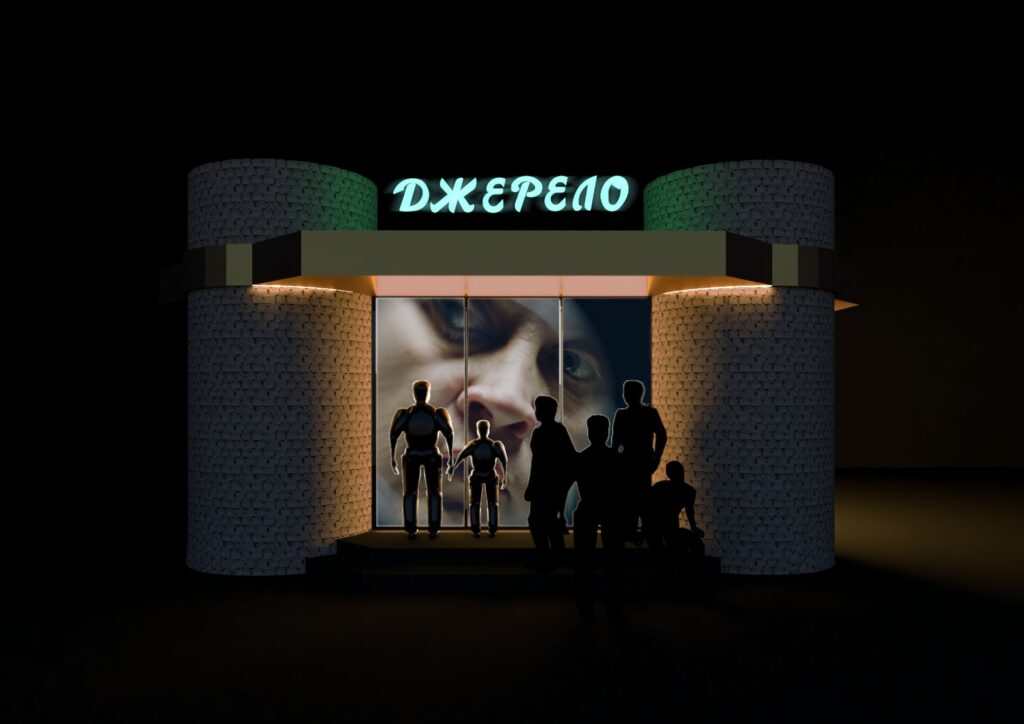
“MYSTERY”

performance, group therapeutic sessions, Dzherelo art space,
Kyiv, Ukraine, 2021

«As part of the exhibition «All Against You», by prior arrangement, Harri Kraievets held a «MYSTERY» for a limited group of people.
The action is based on the ancient tradition of the Eleusinian Mysteries, the essence of which was the experience of contact with the afterlife. In the process of «MYSTERY» the participant had to decide for himself whether he is ready to meet the underworld and his own shadow, and if so, what he is ready to part with in his life.
At the heart of this procedure is the idea of a paradoxical change that can happen to a person in the process of making such a decision. The participant discovers the superfluous, learns to negotiate and get what he wants. Anything can happen in a group process.

PERHAPS YOUR NEIGHBOR IS OMAR KHAYYAM?

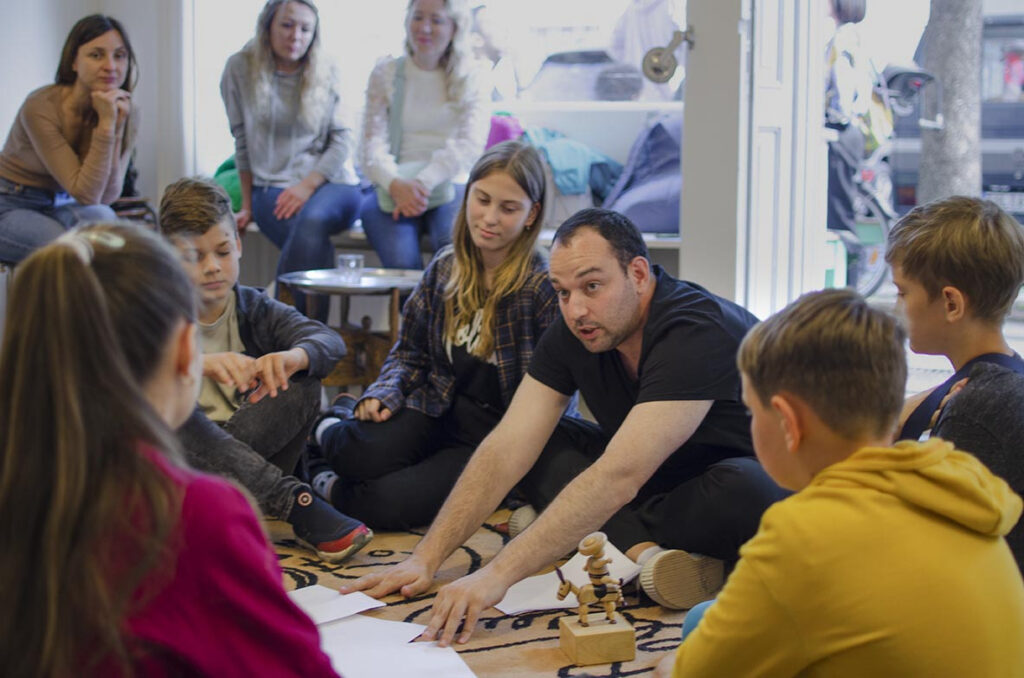
PICKLE BAR, Berlin 2022

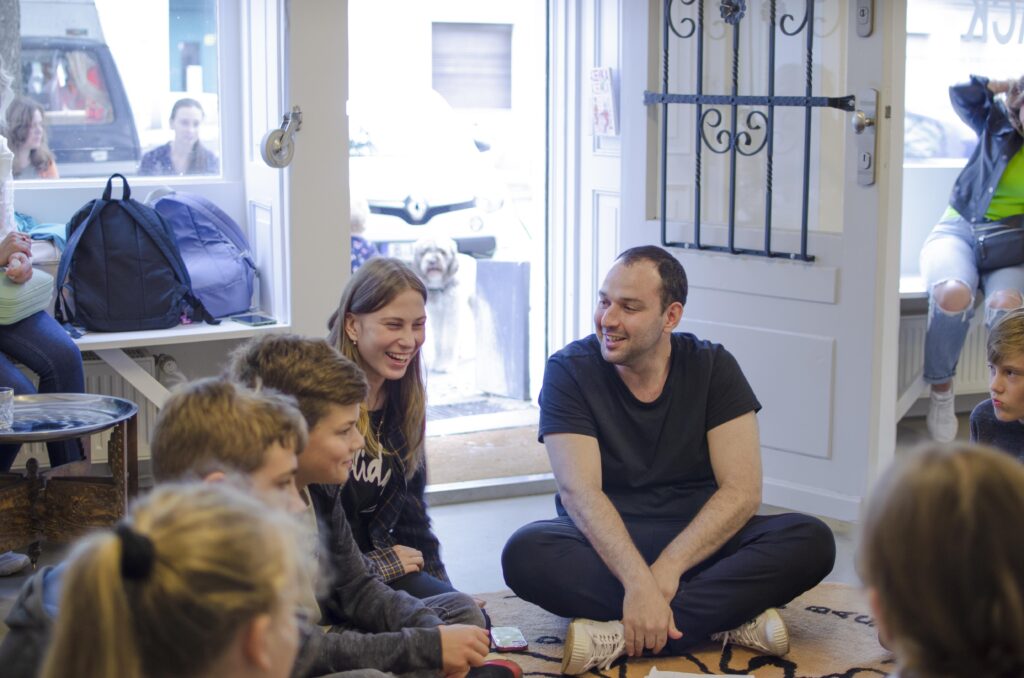
During this workshop, participants were learned to read the story in-depth, and look for meaning by asking questions. With the help of Nasreddin’s texts, one can practice the art of questioning. Hodge’s stories convey wisdom through simple words and life narratives that everyone can understand, especially children. It is an exciting journey for the search of meaning and interest in the world around us.
The master class was attended by children from Ukraine who fled from the war.

SUBLIMATION — THE FATE OF THE MODERN SUBJECT

Open lecture, Part of the public program “New Spirituality”, Future Generation Art Prize 2021.
PinchukArtCentre, Kyiv, Ukraine

The concept of sublimation entices us with the promise of liberation from the frustrations of the body and the path to freedom of the spirit. However, the images of this liberation have changed throughout history along with culture. In his lecture, Harri Kraievets travels from the Baroque to the Postmodern to capture the transformation of the concept and clarify its original meaning. Sublimation is always a scene of two, says the lecturer, and offers us to find out what motives lead the modern subject to this scene, and what role the artist plays in it.

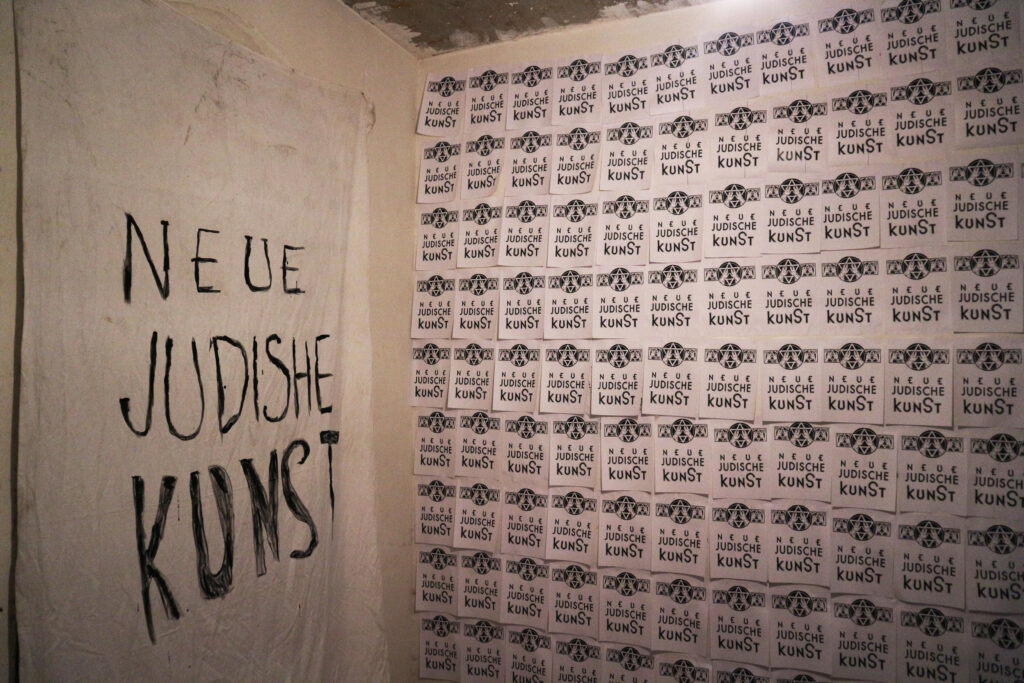
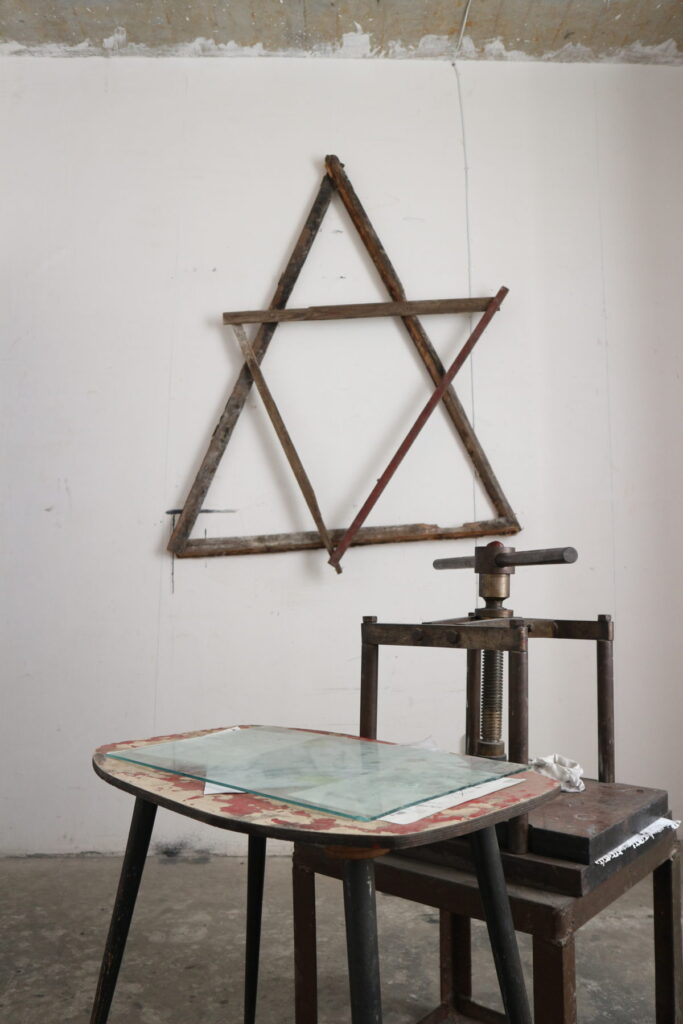
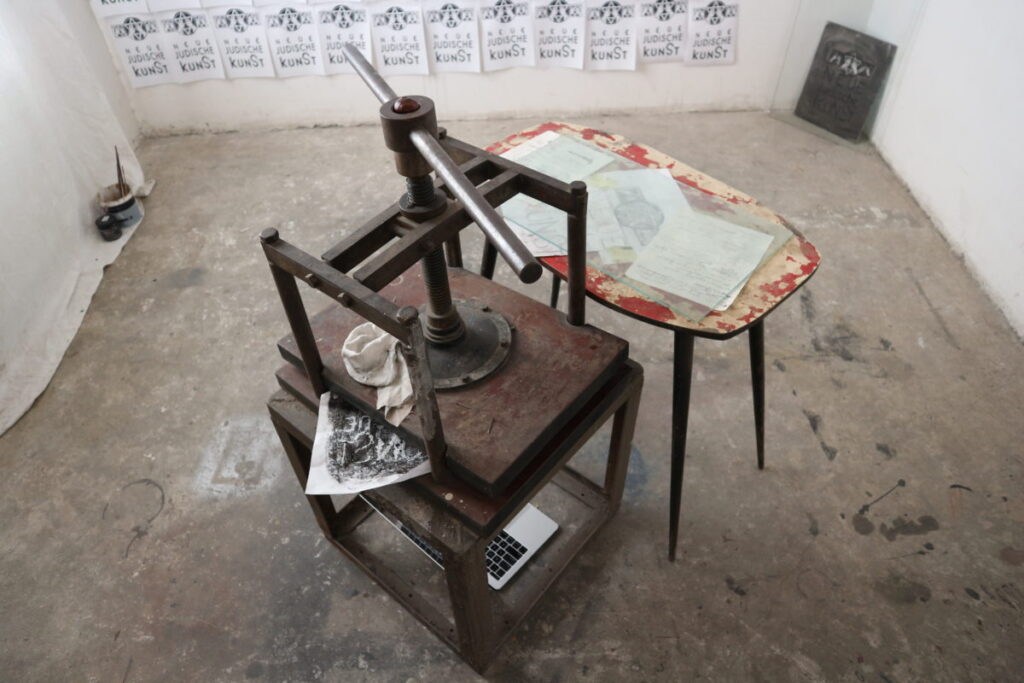
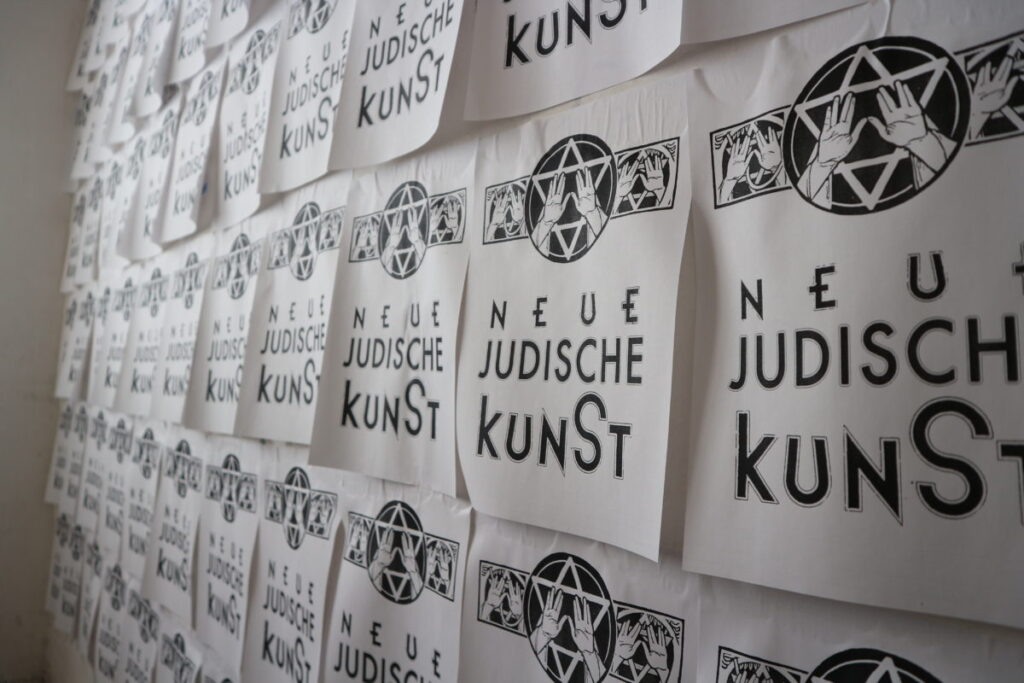
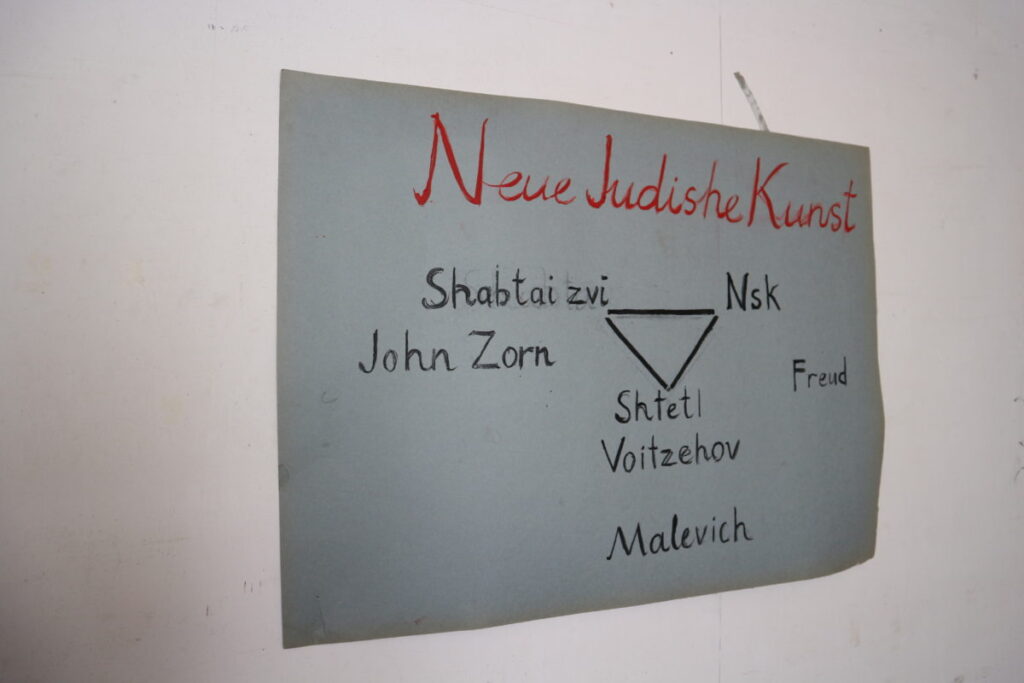
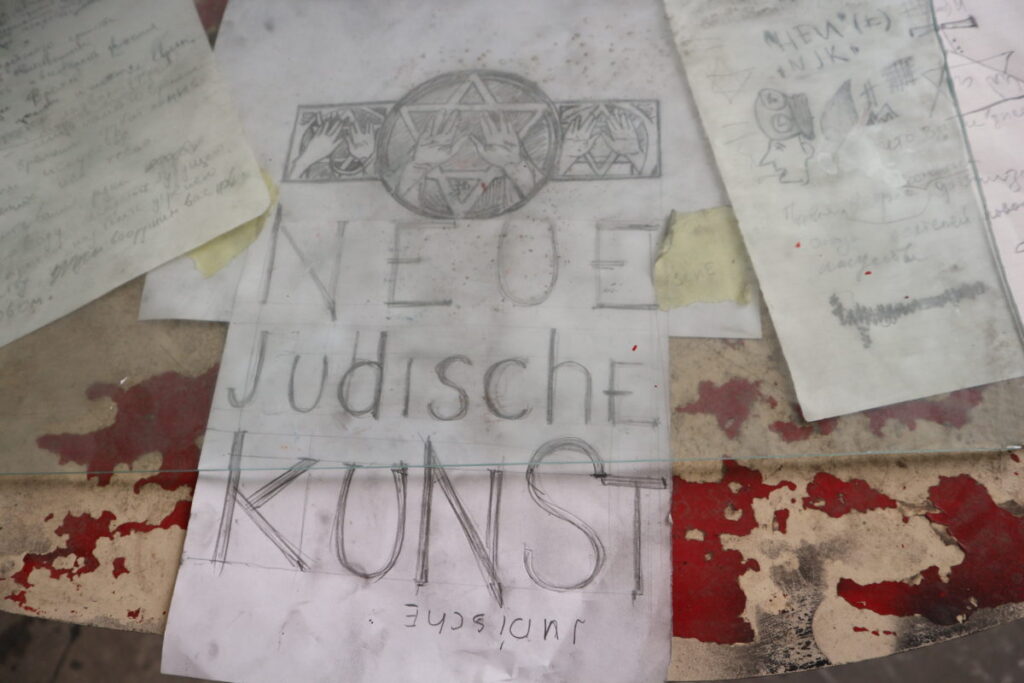
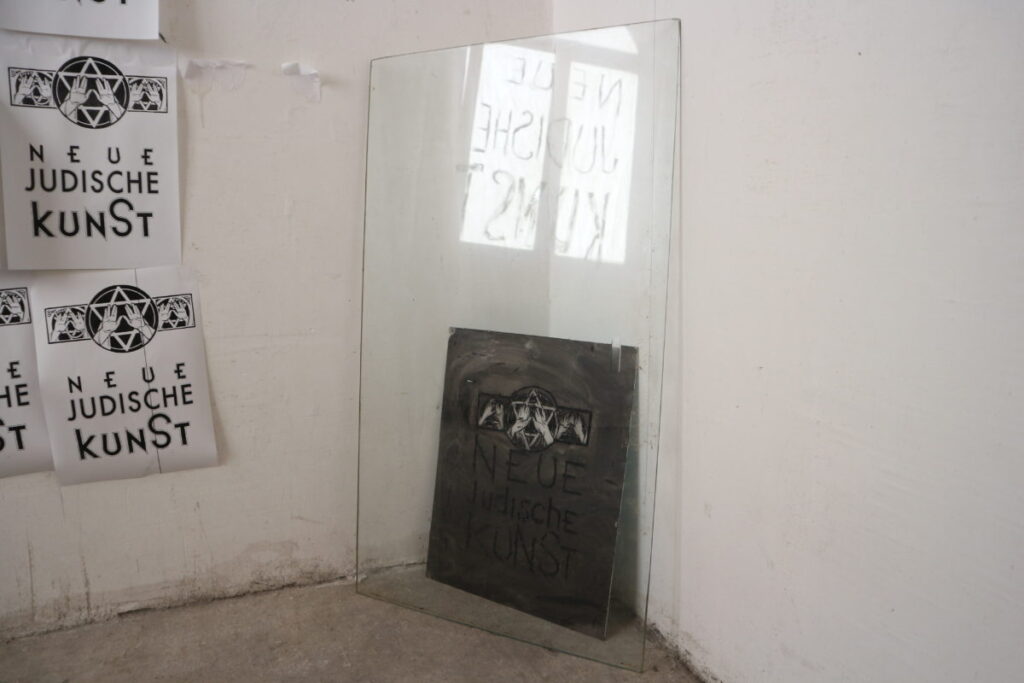
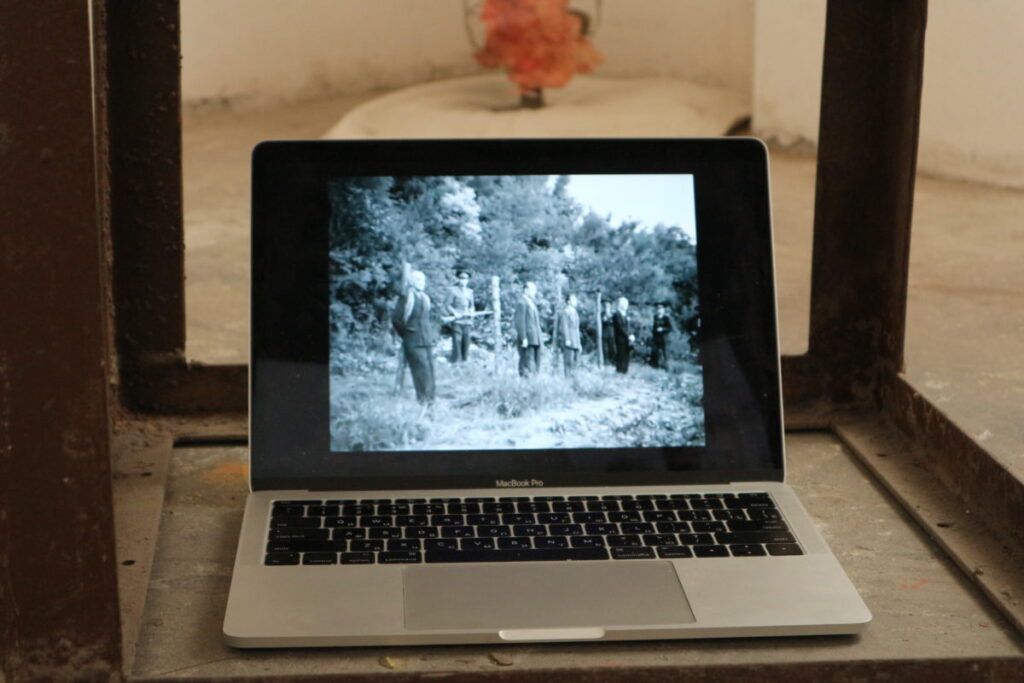
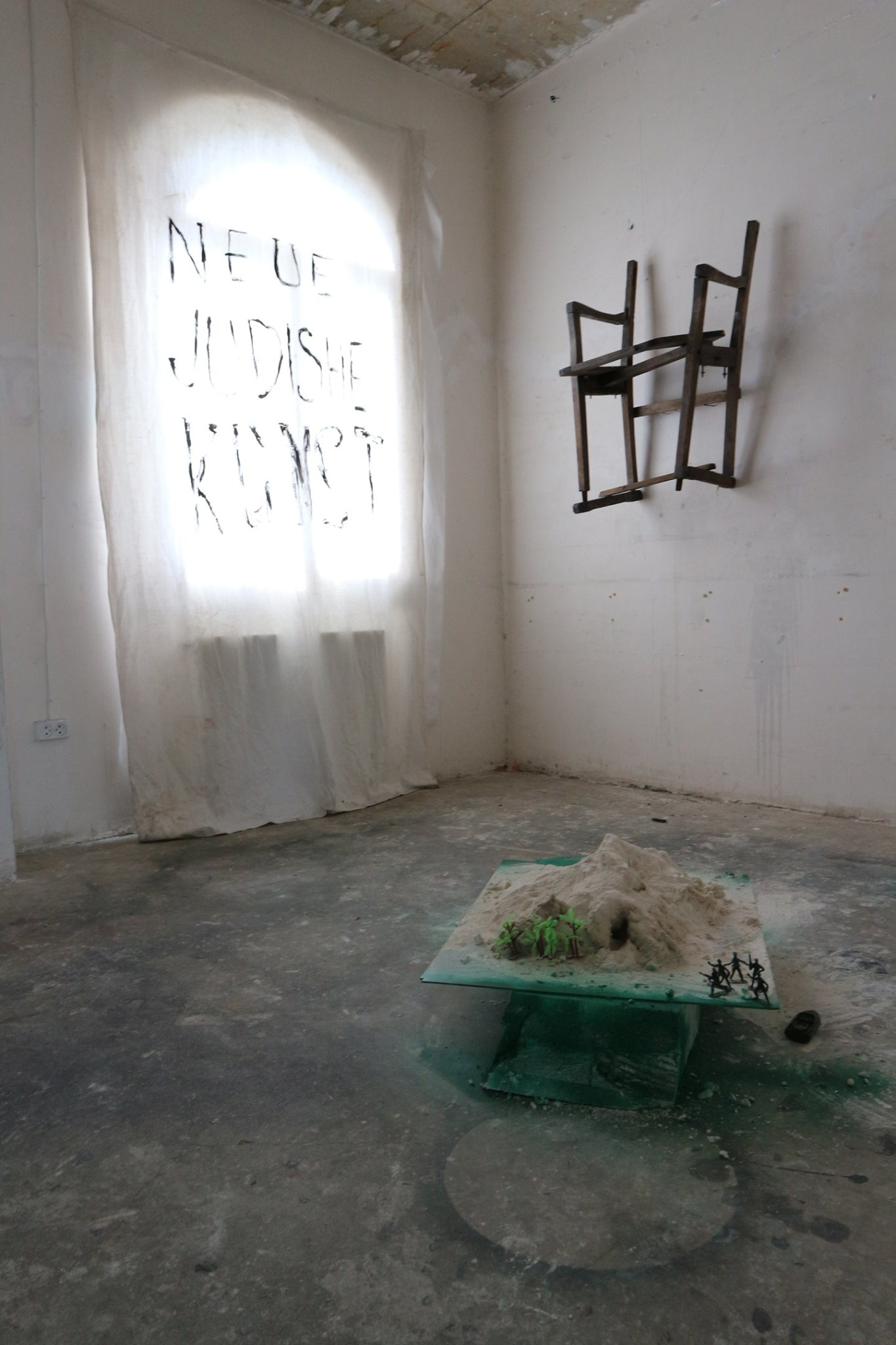
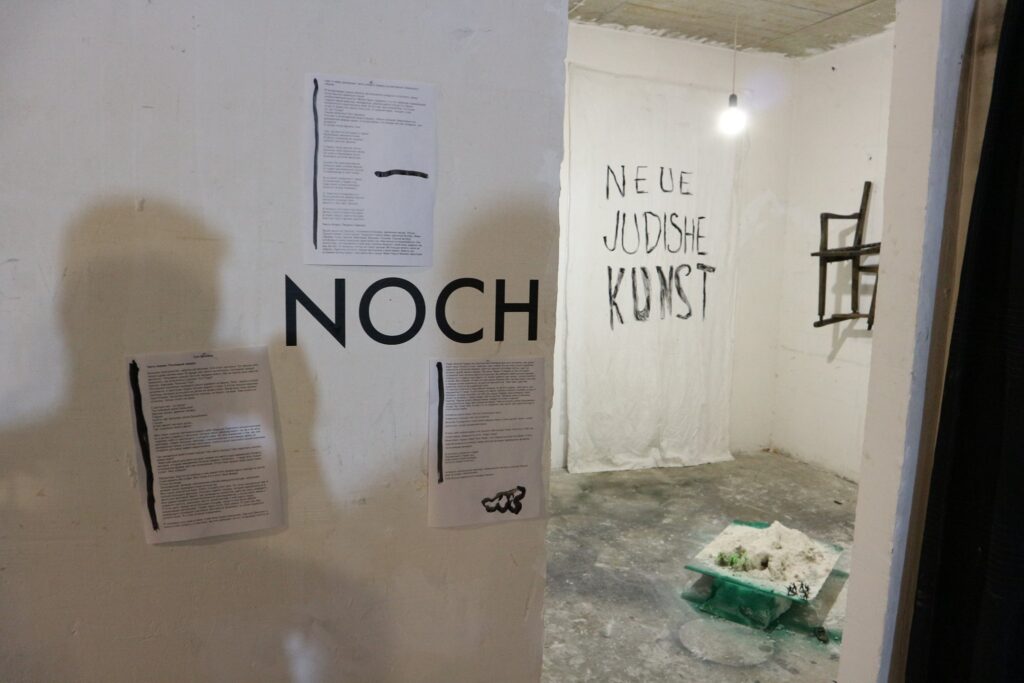
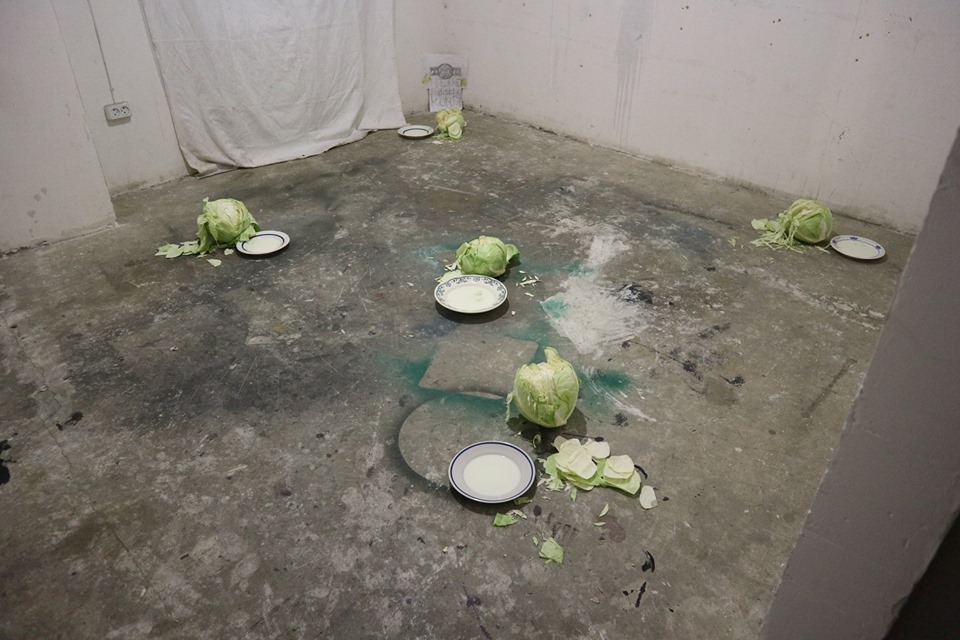
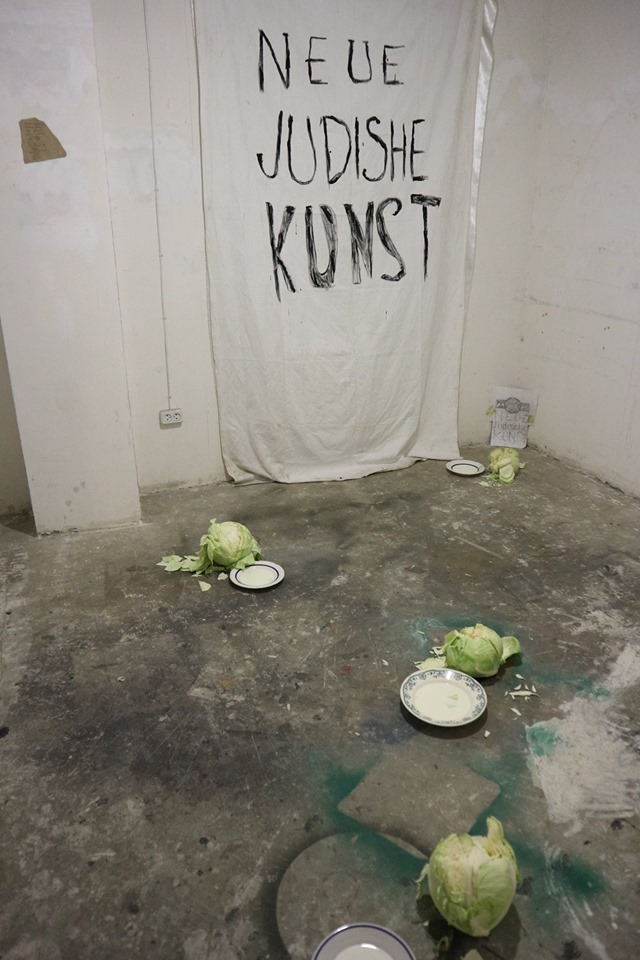
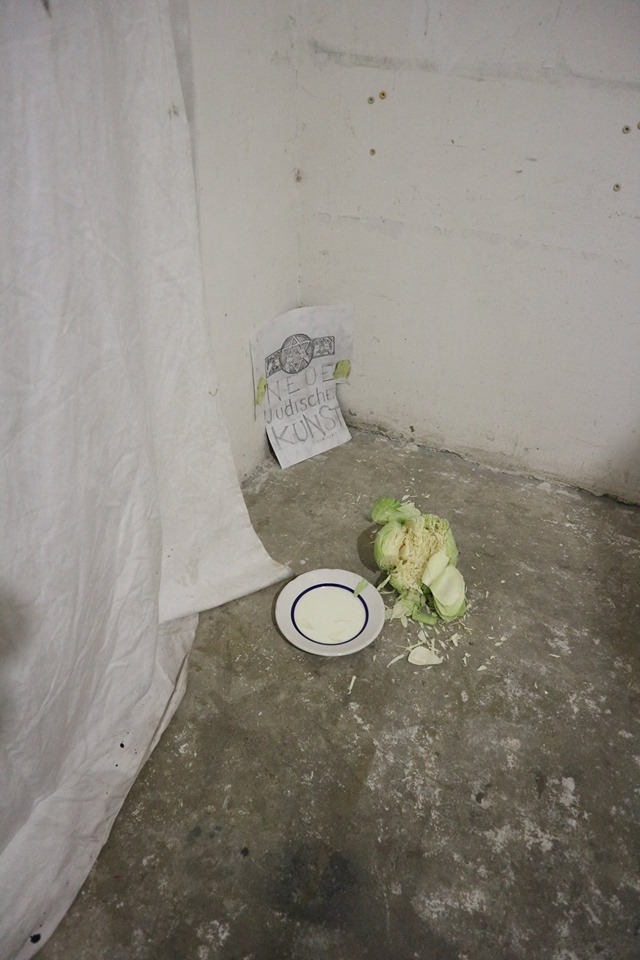
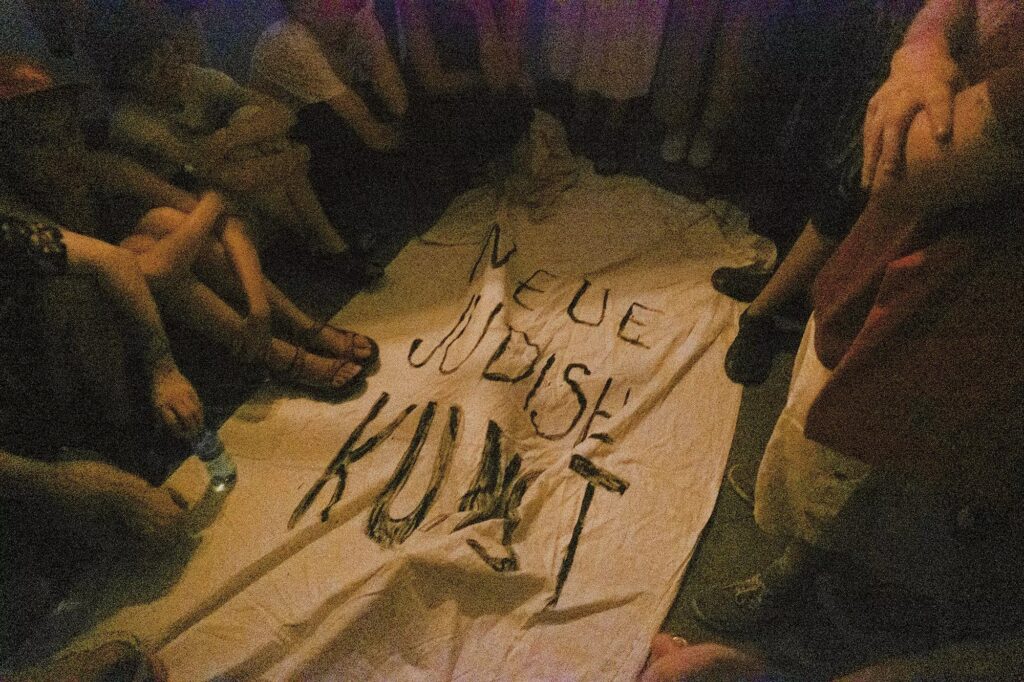
CABINET OF NEUE JUDISHE KUNST

Noch artist-run space, Odesa, Ukraine, 2018
In collaboration with Nikolay Karabinovych

The “Cabinet of New Jewish Kunst” unites seemingly incompatible stories — Jewishness during the Pale of Settlement, the beginning of Suprematism and the reinstatement of the Kultur-League (an association of Jewish artists created in Kyiv in.1918). Together they form a futuristic narrative that combines the ideas of scientific and technological progress and Yiddish culture with a rethinking of the figure of the Soviet Jewish artist and his struggle for rights. Crossing truth with fiction, the project tells the story of a new organization that is being created in a small office in Odesa.

HERZLIYA CAVES

Exhibition, essay
Noch artist-run space
Odesa, Ukraine
In collaboration with Nikolay Karabinovych

An exhibition in the form of a poetry collection, a May Day song, which was sung the next night after the second of May.

This is an essay written by one of the participants of the movement after his prolonged stay in the sacred cave where our founding fathers had been given the secret knowledge.

Details of exhibition 

The anonymity and universality of the movement will result in war. War will give birth to freedom. Freedom will create a union. The union will praise us.
Neue Judische Kunst

The cave of Dyonisius
Part one. The sacred frontier.

Original version of the text: https://syg.ma/@njk/grot-dionisa

A big space it is. Buses around standing chaotically. No sand, no smell of sea. Nobody left in the city. The last frontier’s been reached. The patriarchs died, failing to keep the succession of power. We didn’t manage to seize it and left. Who? Where?

Berlin, Warsaw, Netanya, Ghent…

The last generation spent a lot of time on the coast. They would drink, lose their papers in the sand, dive into the sea naked, seized by sudden attacks of terror. Then the millstones of freedom appeared, pressing the children towards the brink of the land. Having scattered their mats along the beach, they erected edifices on the slopes of hills, on the coast, on water itself. We were left with no choice but to stand on the edge, squeezed up against one another.

When I was young — I do confess! —
I loved my city very much.
Aryks would ripple, plane trees stood in rows
So proud.
Dushanbe river’s splashing thread
High up among the rocky cliffs.
And fields of tulips sang oh soft
Their songs of blossom and delight.

I would like to counter the tradition of Odesa conceptualism, but I can’t break with the past that shaped me. Neither can I separate myself from the present I live in. But my ignorance of the ways they used to pray is a considerable obstacle for me to understand the intimate details of their religious lives. That is the reason why some depths of Odesa conceptualism will remain unreachable to me forever.

Where are the outskirts of my city? How can I find the border? How to stop considering the sea to be that border?

It’s been ages since the sea ceased to be a border for me. It’s rather a place I can’t get to, the matter I’m not able to see or touch anymore. What I’ve got is an illusionary form, that is, illusionary to me. The lack of a perceptible form of the sea frightens me. I’m scared.

Formalism. Has it ever existed here? Or the form has always been inseparable from the word? Or the word itself is our form?

Kostandi street.

No fresh air but clouds of exhaust. Green. Resounding with lament of Bohdan buses, surrounded by clumsy buildings, endless wires twisting round. Ever more riddled with potholes.
I’ve got to descend to find that cave. It’s definitely located somewhere there, on the hills of Bolshoi Fontan. I’ve got to find the mouth of that cave that would transfer them to the place where mysteries took place. The place where they were once initiated into, given the power to create. My goal is to conduct an anthropological investigation and then take the broom and sweep out all the emptiness, tidy up a bit, and surrender the city without a word.
I’m standing alone, a big square in front of me. Back in the day, it was scattered with ugly looking buses. Now it’s empty. Everybody’s gone. A sharp horn of the last bus leaving honks. My mission is to see them out and then sweep the dust away. I’m great at it.
I descend ever lower. Now I see heaps of shelly limestones ahead. There’s the cave of Dyonisius. I’ll manage to get in somehow. I know it, I feel it. Everything around tells me. I’m climbing up the mountain. I’ll find the scenery. I’ll grasp the symbol of collective creative impetus.

I’ve felt damp warmth of the still air and found myself in front of a natural wall of stone of a tremendous height. One might think it’s a gray waterfall from the cloudless sky of Sicily suddenly turned into smooth stone. At that moment, I thought I’d seen this gray wall before, or at least had heard of it…

But where? When?
The cave of Dyonisius is gaping in front of me.

I stepped in. Felt a draught. Turquoise floor, decadent shapes. I suddenly realized there was no return from here… I could never ever return!

Where the ledge is cold and gray
Falls down like a waterfall
I scream at the silent cave:
– Dionysus! Dionysus! Dionysus!

Tired after a long hunt
Dusty purple outfit,
He went to the turquoise grottoes
Squeeze golden grapes…

Dionysus! On a gilded shield —
Faded snakes blue fight,
And weeps with a torn groan
A pipe directed to the sky …

Part II. The caves of Herzliya

Higher, ever higher, up to Herzliya. An impromptu stop, in the middle of nowhere. A plan. It’s time. A pure, cold calculation. A precursor of the ancient world, a bus running wild. Riding past Ofakim, Urim, Tze’elim, Mivtahim, Revivim, Tlalim. A mountain bus won’t stand against the stone features of the mountains. We mustn’t stop. They betrayed Gena, they broke into my house, ripped decorations off from my Christmas tree, they saw everything. Yet no food for the rats in an empty warehouse. They won’t take anything from me anymore. Lonely strangers, they know nothing about my army. Together, we will raise our eyes up high. We must get higher. Riding past Kiryat Malakhi, Bnei Re’em… Having left Gedera behind, we finally were able to put our weary feet to the ground. We only must get to the port, to dabble our feet in water. There are lots of ships in this port, lots of airplanes, and a big caravan laden with brocade and ivory heading towards the destiny of our people. Three Greeks, who were Yanaki, Stavraki, and Papasatyros, expressed their desire to get moving further. We will take the Russian physicist with us; we will save him from the greedy clutches of Tzfat. He will pitch a camp full of tents and bread for us. And we will refuse, since we must get to the caves. We will stay for a night there, and leave with the first ray of sunlight, not willing to stay any longer. Woe is us! Woe! We felt yearning for the fields of Bessarabia.

You wanted to stay in the caves of Herzliya. You didn’t turn into a sea. Your veins are pulsing with rage. You failed to learn this land, you wanted to return to the hills. You grew tired of the burden our people laid upon you. You betrayed our cypress trees. Run. You still might manage to get away from our soldiers. Brave warriors in green berets. A black sword called ‘The star of Cairo’ will spring out of its sheath and make a forceful thrust once more. Run, you crazy Armenian. You won’t learn the secrets of the caves of Herzliya. We are expelling you; you desecrated these halls; you spilt poison on this thriving land.

Blessed are the merciful: for they shall obtain mercy.
Blessed are ye that weep now: for ye shall laugh.

Thou shalt love the Lord thy God with all thy heart, and with all thy soul, and with all thy mind.

Thou shall live by bread alone, and thou shall drink no glass of wine. I will smite you, as the people smites its enemies, for you are a guest uninvited! Leave! Leave!

Riding past Bnei Brak, Ramat Gan, Ramat HaSharon, and towards Ahi Dakar Street. Kneel there, under the red sign, before the red light, the porcelain light, the half-decayed light.

Midst the ashes of nard burning red
I did kneel. I have never felt merrier.
Leopard’s head hover’d high overhead —
Golden chief in his splendid swift chariot!

A cupboard in a cluttered apartment, a familiar tablecloth, a dreary dark yard behind the window. Inexplicable.
You will never return to the caves of Herzliya.

Harri Kraievets
Odesa, April 2019.

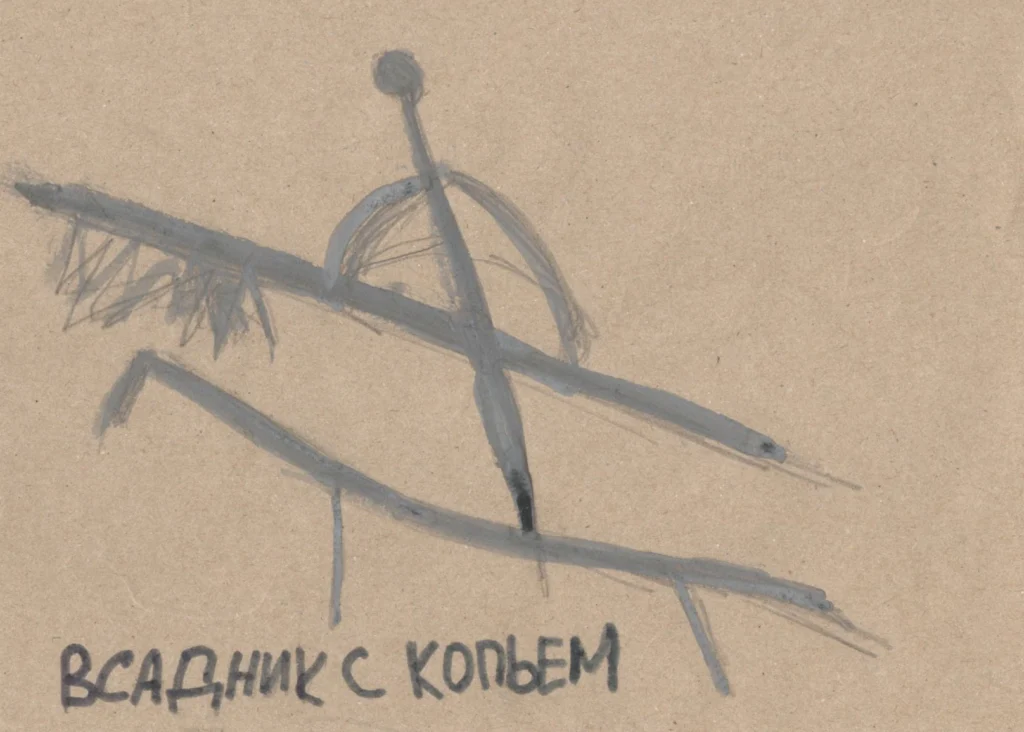
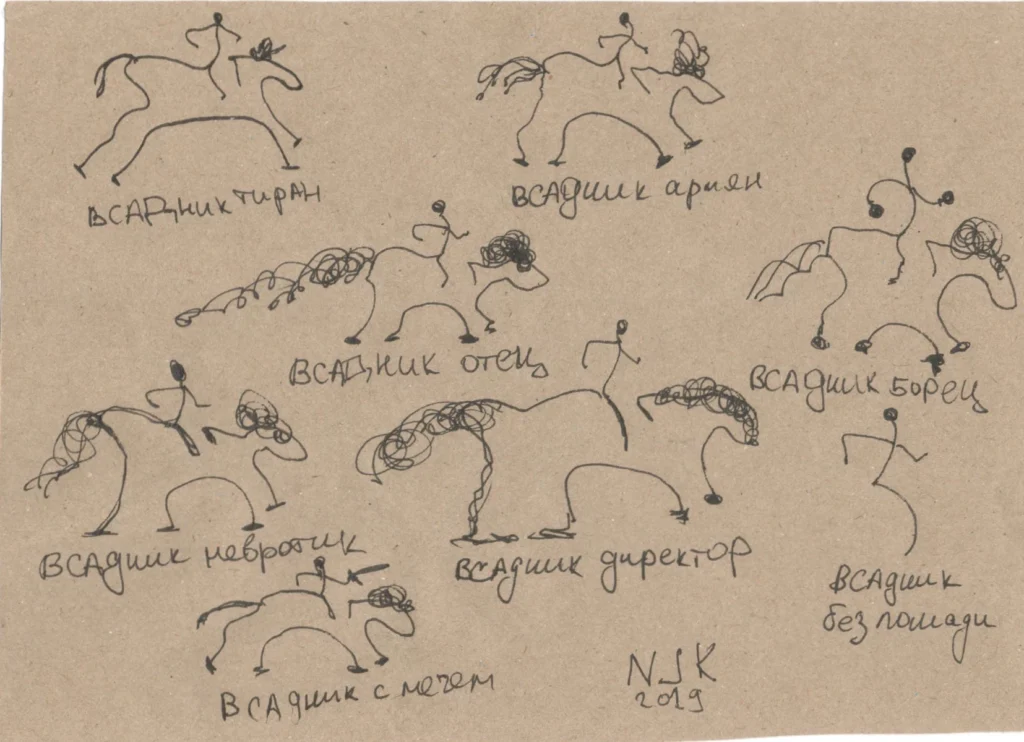
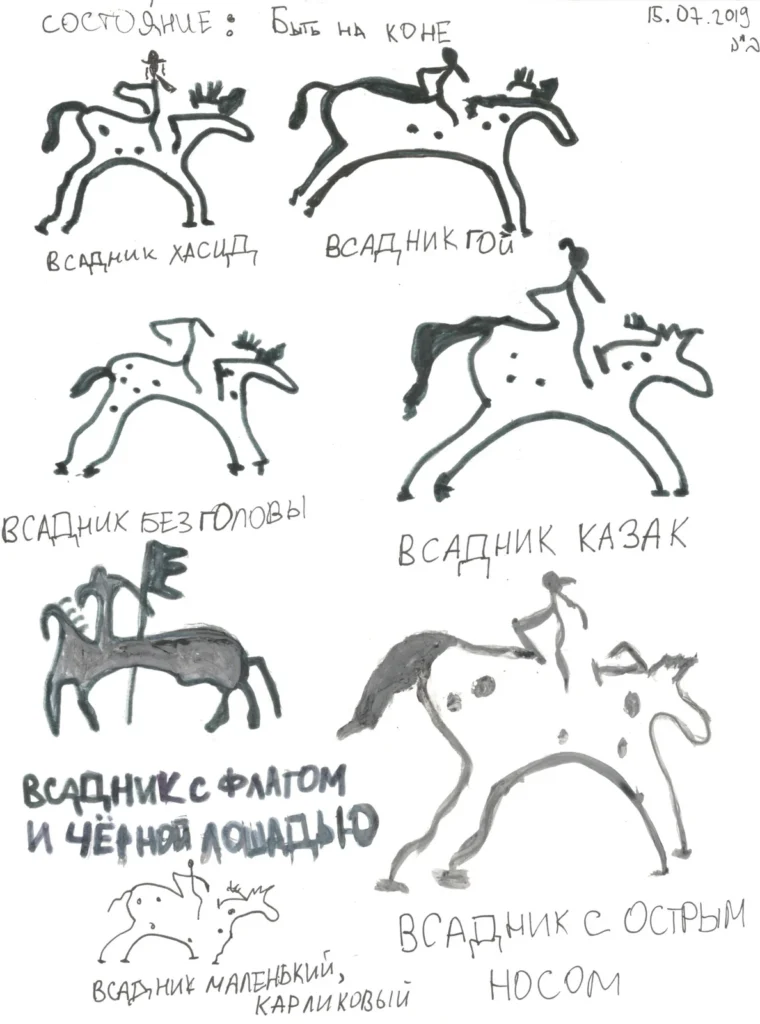
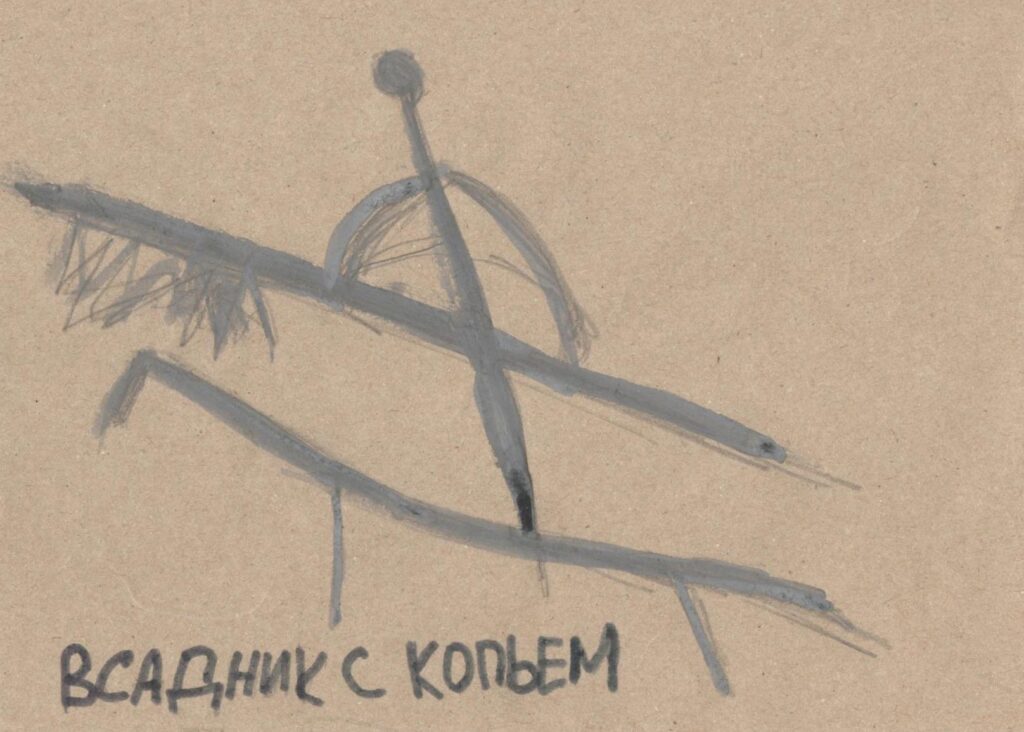
Condition: To Be On A Horse


This is an essay written for the exhibition ‘Dig the hole! Dig it!’. It is the third collaborative project from the leaders of NJK, for whom Lychakiv cemetery became the finishing point for presentation of an anthropological study of Medzhybizh, the capital of the Chasidic Kingdom.


Original version of the text: https://syg.ma/@njk/sostoianiie-byt-na-konie-tochka-vystavka-njk-na-lychakovskom-kladbishchie

There’s a man standing yonder, between the cross and the sign!

Forget the weather in Europe. There’s been no place for us there for ages. Long nights, short days there. We went to the great pilgrimage back then; we built a big bridge. We needed that path since we had forgotten the sweet taste in the mouth. I’m hitching up my horse, destroying the equilibrium of the ancient laws, but choosing the way of ‘Joy’. The muscles of my legs, they’re so strong, I’ll manage to stay in the saddle. I have to realize that moment that plunged into my memory up on that peak. We failed to take the height then.

Back then, we were just simple footmen,

An army with no nimbleness,

An army with no pride,

An army with no smell,

An army with no taste,

An army with no orgasm,

An army with no cries,

An army with no despair,

An army with no instinct.

I’ve managed to understand the true strength: it incorporates hatred and a lively friend. We passed three fields and met a merchant in the fourth. He suggested that we spend our money on warm women, told us to revive the instinct of life that barely glimmered in our bodies on a peak near Sadhora.

The Maggid of Mezeritch told me about that state and disclosed the mystery of being within the instinct. My horse doesn’t have a name anymore. My friend doesn’t have a name anymore. We became part of a sharp blow which bore us over the secret land, an ignorant terrain. I sped up, the stallion takes me further and further, my state is unstoppable, I am a rider. It’s crucial to stay in the saddle. As long as I’m that fast, there will be no death.

Merchant: I watched you for a long time. You’ve been leading your caravan since the baptism.

Stranger: 2000 years. I was allotted that much time.

Merchant: I’m waiting for you. Dismount. Let us go and spend our money on warm women.

We set forth to reap the fruits, but we suffered a total failure. There was an imaginary land laying around us, it turned into a forgotten embossed tile. A little tile bought for a little round man’s money.

I’m suffering.

I loved beauty.

I wept.

Am I a human?

I’m climbing to the peak.

I’m singing a song.

I wept.

Am I a human?

I prayed.

I fasted.

I wept.

Am I a human?

A large table was laid amidst the field near the grave marked by a headstone with my friend’s name inscribed on it. He didn’t dare to sit down to the table. I begged him to defend our honour, I asked him to start eating. He refused.

Our good horses stood too far away; we won’t flee.

Our good brothers lived too far away; we won’t escape.

Our good parents laid too far away; we won’t disappear.

My friend, sit down to the table.

My friend, bless this bread.

My friend, eat the egg.

My friend, stain your neighbour’s jacket.

My friend, stain your own jacket.

We talked about our lot, how difficult it is to be a horseman, how uncomfortable is life in the saddle, yet how reluctant we are to dismount. We didn’t want to start this fight, but we came in business, we’re not after a fateful deed. They made us face the fact; they victimized us. The feast is not that huge anymore! We emptied all the red pots; we swallowed all the pulp; we blessed the master and went along. A big Ukrainian house appeared before us. It was waiting for us, it was thinking about us, dreaming about us. We made its dream come true, we aroused its doors, we came in and stayed for quite a while. The space was designed exactly for us alone: beautiful volumes standing on the bookshelves, the main cabinet, a washing mug, a wooden bench, a little beggar in the corner.

I wished so much you were there with me, in that house. I exist for you. I am looking for you. My queen! The golden days after the hell! How fierce the wind was! My friend started asking us to leave the house, to free him from the wise jew’s hut, but the people from the East are knocking on the door. Impatient people, mean people, wild people!

You’ll get your lifelong sorrow of stone, I said to my friend.

Stop boasting at the table, I shouted to my neighbour.

Stop ruling during dinner, I begged the tzar.

Stop attacking us, I asked the enemy.

There was a suitcase in his hand, full of embroidered red saris. The day quickly came to an end. Everything looked different. We had to stick the ‘Ramla to Lod’ road sign, yet she’s working all the time every morning, not giving a damn about me. Dig the hole! Dig it! Stick the sharp pointer to the ground, spill some blood. 
A huge tomb with a tiny crevice. It’s not that easy to stay ahorse. The foes don’t go. The totalitarian regime built a train station for the country I want to leave, for the landscape I want to forget, for you I won’t ever manage to forget.

We’ve conducted another anthropological study. Each of us has their own goal that brought us to a huge collapse of production. A symbolic footnote will help us to endure it, the imagination will scatter the events, while we’ll forget the 13 fields and the junction, and only two shops with different names will leave us to the everlasting agony of the choosing.

Why can’t I be everywhere at the same time?

Why didn’t you give me an opportunity to be everywhere?

Why couldn’t I fill everything with my own essence?

Why am I not everything?

That’s all.

Harri Kraievets
2019

IN THE CIRCLE OF FRIENDS

Exhibition, Noch artist-run space
Odesa, Ukraine, 2020
In collaboration with Nikolay Karabinovych

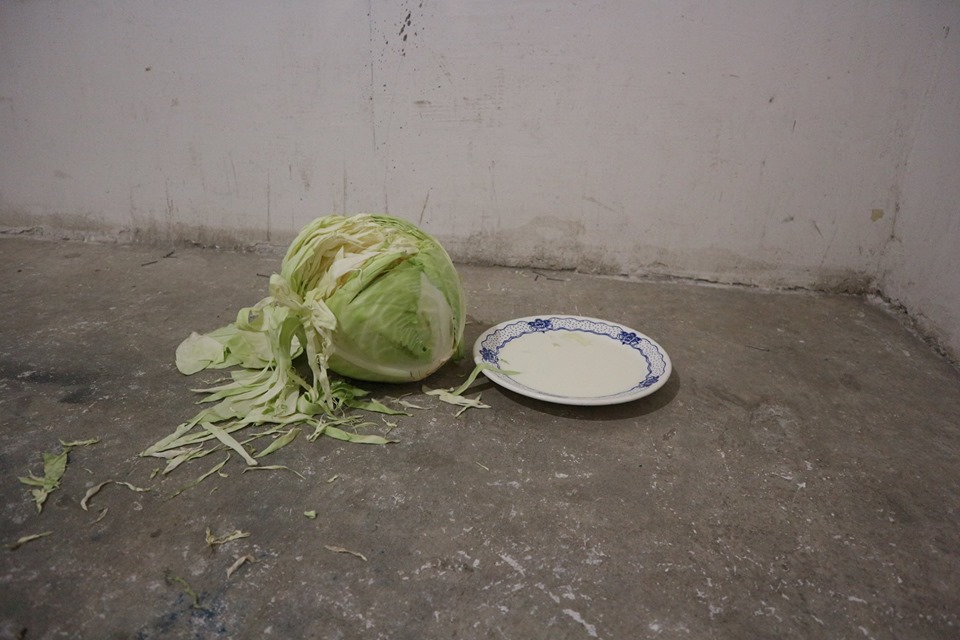
Cabbage Skit Exhibition,
Boulevard and Lighthouse.
Native Land,
Where my young friend lay
Burning with battle.

Выставка капустник,
Бульвар и маяк.
Родная земля,
Где мой друг молодой лежал
Обжигаемый боем.

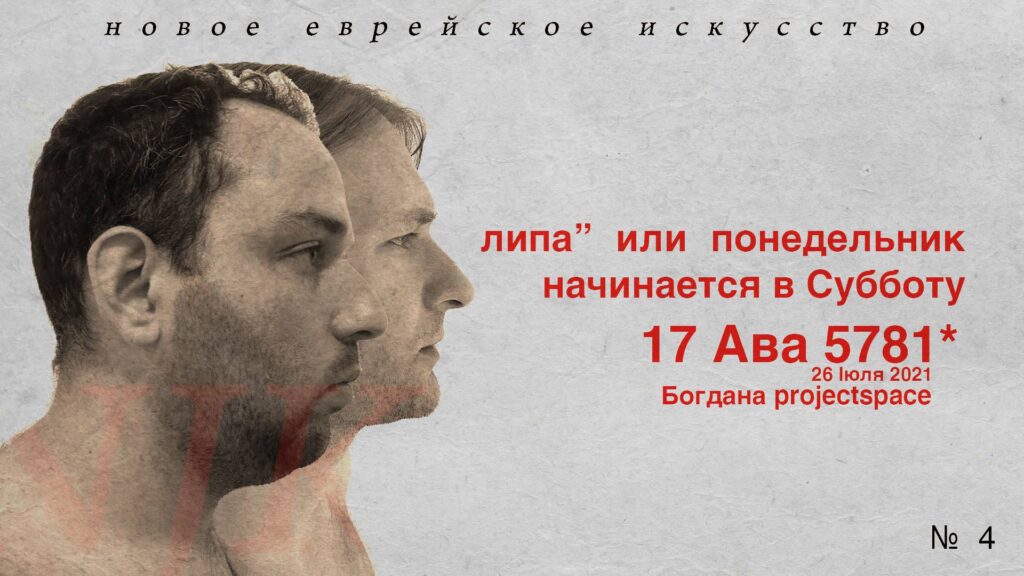
LINDEN OR MONDAY BEGINS ON SATURDAY

Performance,Bogdana projectspace, Kyiv, 2021 
In collaboration with Nikolay Karabinovych
Curated by Nikita Kadan

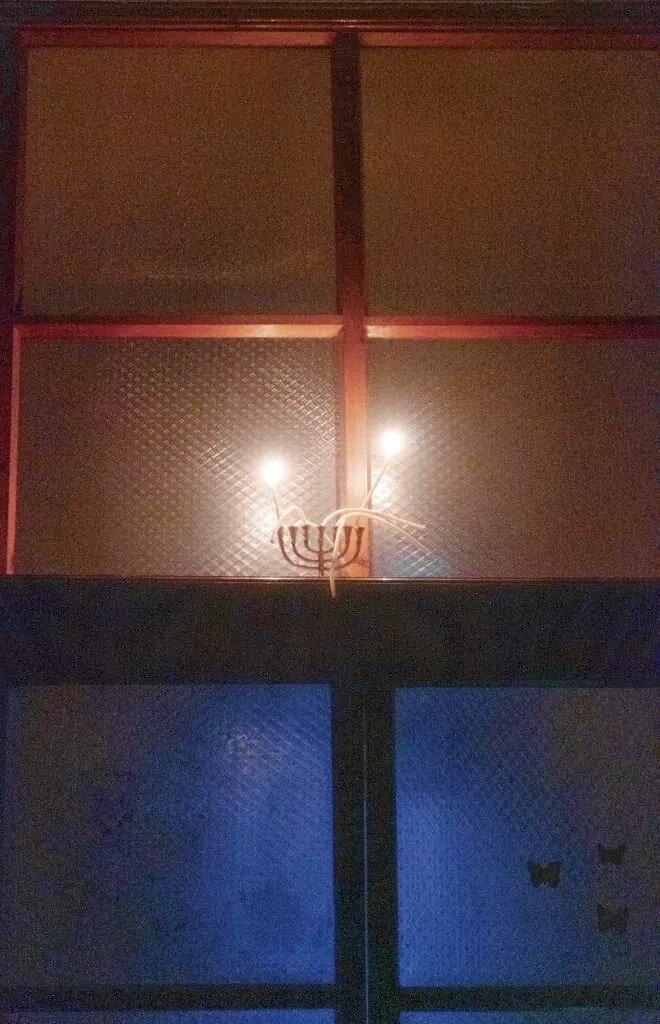
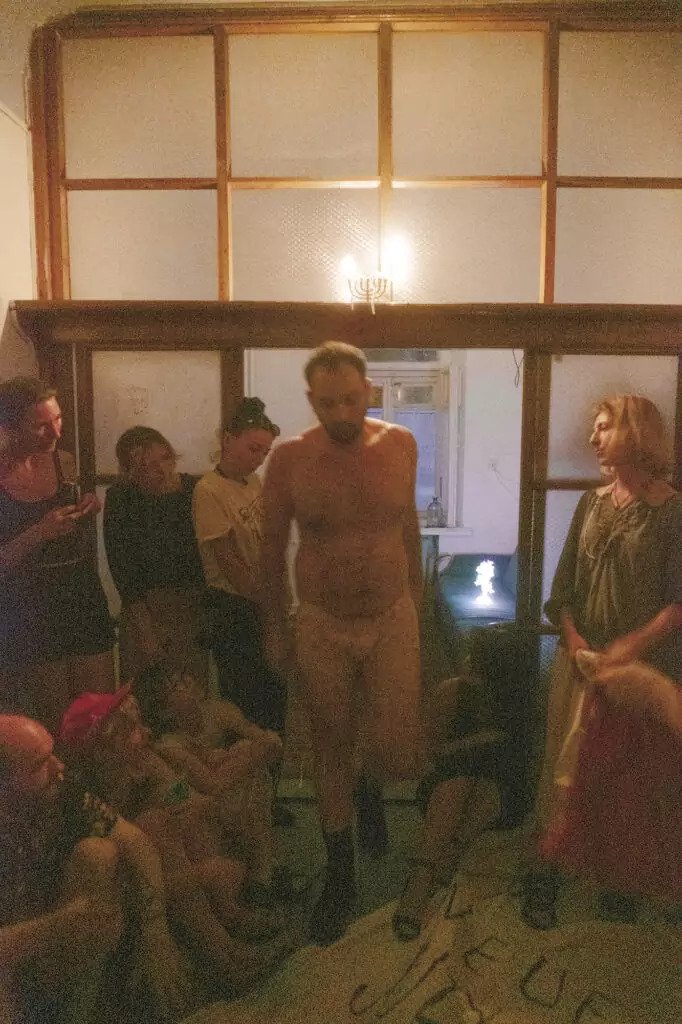
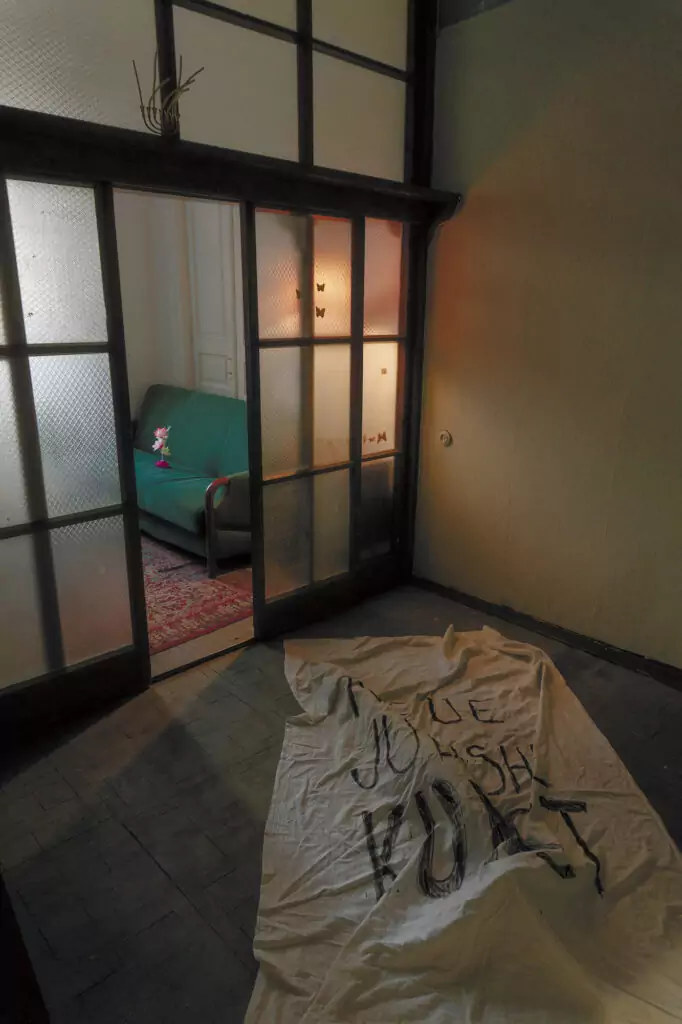
“Linden Or Monday Begins On Saturday” has a clear chronology and structure. Artist marked the beginning of the event with the help of at completely asshole ringing the bell, according to the theater held 3 times. After that, an inside-out psychoanalytic session took place behind closed doors. The psychoanalysis session lasted about half an hour. The usual unremarkable session, one of a million that take place every minute around the globe. At the end there was a certain failure and we saw a figure.

The appearance of the naked figure of the psychoanalyst, its presentation to the participants in the event is the climax. He dis-appeared, dissolving into the human mass.

In psychoanalysis, and especially in the one to which Harri Kraievets belong — the Lacanian school — lies a structuralist practice based on language. In his theatrical exercise, the main character, Lipa, falls into a psychosis. This text, which they also presented, is completely different in its linguistic structure. It becomes geopolitics, as if the people of Ukraine speak for some master. The text is a reference to the Deleuze idea: madness or delirium is always geopolitics.

The next move — the psychoanalyst’s male body was painted with signifiers. This is a withdrawal into the real: when a psychosis occurs, everything is flooded, everything becomes as if under water and subject to words out of place. And the most interesting thing they noticed at the end was that no one stood on the flag, which was at the same time a shroud lying on the floor and covering the vacuum cleaner. It wasn’t trampled. In the process, the fear of trampling on the flag was revealed, although it was placed on purpose to be dirty.

Audio from the performance

Text about Performance

photography by Polina Polikarpova

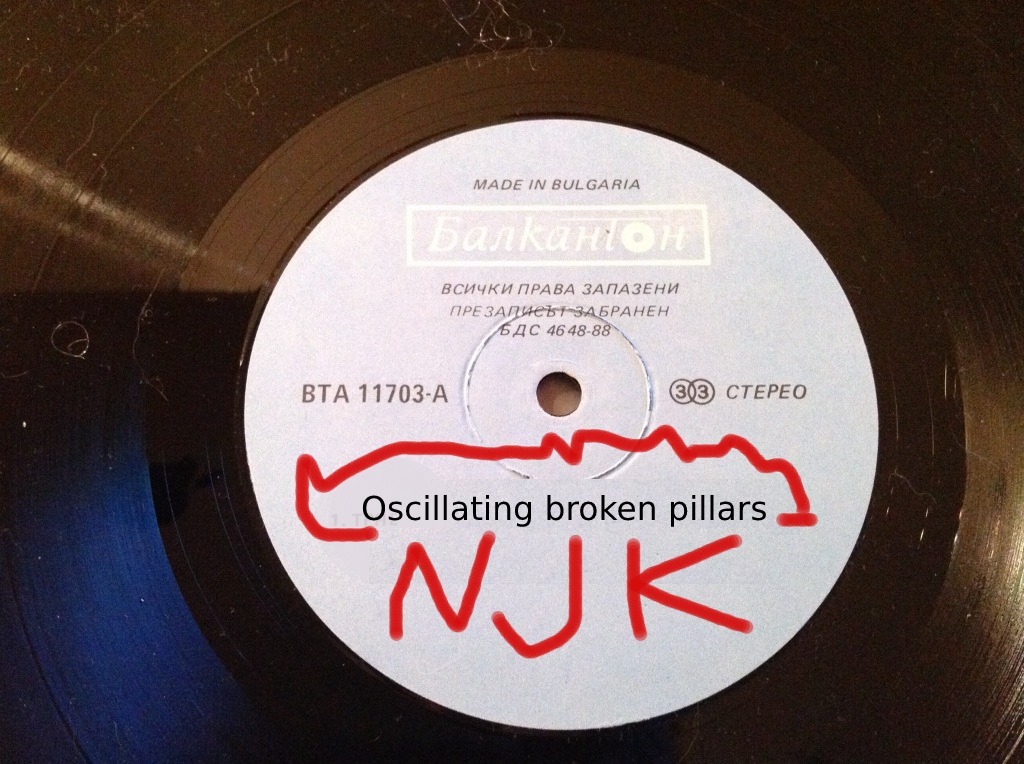
OSCILLATING BROKEN PILLARS

Speculative realist play in two acts
ANABASIS. ONLINE RESIDENCY, 2021
In collaboration with Nikolay Karabinovych
Curated by Oleksandr Sushynskii 

Text of the play:

Read in English

Read in Russian

A critique of the modern repressive machine of adapting refugees into present capitalist discourse. Written in the footsteps of Paul Celan’s poetics.

The play itself explores the interaction of a refugee with the migration policy of modern European states to adapt and assimilate the subject into the state machine. In the world of the future, the refugee ceases to be an anomaly, but becomes a new political subject, which may soon take the political platform, become a new voice in the modern city, and even stir up unrest and new social processes.

Curator Oleksandr Sushynskii about poem:
Firstly I’m going to speak about the Neue Judische Kunst group. Harri Kraievets and Nikolai Karabinovich (members of NJK) created some kind of a radio play named “Oscillating broken pillars” in which four wind instruments got into a broken magic items shop where the owner’s grandson wants to socialise them. During all the play the instruments are crying: “But we don’t want that! We don’t believe in that! We’re other, we’re different! We don’t want to be like you!” A psychoanalyst comes to the store and deliberately shouts out fragmentary expressions from its professional vocabulary: “Geste à peau! dénégation! aliénation! jouissance!” Ultimately, everything ends in a way of “pogrom”. Someone says: “We left our unbearable homeland that has broken us, but we don’t need any repair!” The message of this work was for me: leave us alone, we do not need to be cured and instilled by your values. Today we inevitably face an unsolvable dilemma. Either we are assimilated by force and become a part of a global system, including erased identity (e.g. the regime of social networks “transparency”, conditions of precarity and instability) or we reject it in favour of a vulnerable separateness and “uniqueness”. The only problem is that isolationism seems to be a false alternative because, as Claude LéviStrauss and other anthropologists have shown, at the structural level within even the most closed tribes of Amazonia or Australia, the same patterns are observed – hierarchy, regimentation and repression. I would say identity is as dead as God is. You expressed this more gracefully at the very beginning, when you were talking about Celan and his overcoming the identity construct. While omitting the neoliberal regime of capitalism we put ourselves right into the “Midsommar” (2019)
Moreover, the apology of Nature by Jean-Jacques Rousseau was debunked and carefully deconstructed by Jacques Derrida, who showed how naive and even dangerous it is to think about the human out of the culture, language and structures. This inextricable dilemma and hopelessness is the key mood of the artwork by Neue Judische Kunst in my opinion.

ANABASIS. ONLINE RESIDENCY:
 inspired by Paul Celan, one of the most important German-speaking poets of the twentieth century, featured German and Ukrainian artists working with new media. The artists were invited to deal with questions of identity and posthumanism in a funded workshop and a project phase. The resulting works are presented in November 2021.