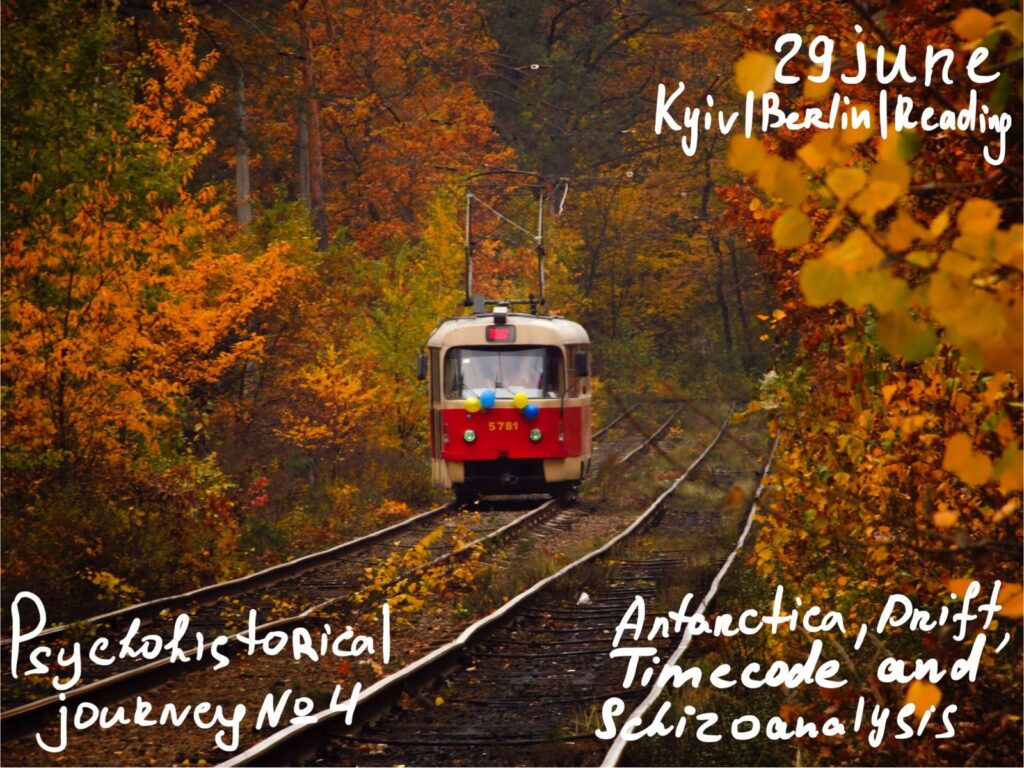
Psychohistorical journey №4: Antarctica, drift, timecode and schizoanalysis

29.06.2025, Kyiv | Berlin | Reading       

Documentation of the Berlin journey

Documentation of the Kyiv journey

Documentation of the Reading journey

On 29 June 2025, at 12:00 Berlin time, three groups started a synchronised psychohistorical journey in different cities: in Berlin (Mittelheide) led by Harri Kraievets, in Kyiv (Pushcha-Vodytsia) with Teta Tsybulnyk, and in Reading (Lousehill Copse, Great Britain) with Pavlo Kerestei.

The groups started simultaneously, each in their own time zone, but all oriented in a common spatial vector — towards the West. Participants had to keep in mind the spaces of the other groups, as if walking through three landscapes at once.

The journey was built around the concept of Antarctica — the last territory on Earth that is collectively managed by scientists. This image served as an imaginary backdrop and framework for reflections on alternative forms of community, language, and memory.

At 14:55 Berlin time (13:55 in London and 15:55 in Kyiv), the groups found a way to connect without using modern means of communication — singing simultaneously from a pre-written score, which became an act of intuitive synchronisation and a temporary merging in a shared choral gesture.

Each group developed its own form of research:

Kyiv — through practices of free association, collective dreaming, psychotic speech, and sound improvisation — participants explored the unconscious landscape of Pushcha-Vodytsia.

Berlin — immersion in psychohistorical texts, schizoanalytic practices, and bodily liberation from the shackles of language, a shared imaginary space was constructed.

Reading — through the collection of words, gestures, and fragments that speak for untold stories, a temporary mosaic installation was created in the forest.

During the trip, various methods of documentation were used: note-taking, plant collecting, analogue photography, sound recording, and video recording. A week after the event, at the same time, each group discussed their experiences.

Discussion Recording

The result of three psychohistorical journeys became a video work:

«Phonopedic exercises for the regeneration of Antarctic fauna».

Ukrainians’ text below↓

Psychohistorical Journey №2 Journey to the Glacier Valley
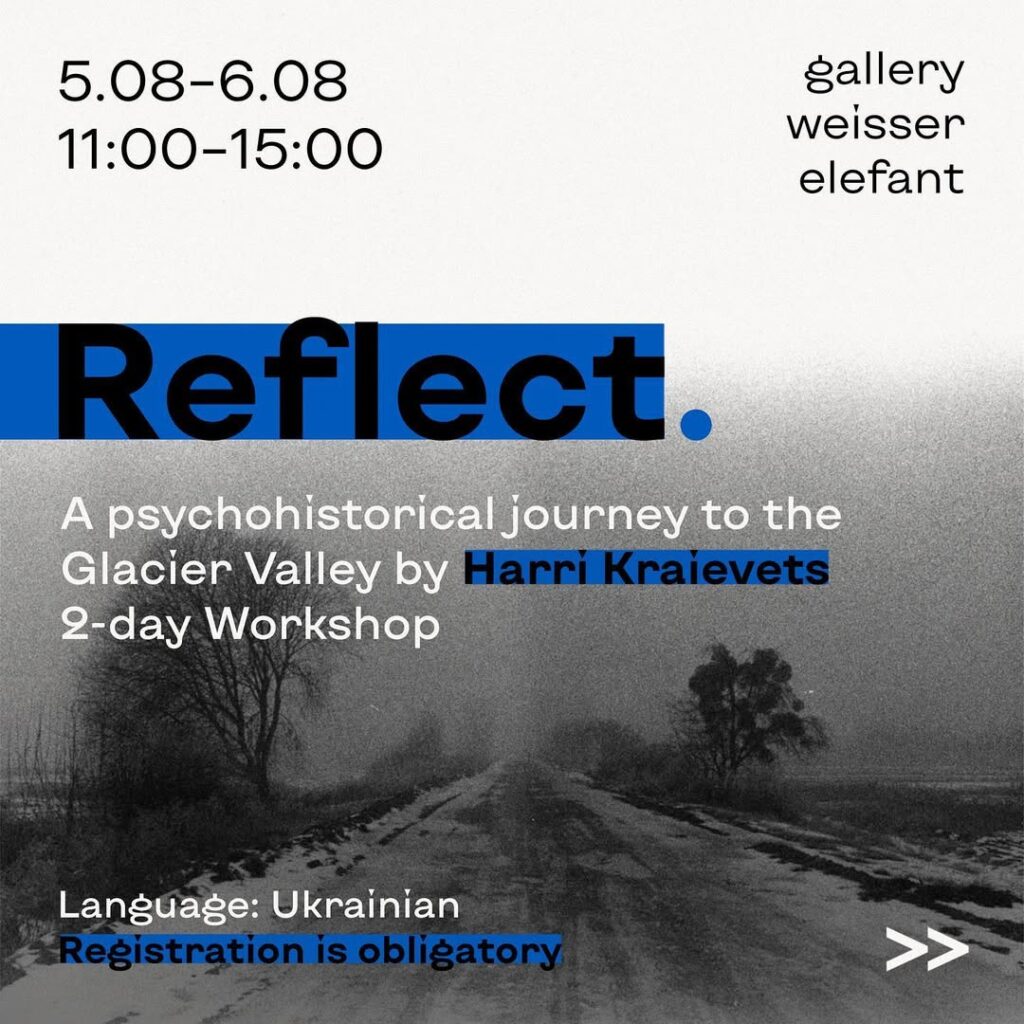
5.08-6.08.2023, Berlin

The group gathered at Neuhelgoländer Weg 9, 12559 Berlin (https://goo.gl/maps/5jaxjL2YZLAQXS6B9) in the parking lot at 11:00 AM.

Harri Kraievets announced the rules of the walk: mobile phones were prohibited and talking was forbidden outside of designated activities. Participants could stop participating at any moment. The importance of water consumption throughout the route was emphasized.

First Stop. Working with markers.The group spontaneously formed a circle and began passing markers to each other. Gradually, participants were chaotically eliminated from the game by the facilitators and had their markers taken away. The last participant was also deprived of their marker, completing this part of the ritual.

Second Stop. In the invitation to the walk, participants were told to bring a pumpkin, but the purpose was not revealed. After the group gathered, everyone had to find an arbitrary stick and carry it throughout the route. Then began the search for a place to bury the pumpkins.

Third Stop. Searching for a place to dig. The group collectively searched for a suitable location. The first three or four location proposals were rejected, after which the facilitators imposed their own choice. The group rejected it. Participants could not reach agreement on a suitable location for a long time, which caused significant stress and tension. The uncertainty of choice and the symbolic nature of the future burial of the pumpkin in the ground created psychological pressure. Eventually, the group decided to resort to collective divination using Tarot cards to make a decision about the place of ritual burial.

At the chosen location, participants were given time to bury their pumpkins. Those who did not manage to complete the burial ritual lost their pumpkins—they were taken by the facilitators. The next day, these pumpkins could be brought and placed in the center of the circle.

Fourth Stop. Exit to the lake.The group chose two participants: one to read a scientific text, another to read a text about Kai. Collective listening to the texts took place on the shore of the water body.

Fifth Stop. Field, second lake.The culminating part of the walk: participants had to arbitrarily choose someone from the group and ask for their forgiveness, explaining the reasons. It was necessary to name at least three motives: conscious, subconscious, and «true» unconscious. This practice created space for deep group catharsis and reflection on hidden relationship dynamics.

The walk concluded at the second lake, where the group spent time in silent reflection on the path traveled and the internal processes that occurred during the ritual passage through the glacial valley.

Duration of the walk: 4 hours.

Conductors:  Harri Kraievets, Maxim Yarmolenko

Historical Background

The Berlin Glacial Valley, part of the Warsaw-Berlin Glacial Valley, was formed at the end of the last ice age approximately 18,000 years ago. It served as a spillway for meltwater from internal ice during the Frankfurt ice margin period. The valley trajectory extends from Eisenhüttenstadt through Berlin to Friesack, where it connects with the Eberswalde Glacial Valley.

The valley consists of powerful sands over 20 meters high that serve as groundwater reservoirs. During the Weichselian glacier, many ice blocks formed, which melted and today form lakes and swamps—Müggel, Tegel. In the Middle Ages, ice valleys were natural transportation obstacles; merchants chose narrow places for crossing, where they founded cities like Cologne and Berlin.

Second Day

Start at 11:00 AM. Address: galerie weisser elefant (Auguststraße 21, 10117 Berlin).

The second day took place in the format of a classical psychoanalytic group, in which there was an opportunity to reflect on the new experience lived through in the psychohistorical journey, as well as to explore revealed gaps in old movement patterns. Group work helped notice around which repetitive actions anxiety focuses and how it transforms under the influence of the local group.

Collective Conclusion of the Group:

The walk revealed the fundamental paradox of the Glacial Valley: at the moment of attempting to perceive it as it is in itself—beyond symbolic distortions—the ice evaporates into nothingness. This Ice paradox involves temporal feedback: the cause does not exist before its consequences, but is retroactively established by them through repetition and echoes in the structure of the signified.

The ritual with pumpkins and sticks revealed the impossibility of a direct approach to the traumatic core. If one tries to understand the Glacial Valley directly, independently of its subsequent consequences, only a meaningless factum brutum remains—a crude fact that has no direct impact on the psyche. Only through echoes in the symbolic structure does this fact retroactively acquire an Icy character and become a Cause.

The final forgiveness ritual at the second lake allowed participants to experience this retroactive establishment of trauma through three levels: conscious, subconscious, and unconscious—where the latter proves to be the true place of the Glacial cause.
Психоісторична подорож №2 Подорож до Льодовиковій долині

5.08-6.08.2023, Берлін

Група зібралася за адресою Neuhelgoländer Weg 9, 12559 Berlin (https://goo.gl/maps/5jaxjL2YZLAQXS6B9) на парковці о 11:00.

Гаррі Краєвець оголосив правила прогулянки: заборонено користуватися мобільними телефонами та розмовляти поза межами визначених дій. Учасники могли в будь-який момент припинити участь. Було наголошено на важливості споживання води протягом маршруту.

Перша зупинка. Робота з маркерами. Група довільно утворила коло і розпочала роздавання маркерів один одному. Поступово учасники хаотично виключалися з гри ведучими та в учасників забирали маркер. Останнього учасника також позбавили маркера, завершивши цю частину ритуалу.

Друга зупинка. У запрошенні на прогулянку учасникам було сказано взяти з собою гарбуз, але мета не розкривалася. Після збору групи кожен мав знайти довільну палицю й нести її протягом маршруту. Далі розпочався пошук місця для закопування гарбузів. 

Третя зупинка. Пошук місця для копання. Група спільно шукала підходящу локацію. Перші три-чотири пропозиції щодо місця були відхилені, після чого ведучі нав’язали власний вибір. Група його відхилила.Учасники не могли довго дійти згоди щодо підходящої локації, що спричинило значний стрес і напруження. Невизначеність вибору та символічна природа майбутнього поховання гарбуза в землю створили психологічний тиск. Зрештою група вирішила вдатися до колективного ворожіння на картах Таро, щоб прийняти рішення про місце ритуального поховання.

 На обраному місці учасникам було надано час для закопування своїх гарбузів. Ті, хто не встиг завершити ритуал закопування, втрачали свої гарбузи — їх забирали ведучі. Наступного дня ці гарбузи могли бути принесені й покладені в центр кола.

Четверта зупинка.Вихід до озера. Група обрала двох учасників: одного для читання наукового тексту, іншого — для читання тексту про Кая. Відбулося колективне прослуховування текстів на березі водойми.

П’ята зупинка. Поле, друге озеро. Кульмінаційна частина прогулянки: учасники мали довільно обрати когось із групи і попросити в нього прощення, пояснивши причини. Необхідно було назвати мінімум три мотиви: свідомий, підсвідомий і «справжній» несвідомий. Ця практика створила простір для глибокого групового катарсису та рефлексії над прихованими динаміками взаємин.

Прогулянка завершилася біля другого озера, де група провела час у мовчазній рефлексії над пройденим шляхом та внутрішніми процесами, що відбулися протягом ритуального переходу через льодовикову долину.

Тривалість прогулянки: 4 години.

Ведучі: Гаррі Краєвець, Максим Ярмоленко

Історична довідка: Берлінська льодовикова долина, частина Варшавсько-Берлінської льодовикової долини, сформувалася наприкінці останнього льодового періоду близько 18 000 років тому. Вона слугувала водозливною доріжкою для талої води внутрішнього льоду в період Франкфуртського краю льоду. Траєкторія долини простягається від Айзенгюттенштадту через Берлін до Фрізака, де з’єднується з Еберсвальдською льодовиковою долиною.

Долина складається з потужних пісків висотою понад 20 метрів, що служать резервуарами підземних вод. Під час Вейсельського льодовика утворилося багато трупців льоду, які відтанули й сьогодні формують озера та болота — Мюггель, Тегель. У Середньовіччі льодові долини були природними перешкодами для транспорту; торговці обирали вузькі місця для переправи, де й заснували міста Кёльн та Берлін.

Другий день

Початок о 11:00. Адреса: galerie weisser elefant (Auguststraße 21, 10117 Berlin).

Другий день відбувався у форматі класичної психоаналітичної групи, в якій була можливість відрефлексувати новий досвід, пережитий у психоісторичній мандрівці, а також дослідити виявлені розриви у своїх старих рухових паттернах. Робота в групі допомогла помітити, навколо яких повторюваних дій фокусується тривога і як вона трансформується під впливом локальної групи.

Спільний висновок групи: 

Прогулянка розкрила фундаментальний парадокс Льодовикової долини: у момент спроби сприйняти її такою, якою вона є в самій собі — поза символічними спотвореннями — лід випаровується у нікуда. Цей парадокс Льоду передбачає часовий зворотний зв’язок: причина не існує перед своїми наслідками, а ретроактивно встановлюється ними через повторення та відгомони в структурі означуваного.

Ритуал з гарбузами та палицями виявив неможливість прямого підходу до травматичного ядра. Якщо намагатися розібратися у Льодовиковій долині безпосередньо, незалежно від її подальших наслідків, залишається лише безглуздий factum brutum — грубий факт, який не має прямого впливу на психіку. Лише за відгомонами в символічній структурі цей факт ретроактивно набуває Льодяного характеру і стає Причиною.

Кінцевий ритуал прощення біля другого озера дозволив учасникам пережити це ретроактивне встановлення травми через три рівні: свідомий, підсвідомий і несвідомий — де останній виявляється справжнім місцем Льодовикової причини.

Psychohistorical Journey No. 3. Humboldt Heights
03.07.2024, Berlin

Together with five participants of the Zwischenstopp* project, a psychohistorical journey was organized. The participants were already familiar with each other through monthly two-day (three-hour) group therapy sessions held at a psychotherapy practice on Schönhauser Allee as part of the project.

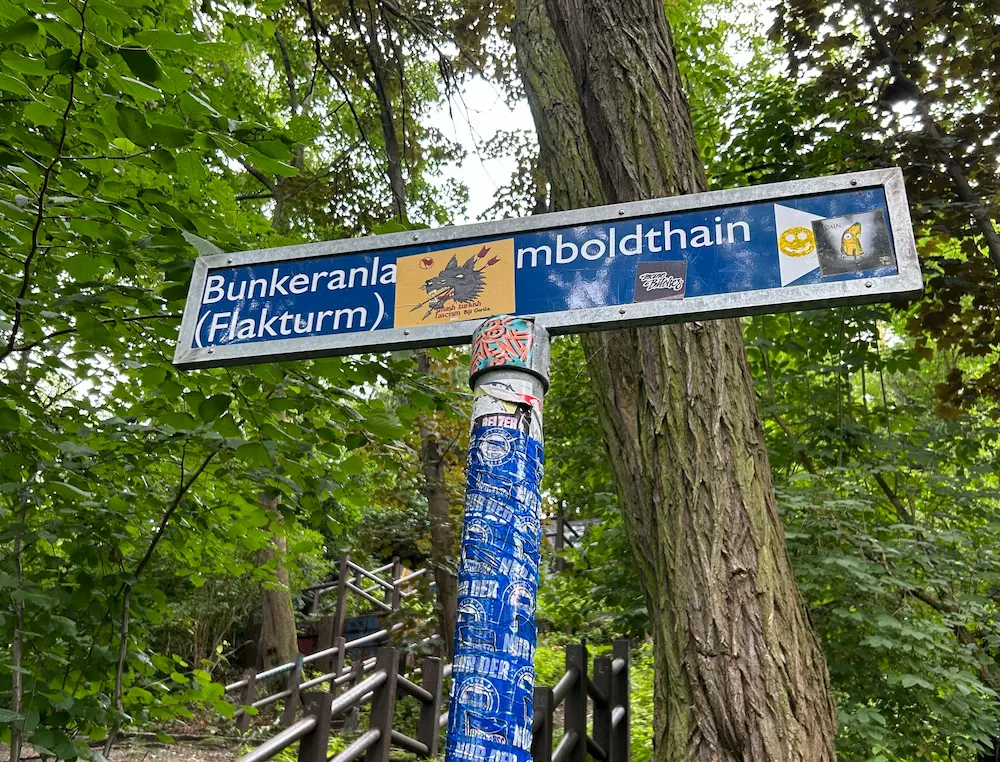
After six sessions, it was decided to move the exploration of group dynamics from the office into the public space — in order to examine changes in the group’s bodily and psycho-emotional perception while in motion and in interaction with the natural environment. The aim was also to trace the forest’s spatial topology and its influence on the group’s unconscious. The route through Volkspark Humboldthain became an attempt at a shared bodily and symbolic shift.

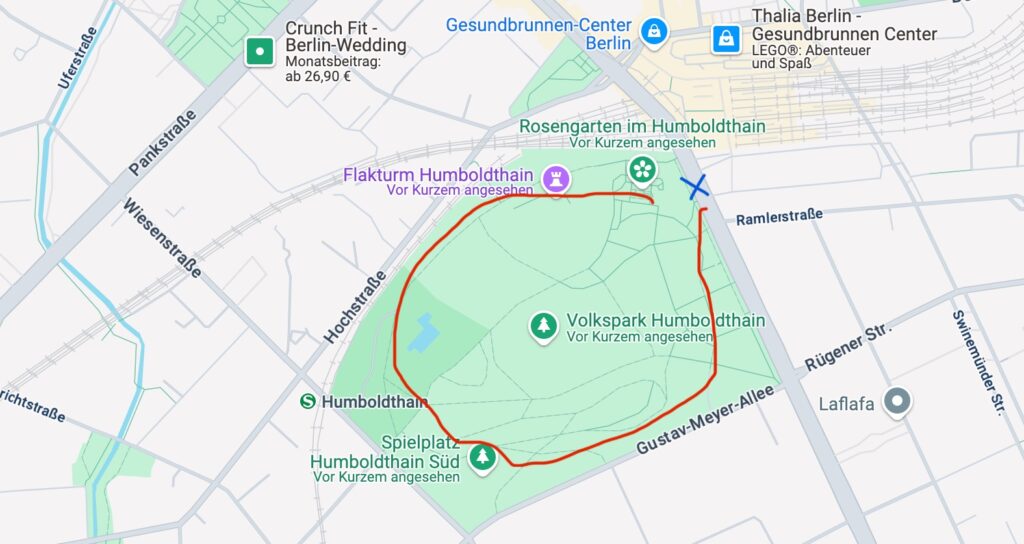
Volkspark Humboldthain was chosen for the route — a historically charged site where Luftwaffe flak towers stood during the Second World War.

The meeting began at 11:00 at Korn Bäckerei (Brunnenstraße 104).
The walk started at 12:00 at the archaeological window of the Alte Himmelfahrtkirche.
Without stopping, the group proceeded through the park to the northern flak tower, now known as Humboldt Heights. On the benches near the viewing platform by the Memorial to German Unity, a 50-minute group conversation took place on a topic proposed by one of the participants: “Integration into German society.” The discussion touched on bodily and emotional aspects of adaptation, everyday strategies of inclusion, barriers, and invisible boundaries.

The entire walk was documented and became part of the film Zwischenstopp.

Conductor: Harri Kraievets
Cinematographers: Andrėja Šaltytė, Tomi Hazslinszky

*A documentary film about group therapy for Ukrainian refugees in Berlin

Historical Note:
In 1941–1942, two Luftwaffe flak towers were constructed in the park. After the war, the southern tower was destroyed and buried, while the northern one partially survived and today serves as a viewing platform known as Humboldt Heights. These massive concrete structures, once built for air defense, have become symbols of layered memory and spatial transformation.

Психоісторична прогулянка №3. Гумбольдтська висота
3 липня 2024 року, Берлін

Разом із п’ятьма учасницями проєкту Zwischenstopp* була організована психоісторична прогулянка. Учасниці вже були знайомі завдяки щомісячним дводенним (тригодинним) груповим терапевтичним зустрічам, що проходили у психотерапевтичній практиці на Шенхаузер-алеї в рамках проєкту. Після шести сесій було вирішено перенести дослідження групової динаміки з кабінету на вулицю, щоби вивчити зміну тілесного та психоемоційного сприйняття групи в русі та у взаємодії з природним середовищем. А також — простежити топологію лісового простору та його вплив на несвідоме групи. Маршрут через Фолькспарк Гумбольдтхайн став спробою спільного тілесного та символічного зсуву.

Місцем маршруту було обрано Volkspark Humboldthain — простір, насичений історією, де в роки Другої світової війни розташовувалися зенітні башти люфтваффе.

Зустріч відбулася об 11:00 у кафе Korn Bäckerei (Brunnenstraße 104).
Початок маршруту — о 12:00 біля археологічного вікна Alte Himmelfahrtkirche.
Група без зупинок пройшла через парк до північної зенітної башти, нині відомої як Гумбольдтська висота. На лавках біля оглядового майданчика поряд із Меморіалом Єдності Німеччини відбулася 50-хвилинна групова розмова на тему, запропоновану однією з учасниць: «Інтеграція в німецькому суспільстві». Обговорювалися тілесні та емоційні аспекти адаптації, повсякденні стратегії включення, бар’єри та невидимі кордони.

Вся прогулянка була задокументована і стала частиною фільму Zwischenstopp.

Ведучий: Harri Kraievets
Оператори: Andrėja Šaltytė, Tomi Hazslinszky

*Документальний фільм про групову терапію українських біженок у Берліні

Історична довідка:
У 1941–1942 роках на території парку було зведено дві зенітні башти люфтваффе. Після війни південну башту було знищено й засипано, а північна частково вціліла і нині слугує оглядовим майданчиком під назвою Гумбольдтська висота. Ці масивні бетонні споруди, що колись були елементами протиповітряної оборони, стали символом нашарованої пам’яті та трансформації простору.