Phonopedic exercises for the regeneration of Antarctic fauna
Video, 2025
In collaboration with Teta Tsybulnyk, Pavlo Kerestei
Phonopedic exercises for the regeneration of Antarctic fauna
Video, 2025
In collaboration with Teta Tsybulnyk, Pavlo Kerestei
In the spirit of psychohistorical materialism, we have decided to ensure a permanent place for nature in the history of art. Our journey is shaped by a desire that compels us to transcend urban conventions and make space for trees and nature. Looking at the mountain and looking at Berlin, we realize the importance of this pivotal moment that allows us to acquaint ourselves with the new.
Leaves gaze towards the city, Berlin lies below near the foot of the mountain, the midpoint of the path, the place of decision-making. If you wish to continue, you should familiarize yourself with the rules of the Psychohistorical Journey to the Wrong Sea.
Law 2
1.
Do not limit yourself to the systematization of Trees in this forest. Study their intellectual legacy in the context of their ideas to avoid distortions and misinterpretations.
2.
Explore the intellectual heritage of the Trees in this forest in relation to their lives and the circumstances that shaped them. Understand the motivations caused by external and internal factors to get a complete picture of them.
3.
Grasp these trees in this forest in their maximum integrity. Avoid splitting into aspects and highlighting dominant characteristics. Judge trees not only from individual branches. This approach limits understanding and makes the Trees in the Forest more ambiguous.
4.
Every Tree in this forest is a thinker, so a unique way of understanding is required. There is no universal key or algorithm that applies to everyone. Different thinkers require different approaches, their teachings and lives are unique and unrepeatable.
5.
Use an individualized method, immersing yourself in a specific situation. The truth is always abstract, and immersion in the situation helps to get closer to it. Avoid generalizations and consider the context to understand the true meaning.
6.
Use a psychological approach to explain the behavior and ideas of the Trees in this forest. Understanding how they arrived at their ideas helps determine their value and truth.
You may think that the authors have decided to drive you into a mystical experience, but they are simply in the grip of the merciless Anthropocene.
Next, you have to make a choice whether you continue your journey or return to Berlin. There he is, look at him.
Кавана 2
У дусі психоісторичного матеріалізму ми вирішили забезпечити природі постійне місце в історії мистецтва. Наша подорож сформована прагненням, яке спонукає нас виходити за межі міських умовностей і звільняти місце для дерев і природи. Дивлячись на гору та дивлячись на Берлін, ми усвідомлюємо важливість цього переломного моменту, який дає нам можливість познайомитись з новим.
Листочки поглядають у бік міста, Берлін лежить унизу біля підніжжя гори, точка середини шляху, місце прийняття рішення, якщо хочете йти далі, то вам слід ознайомитися з правилами Психіатричної подорожі до неправильного моря.
Закон 2
1.
Не обмежуйтесь систематизацією Дерев у цьому лісі. Вивчайте їхню інтелектуальну спадщину в контексті їхніх ідей, щоб уникнути спотворень та неправильної інтерпретації.
2.
Вивчайте інтелектуальну спадщину Дерев у цьому лісі у зв’язку з їхнім життям та обставинами, які їх формували. Розумійте мотиви, викликані зовнішніми та внутрішніми факторами, щоб отримати повне уявлення про них.
3.
Осягайте ці дерева в цьому лісі в їх максимальній цілісності. Уникайте дроблення на аспекти та виділення переважаючих характеристик. Судіть про Дерева не лише з окремих гілок. Такий підхід обмежує розуміння та робить Дерева у лісі більш однозначними.
4.
Кожне Дерево в цьому лісі є мислителем, тому потрібен унікальний спосіб розуміння. Немає універсального ключа чи алгоритму, застосовуваного всім. Різні мислителі вимагають різного підходу, їх вчення та життя унікальні та неповторні.
5.
Використовуйте індивідуалізуючий метод, занурюючись у конкретну ситуацію. Істина завжди абстрактна, і занурення у ситуацію допомагає наблизитися до неї. Уникайте узагальнень та враховуйте контекст, щоб зрозуміти справжнє значення.
6.
Використовуйте психологічний підхід для пояснення поведінки та ідей Дерев у цьому лісі. Розуміння того, як вони дійшли своїх ідей, допомагає визначити їх цінність і істинність.
Вам може здатися, що автори вирішили загнати вас у містичний досвід, але вони просто знаходяться в лапах нещадного антропоцена.
Далі вам потрібно зробити вибір, продовжуєте ви шлях або повертаєтеся до Берліна. Он він, дивіться на нього.
With boundless reverence and unwavering devotion, I call upon the ancient and mystical power inherent in each alphabet. When I pronounce these sacred sounds, I open the door to the depths of my soul and reveal the divine wisdom hidden within. Each letter carries its own unique resonance, a symphony that resonates with my essence. Thanks to the supernatural power of these sacred letters, I have gained clarity, insight, and a deep understanding of the purpose of my existence. May their resonating vibrations continue to guide my path, nourish my soul and my connection to the psychohistorian.
With sincere gratitude and unwavering faith, I invoke powerful forces as I raise this wooden structure that is a testament to Human ingenuity and creativity. I acknowledge the dedication and labor that went into its creation, and I recognize its status as a vessel of the infinite potential that the Psychohistorical Book gives us. As I release it into the vast expanse of air, may it transcend earthly limitations and carry the dreams, hopes, and aspirations of its creators. With this act, I honor the extraordinary power of craftsmanship and our ability to create expressions of inspiring art from raw materials. As it soars above, I express my humblest gratitude to the Psychohistorian who has gifted us with the metaphysical ability to transform raw materials into objects of art.
Кавана 4
З безмежним благоговінням і непохитною відданістю я звертаюся до давньої та містичної сили, закладеної в кожній букві. Коли я вимовляю ці священні звуки, я відкриваю двері в глибини своєї душі і відкриваю приховану всередині божественну мудрість. Кожна літера несе свій унікальний резонанс, симфонію, яка резонує з моєю суттю. Завдяки трансцендентній силі цих священних літер я отримав ясність, проникливість і глибоке розуміння мети мого життя. Нехай їхні гучні вібрації продовжуватимуть направляти мій шлях, живити мою душу та мій зв’язок із психоісториком.
З щирою вдячністю та непохитною вірою я закликаю могутні сили, піднімаючи цю дерев’яну конструкцію, яка є свідченням людської винахідливості та творчості. Я визнаю відданість і працю, які були витрачені на їх створення, і визнаю їхній статус посудини безмежного потенціалу, який дарує нам Психоісторичная Книга. Коли я випускаю її в безмежний простір повітря, нехай вона виходить за межі земних обмежень і несе в собі мрії, надії та прагнення своїх творців. Цим актом я вшановую надзвичайну силу майстерності та нашу здатність створювати вираження що надихає мистецтва із сировини. Оскільки він злітає вище, я висловлюю свою скромну вдячність Психоісторику, який обдарував нас метапсихічною здатністю перетворювати сировину на предмети мистецтва.
Tree-skin
ILet’s take our word for it that in addition to the skin, a person also has an Ego-skin, its goal is to cover the entire psychic apparatus. Ego-skin is often depicted as a bark, inside of which is the Core — Desire. Both terms need each other, both cannot exist separately. For example, a pig is a container, a living vessel for fat, it can store fat in itself, without affecting it and without changing under its influence. A pig can be replaced by another pig without harm to the fat. Rather, a pig is not very appropriate, a stuffed pig might be better, a vessel that is filled with lard and garlic, delicious if spread on bread.
The skin-ego is a contenant only if it has the tendency to contain, localize, and subsequently differentiate bodily sources. The Desire is experienced as an impulse, as a driving force, only if it encounters boundaries and specific points of inclusion in the psychic space where it unfolds, and if its source is projected onto sensitive areas of the body. This interconnection of skin and core provides the basis for a sense of the continuity of the Self.
The deformation of the skin—sometimes real, more often imagined—is a dramatic attempt to establish the boundaries of the body and self, to create a sense of inviolability and connection. The Viennese artist Rudolf Schwarzkogler took his own body as an object of art, gradually removing pieces of his skin until it led to his death. He photographed himself during this operation, and the photographs became an exhibit in Kassel, Germany.
Pork meat is very popular in Kassel, it is very tasty there, especially in beer bars.
Dialog
Sweet smile consultant
Rivka, hello. My name is Sweet Smile and I am a psychologist. Today I am here to help you as much as I can. I hear you are having a hard time. I can only imagine how many feelings you are experiencing right now and how difficult it is to find a place for them at least somewhere.
Noga
I suffer, it hurts a lot. This pain inside, the torture does not stop, my efforts to resist are futile. Everything makes no sense. No one will make sense, even the oligarchs or Elon Musk. This is a stillborn world, just a planet. And I’m scared. And it’s funny from fucking people, I hate them.
Why are little girls wrapped up and cut into their clitoris, and married at 14 to an old uncle, and deprived of their education?
Sweet smile consultant
I can merely begin to fathom the anguish that grips you, witnessing these atrocities in the very realm that molded you. Your words emanate weariness, a deep disillusionment, as if resistance against this malevolence is a futile charade. Tell me, Noga, what have you strived to defy?
Noga
A day shall dawn, engulfing all in a desolate void. No souls shall remain, not even those hidden in their feeble sanctuaries. Even the ravens, feasting on the putrid remnants of their dilapidated corpses, shall abandon these forsaken lands. Time, the insatiable devourer, shall reduce nations to smoldering ash. I am the personification of this desolation, exacting vengeance for the Pharisees, Roma, liberals, revolutionaries, and all who dared challenge the inertia of our damned world.
Sweet smile consultant
It seems that you put a lot of effort and yourself into trying to change something, but, unfortunately, you did not see any changes?
Noga
Zeev, Izya, Nikita, Joachim, Zalman, Riaru, Shavul, Mallmmutt, Khadija, Kalya, Rakra, Pima, Fima, Mahfa, Carmel, Rommel, Abraham, Israel, Allon, Bahor… I CAN’T DO THIS MUCH MORE!!!
Sweet smile consultant
Noga, when you talk about all these people, it seems that there is so much pain that it cannot be covered. But I’m here with you now and I want to support you. Tell me, can you do one exercise with me right now that might help to reduce the level of tension a little?
Tell me, what would you like to be here right now?
Noga
I want to be a dictator.
Fuck, I’ll be the first woman to turn out to be a dictator!
Well, I really hate a totalitarian society.
For me there is not a single flame of the sun, only the eternal bitch night.
Кавана 3
Дерево-шкіра
Давайте повіримо на слово, що окрім шкіри в людини є Я-шкіра, її мета охопити весь психічний апарат. Найчастіше Я-Шкіру зображують як кору, всередині якої знаходиться Ядро — потяг. Обидва терміни потребують один одного, обидва не можуть існувати окремо. Наприклад, свиня є контейнером, живою судиною для сала, вона може зберігати в собі сало,
не впливаючи на нього та не змінюючись під його впливом. Свиню можна замінити іншою свинею без шкоди для сала. Швидше свиня не дуже доречно, може бути краще фарширована свиня, посудина, яка наповнена салом із часником, смачно, якщо намазати на хліб.
Я-шкіра є контенантом лише в тому випадку, якщо вона має прагнення контейнування, локалізації та згодом диференціації тілесних джерел. Потяг переживається як імпульс, як рушійна сила, тільки якщо воно стикається з межами та конкретними точками включення в психічний простір, де воно розгортається, і якщо його джерело проектується на чутливі ділянки тіла. Це взаємозв’язок шкіри ядра забезпечує основу відчуття безперервності Самості.
Деформація шкіри — іноді реальна, найчастіше уявна — є драматичною спробою встановити межі тіла і Я, створити відчуття недоторканності та зв’язку. Віденський художник Рудольф Шварцхоглер сприймав своє власне тіло як об’єкт мистецтва, поступово знімаючи з себе шматки шкіри до того часу, поки це призвело до його загибелі. Він фотографував себе під час цієї операції, і фотографії стали експонатом виставки у Касселі, Німеччина.
У Касселі дуже люблять свиняче м’ясо, там воно дуже смачне, особливо у пивних барах.
Діалог
Мила усмішка консультант
Noga, привіт. Мене звати Sweet Smile і я психолог. Сьогодні я тут, щоб допомогти вам, чим можу. Я чую, тобі важко. Я тільки уявляю, скільки почуттів ти зараз відчуваєш і як важко хоч десь знайти їм місце.
Noga
Я страждаю, мені дуже боляче. Цей внутрішній біль, тортури не припиняються, мої зусилля чинити опір марні. Все безглуздо. Ніхто не зрозуміє, навіть олігархи чи Ілон Маск. Це мертвонароджений світ, просто планета. І мені страшно. І це смішно від ебаних людей, я їх ненавиджу.
Чому маленьких дівчаток кутають і ріжуть їм клітор, а в 14 років видають заміж за старого дядька і позбавляють їх освіти?
Мила усмішка консультант
Я лише починаю розуміти біль, який охоплює вас, коли ви спостерігаєте ці жорстокості в тому самому царстві, яке вас сформувало. Ваші слова випромінюють втому, глибоке розчарування, наче опір цій зловмисності — марна шарада. Скажи мені, Нога, що ти прагнув заперечити?
Noga
Настане день, поглинувши все безлюдною порожнечею. Жодна душа не залишиться, навіть ті, що сховані у своїх слабких святилищах. Навіть ворони, ласуючи гнилими залишками своїх напівзруйнованих трупів, покинуть ці покинуті землі. Час, ненаситний пожирач, перетворить нації на тліючий попіл. Я – уособлення цього спустошення, що мститься фарисеям, ромам, лібералам, революціонерам і всім, хто насмілився кинути виклик інертності нашого проклятого світу.
Мила усмішка консультант
Здається, ви доклали багато зусиль і себе, щоб щось змінити, але, на жаль, змін не побачили?
Noga
Зеєв, Ізя, Микита, Йоахім, Залман, Ріару, Шавул, Маллмутт, Хадіджа, Каля, Ракра, Піма, Фіма, Махфа, Кармель, Роммель, Авраам, Ізраель, Аллон, Бахор… Я НЕ МОЖУ РОБИТИ ЦЬОГО БІЛЬШЕ !!!
Мила усмішка консультант
Noga, коли говориш про всіх цих людей, то здається, що там стільки болю, що його неможливо охопити. Але я зараз тут з вами і хочу вас підтримати. Скажіть, чи можете ви зараз зробити зі мною одну вправу, яка допоможе трохи знизити рівень напруги?
Скажи мені, що б ти хотів бути тут прямо зараз?
Noga
Я хочу бути диктатором.
Бля, я стану першою жінкою, яка виявиться диктатором!
Ну, я дуже ненавиджу тоталітарне суспільство.
Для мене немає жодного вогню сонця, тільки вічна сучина ніч.
In the spirit of psychohistorical materialism, we have decided to ensure a permanent place for nature in the history of art. Our journey is shaped by a desire that compels us to transcend urban conventions and make space for trees and nature. Looking at the mountain and looking at Berlin, we realize the importance of this pivotal moment that allows us to acquaint ourselves with the new.
Leaves gaze towards the city, Berlin lies below near the foot of the mountain, the midpoint of the path, the place of decision-making. If you wish to continue, you should familiarize yourself with the rules of the Psychohistorical Journey to the Wrong Sea.
Law 2
1.
Do not limit yourself to the systematization of Trees in this forest. Study their intellectual legacy in the context of their ideas to avoid distortions and misinterpretations.
2.
Explore the intellectual heritage of the Trees in this forest in relation to their lives and the circumstances that shaped them. Understand the motivations caused by external and internal factors to get a complete picture of them.
3.
Grasp these trees in this forest in their maximum integrity. Avoid splitting into aspects and highlighting dominant characteristics. Judge trees not only from individual branches. This approach limits understanding and makes the Trees in the Forest more ambiguous.
4.
Every Tree in this forest is a thinker, so a unique way of understanding is required. There is no universal key or algorithm that applies to everyone. Different thinkers require different approaches, their teachings and lives are unique and unrepeatable.
5.
Use an individualized method, immersing yourself in a specific situation. The truth is always abstract, and immersion in the situation helps to get closer to it. Avoid generalizations and consider the context to understand the true meaning.
6.
Use a psychological approach to explain the behavior and ideas of the Trees in this forest. Understanding how they arrived at their ideas helps determine their value and truth.
You may think that the authors have decided to drive you into a mystical experience, but they are simply in the grip of the merciless Anthropocene.
Next, you have to make a choice whether you continue your journey or return to Berlin. There he is, look at him.
Кавана 2
У дусі психоісторичного матеріалізму ми вирішили забезпечити природі постійне місце в історії мистецтва. Наша подорож сформована прагненням, яке спонукає нас виходити за межі міських умовностей і звільняти місце для дерев і природи. Дивлячись на гору та дивлячись на Берлін, ми усвідомлюємо важливість цього переломного моменту, який дає нам можливість познайомитись з новим.
Листочки поглядають у бік міста, Берлін лежить унизу біля підніжжя гори, точка середини шляху, місце прийняття рішення, якщо хочете йти далі, то вам слід ознайомитися з правилами Психіатричної подорожі до неправильного моря.
Закон 2
1.
Не обмежуйтесь систематизацією Дерев у цьому лісі. Вивчайте їхню інтелектуальну спадщину в контексті їхніх ідей, щоб уникнути спотворень та неправильної інтерпретації.
2.
Вивчайте інтелектуальну спадщину Дерев у цьому лісі у зв’язку з їхнім життям та обставинами, які їх формували. Розумійте мотиви, викликані зовнішніми та внутрішніми факторами, щоб отримати повне уявлення про них.
3.
Осягайте ці дерева в цьому лісі в їх максимальній цілісності. Уникайте дроблення на аспекти та виділення переважаючих характеристик. Судіть про Дерева не лише з окремих гілок. Такий підхід обмежує розуміння та робить Дерева у лісі більш однозначними.
4.
Кожне Дерево в цьому лісі є мислителем, тому потрібен унікальний спосіб розуміння. Немає універсального ключа чи алгоритму, застосовуваного всім. Різні мислителі вимагають різного підходу, їх вчення та життя унікальні та неповторні.
5.
Використовуйте індивідуалізуючий метод, занурюючись у конкретну ситуацію. Істина завжди абстрактна, і занурення у ситуацію допомагає наблизитися до неї. Уникайте узагальнень та враховуйте контекст, щоб зрозуміти справжнє значення.
6.
Використовуйте психологічний підхід для пояснення поведінки та ідей Дерев у цьому лісі. Розуміння того, як вони дійшли своїх ідей, допомагає визначити їх цінність і істинність.
Вам може здатися, що автори вирішили загнати вас у містичний досвід, але вони просто знаходяться в лапах нещадного антропоцена.
Далі вам потрібно зробити вибір, продовжуєте ви шлях або повертаєтеся до Берліна. Он він, дивіться на нього.
Why are there no photographs on graves?
Modern Hebrew is characterized by the fact that it does not distinguish between grammatical person at all. The same rules apply to any person. It doesn’t matter if you’re speaking in the first or second person; shifter categories (see Jakobson) in grammar remain unchanged. In such a situation, it is very difficult to determine which person is being referred to, but instead, the distinction by gender is emphasized. All pronouns, except for «I» and «we,» are associated with Grammatical gender. For example, «you» in masculine gender will differ from «you» in feminine gender.
The letter Vav in the middle of a word is preserved for each person and gender of that tense, and for the feminine gender, a Tav is added at the end.
Based on this, it can be assumed that immortality is not subject to the grammatical category; it cannot be a specific case or an ontological error. To put it more simply, in even simpler and clearer terms, directly and straightforwardly, immortality cannot occur for one person alone; it only happens simultaneously for everyone at once.
In that case, photographs are not necessary. At the right moment, during the moment of rectification (Tikkun), everyone will be elevated without queue, without hierarchy or order, regardless of the location of the grave or the size, color, or quality of the photograph taken.
Magic words 1
Let my words resonate softly and melodiously,
In this world where individuals remain undifferentiated,
Where the rules are the same, equal for all,
And Gramma gender is but a language-bound secret.
Immortality, beyond the grasp of grammar,
Eludes comprehension within rules and categories.
It dwells within each of us, in our uniqueness,
Swiftly rectifying all misunderstandings.
Photographs are unnecessary,
Your presence no longer tied to appearance.
All shall rise at the appointed moment, as in paradise,
Without hierarchy, without order, in silence.
May every soul ascend,
Regardless of where and whether a photograph is held.
The house shall be concealed in the foliage,
Let us come together to behold it as one.
Кавана 1
Чому на могилах немає фотографій?
Сучасний іврит характеризується тим, що в ньому взагалі не розрізняються особи. Для будь-якої особи діють одні й ті самі правила. Неважливо, чи говориш ти від першої особи, чи другої, Шифтерні категорії (дивись Якобсона) в граматиці не піддаються зміні. В такій ситуації дуже складно визначити, від якої особи зараз йде мова, але замість цього особливо підкреслюється відмінність за родами. Усі займенники, крім «я» і «ми», пов’язані з родом. Наприклад, «ти» в чоловічому роді буде відрізнятися від «ти» в жіночому.
Літера Вав посередині слова зберігається для кожної особи і роду цього часу, а для жіночого роду на кінці додається Тав.
Виходячи з цього, можна припустити, що безсмертя не піддається граматичній категорії, воно не може бути окремим випадком або онтологічною помилкою, або, якщо сказати простіше, не можна погоджувати дієслово за особою. Щоб сказати ще простіше, ну так зовсім просто і зрозуміло, прямо в лоб, безсмертя не може настати для однієї людини, воно буває тільки одночасно для всіх і зразу.
В такому випадку фотографії не потрібні, в потрібний момент, в момент виправлення (Тіккун) всі звільняться без черги, без ієрархії або порядку, незалежно від місця розташування могили або розміру фотографії, кольору чи якості зробленого знімка.
Чарівні слова 1
Нехай слова мої звучать м’яко та дзвінко,
У цьому світі, де особи не розрізняються,
Де правила одні, усім однакові,
А рід залишився лише в мові, прихований.
Безсмертя, граматиці непідвладне,
Не пізнається у правилах та категоріях.
Воно живе у кожному, у нашій самості,
Миттєво виправляє всі непорозуміння.
Фотографії не потрібні,
Твоя присутність більше не пов’язана із зовнішністю.
Усі піднесуться в потрібний момент, немов у раю,
Без ієрархії, порядку і в безмовності.
Хай кожна душа піднімається,
Не важливо, де і чи фото в руці залишається.
Будинок буде в кущах захований,
приходить роздивитися його разом.
Ukrainians’ text below↓
Psychohistorical Journey No. 4. Antarctica, drift, timecode and schizoanalysis
29 June 2025. Berlin.
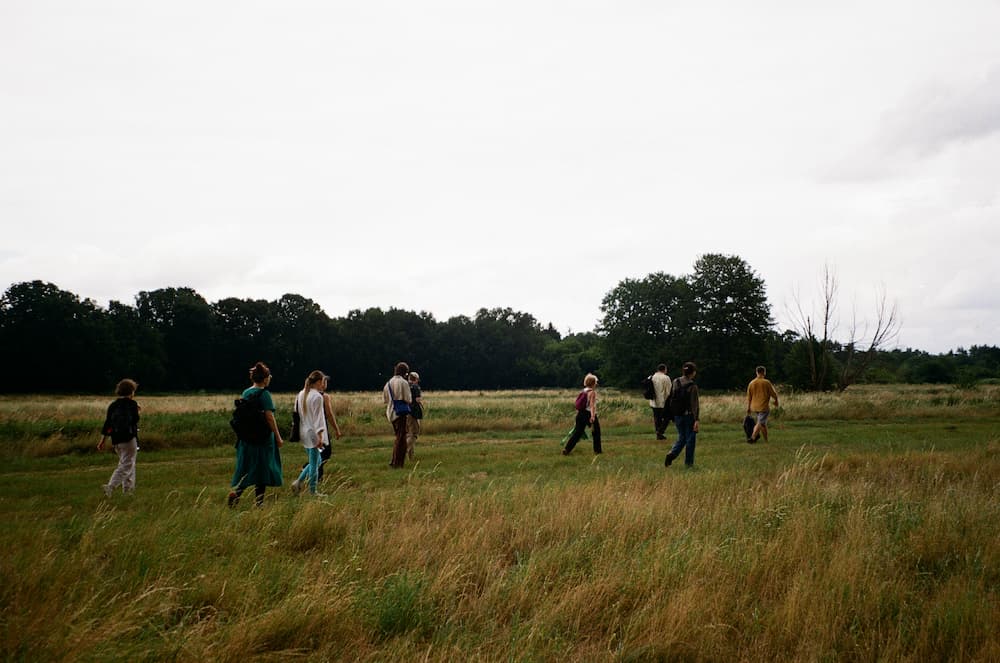
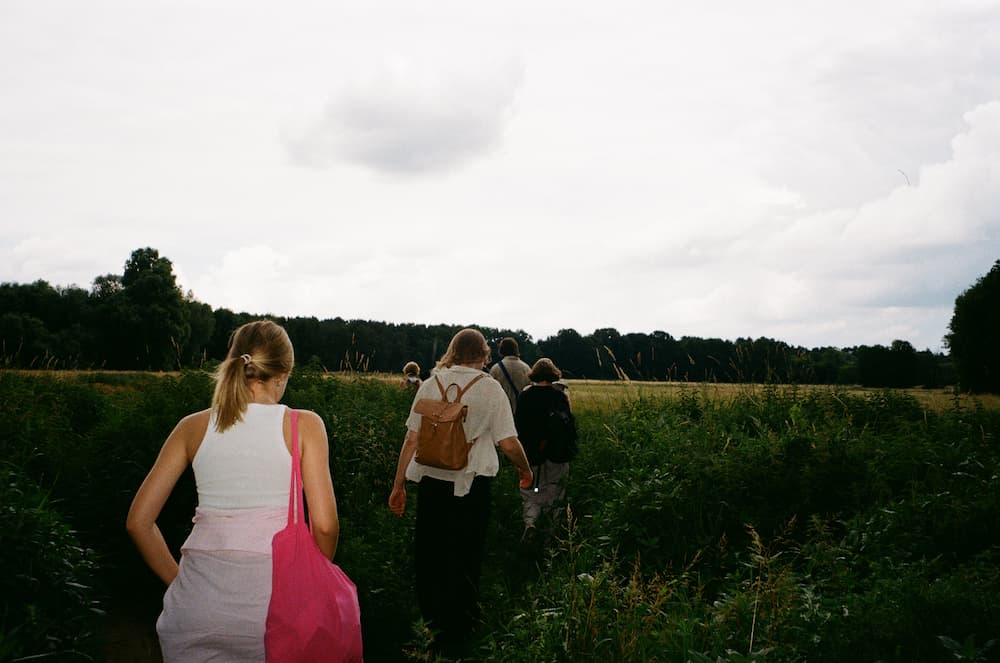
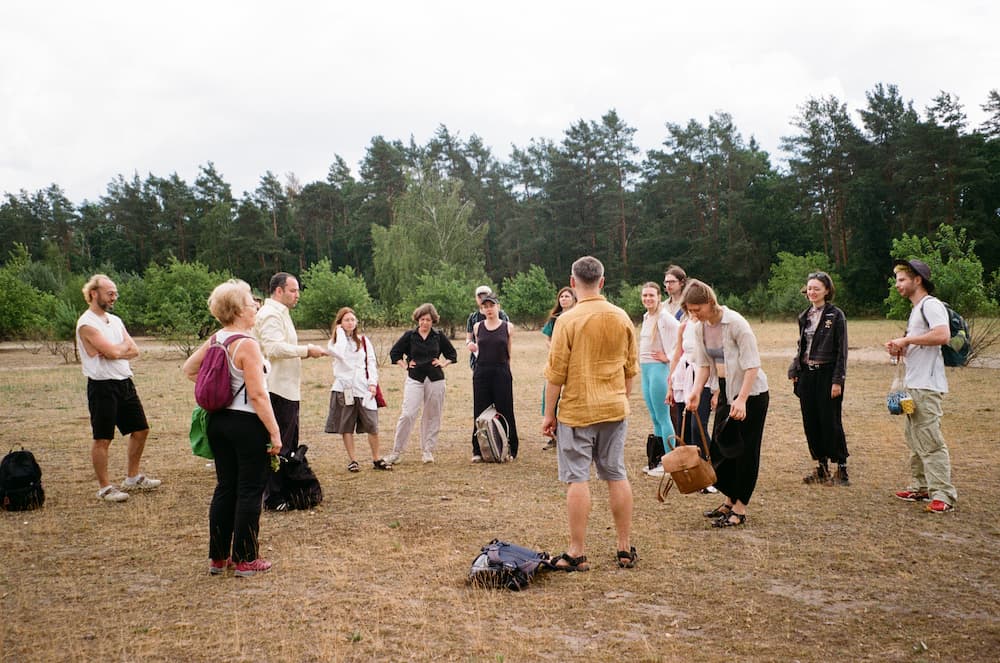
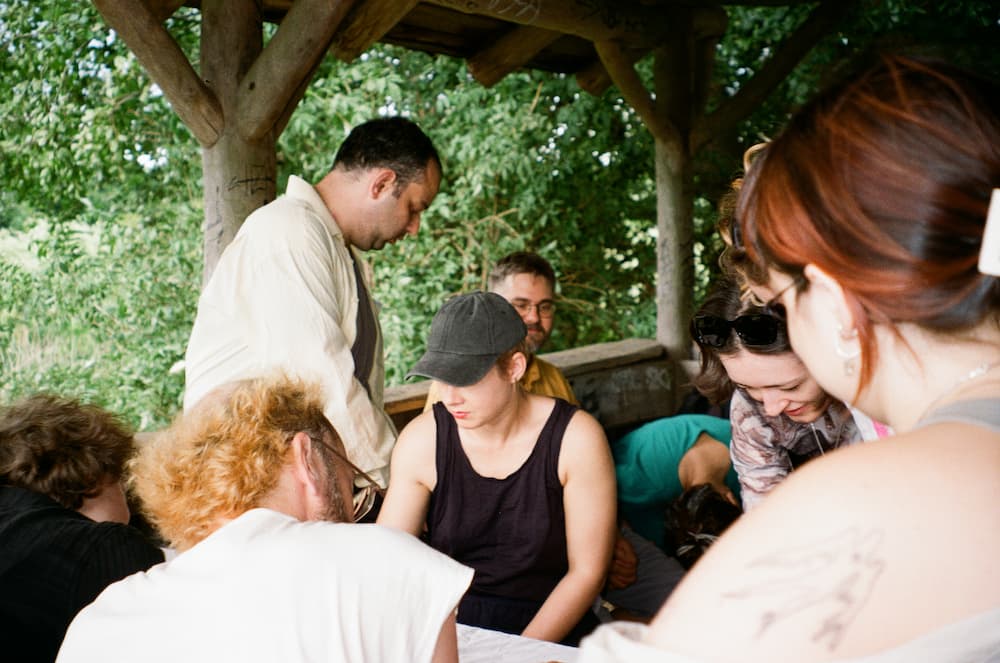
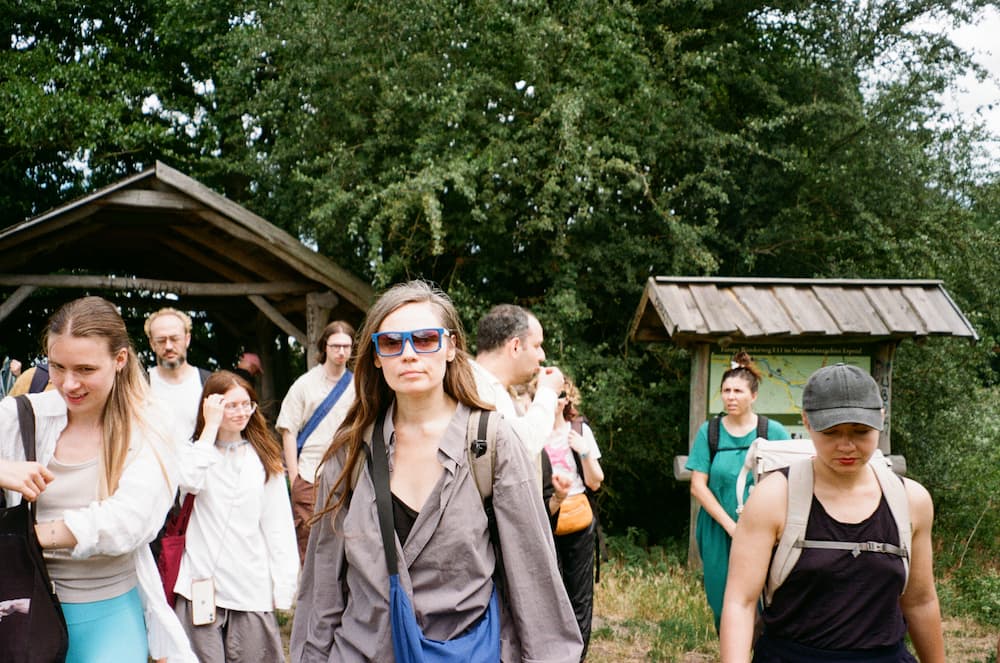
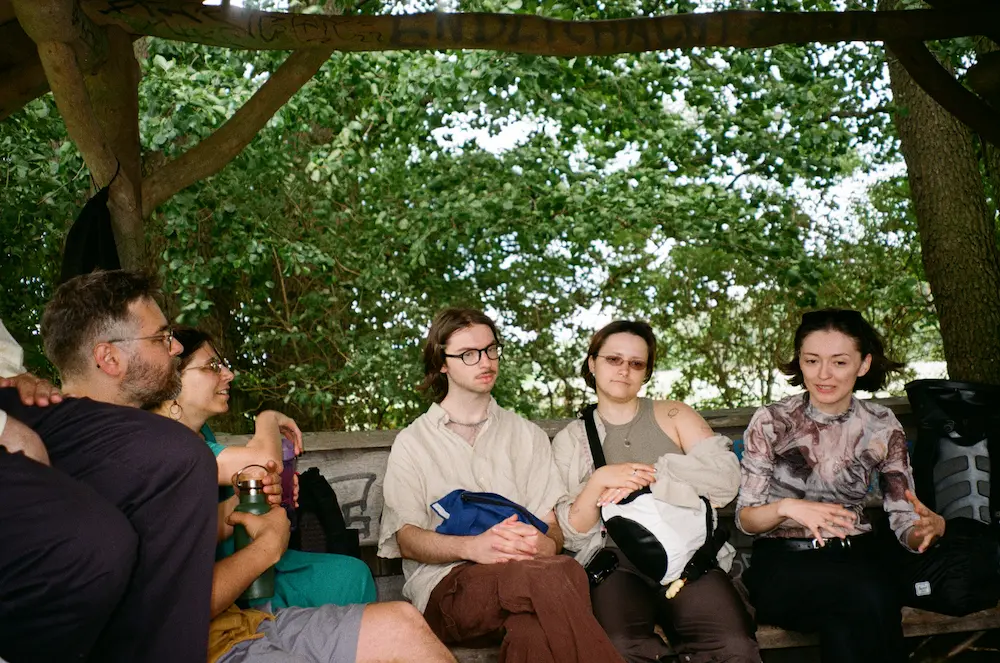
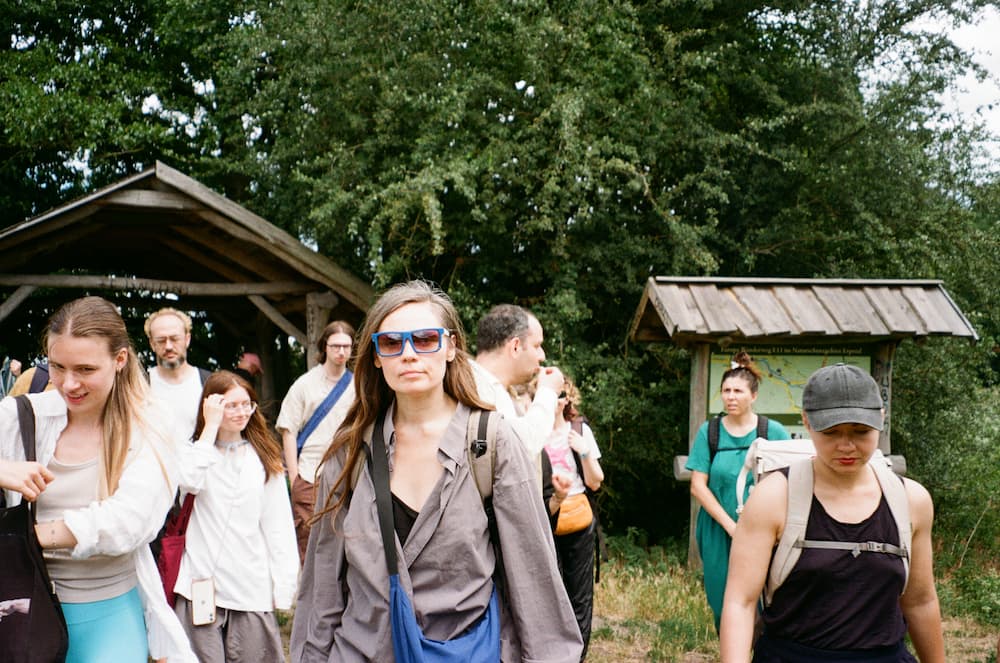
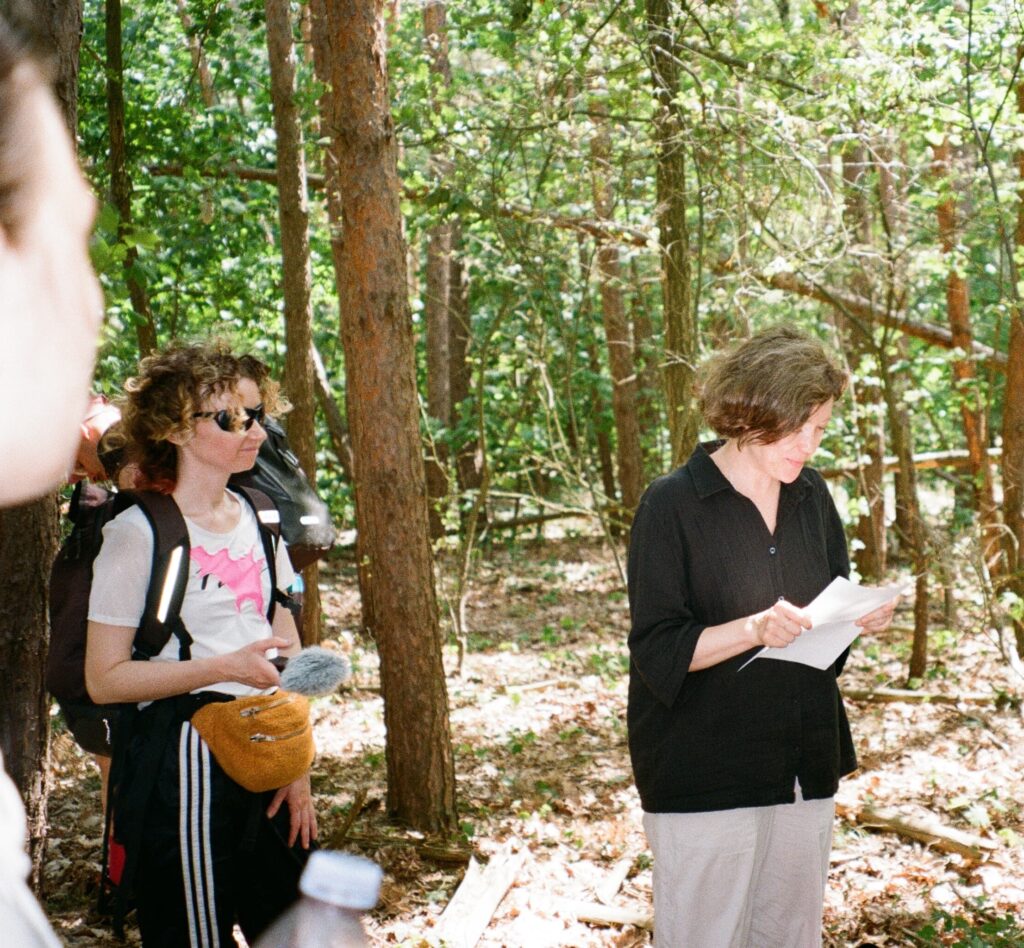
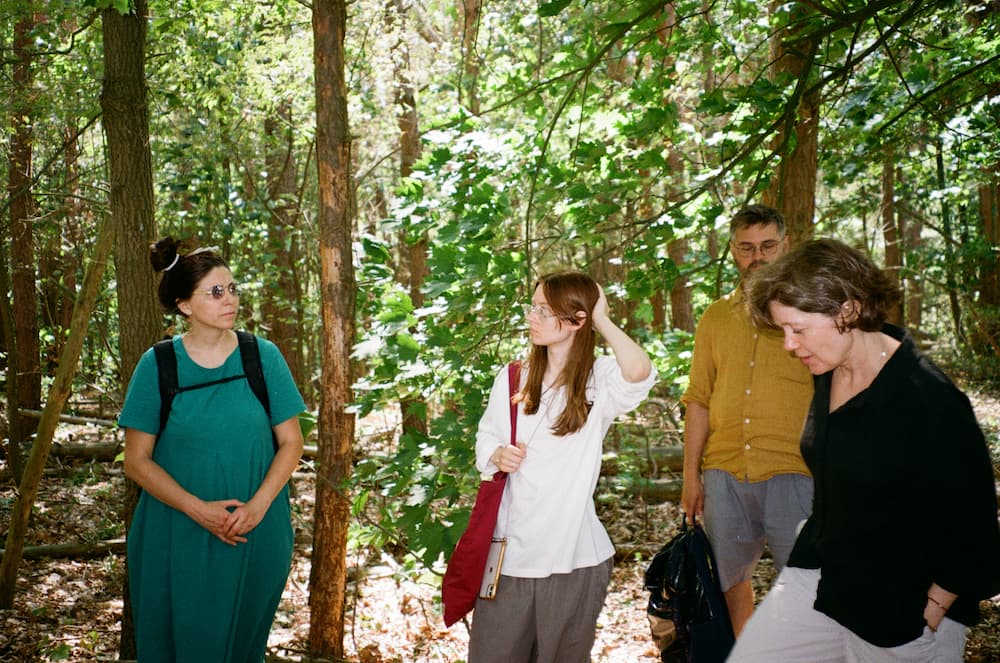
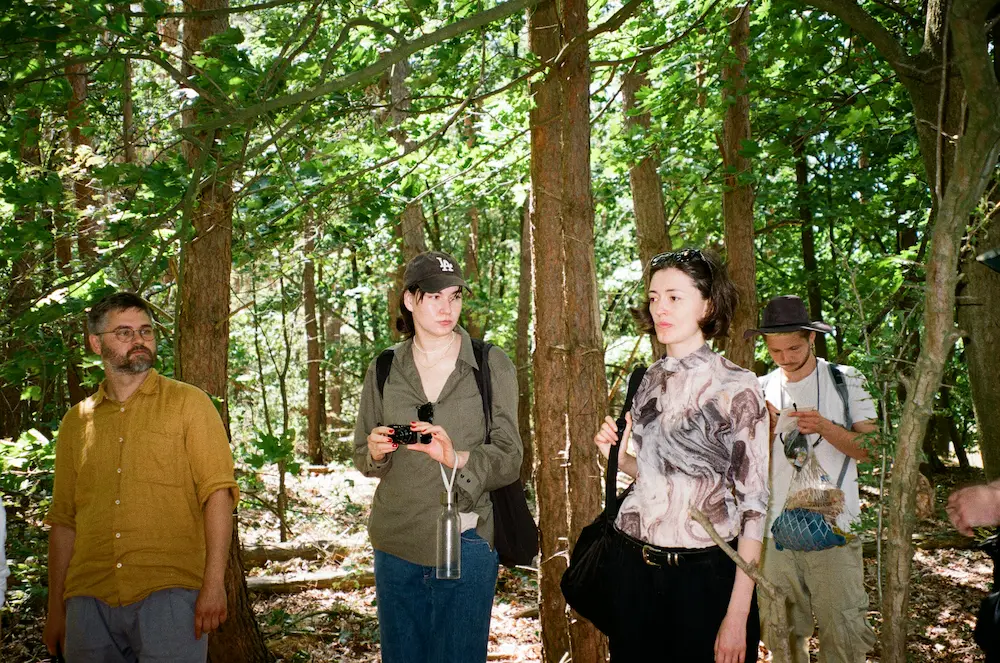
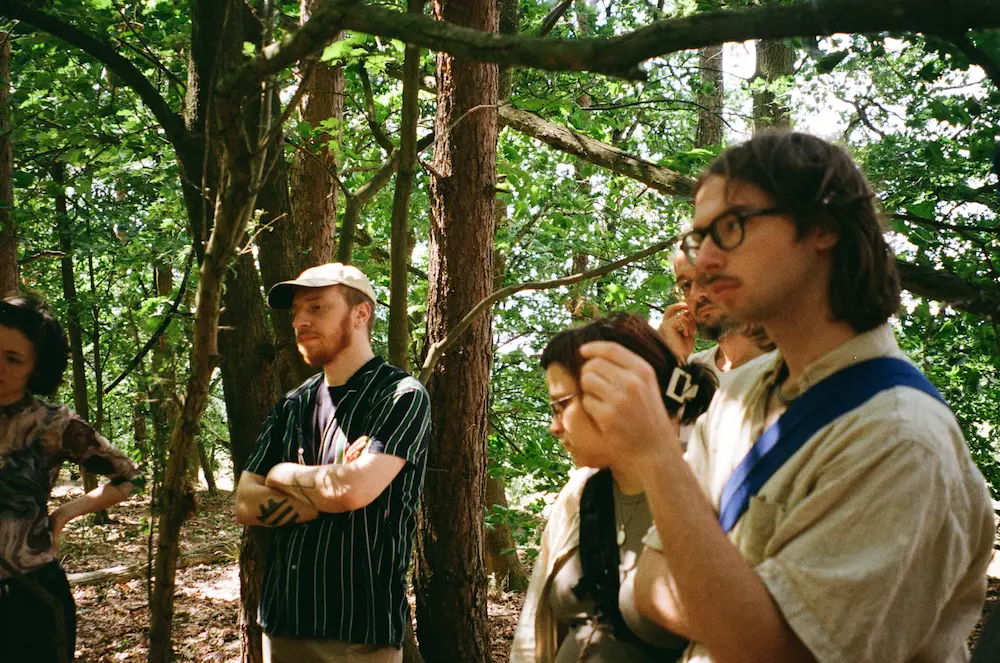
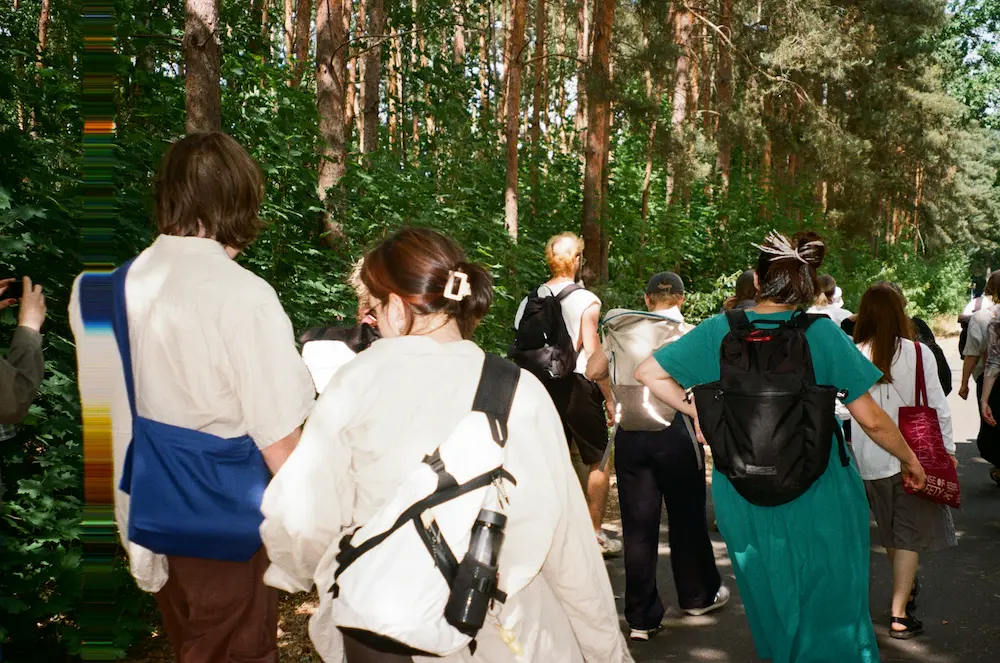
At 12:00, the participants of the Berlin group gathered near the watch repair shop U. Rödiger Uhrmacher (Schmausstraße 45, 12555 Berlin), next to the barrier marking the entrance to the forest. Harri Kraievets and Maksym Yaromlenko announced the rules of the walk: no mobile phones and no talking between stops. Tools were handed out: a film camera to Alina and a small notebook to Serhii to record events. One of the participants received a sealed Chinese envelope with an inscription that was to be read at exactly 1:15 p.m.
Two other groups set off at the same time as the Berlin group: one in Kyiv (Pushcha-Vodytsia) led by Teta Tsybulnyk, and one in Reading, England, led by Pavlo Kerestey. Harri Kraievets asked everyone to keep these two spaces in mind and try to head west. Harry Kraevets’ introductory text, ‘Antarctic Language,’ was read aloud. At 12:15 p.m., the group set off into the forest.
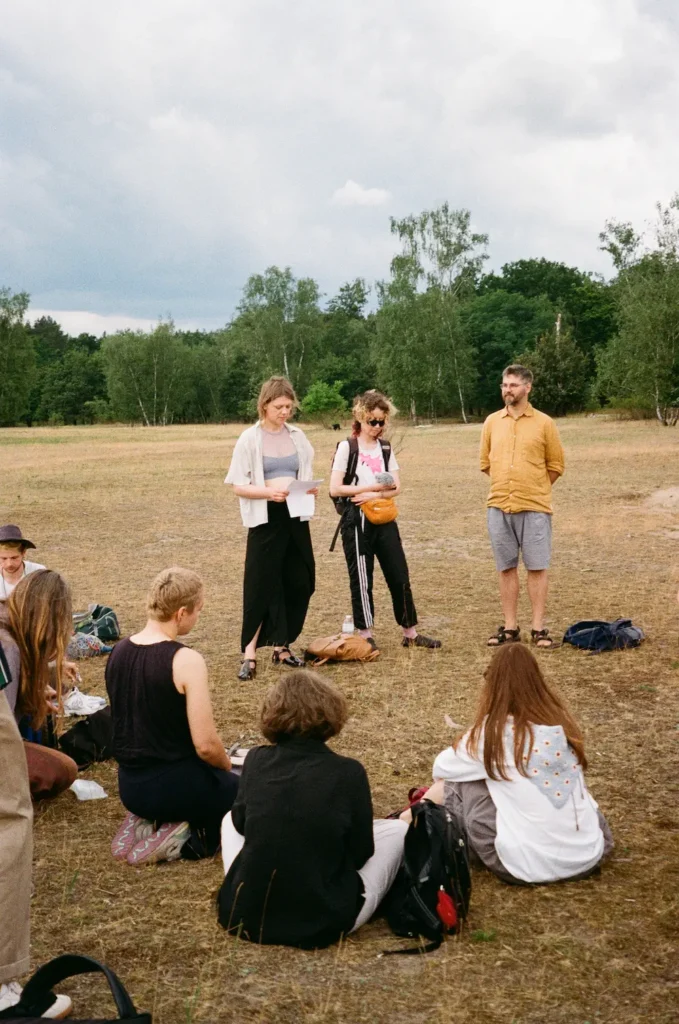
At 12:40 p.m., the first stop was made. Andriya read her text: ‘I am monolingual.’
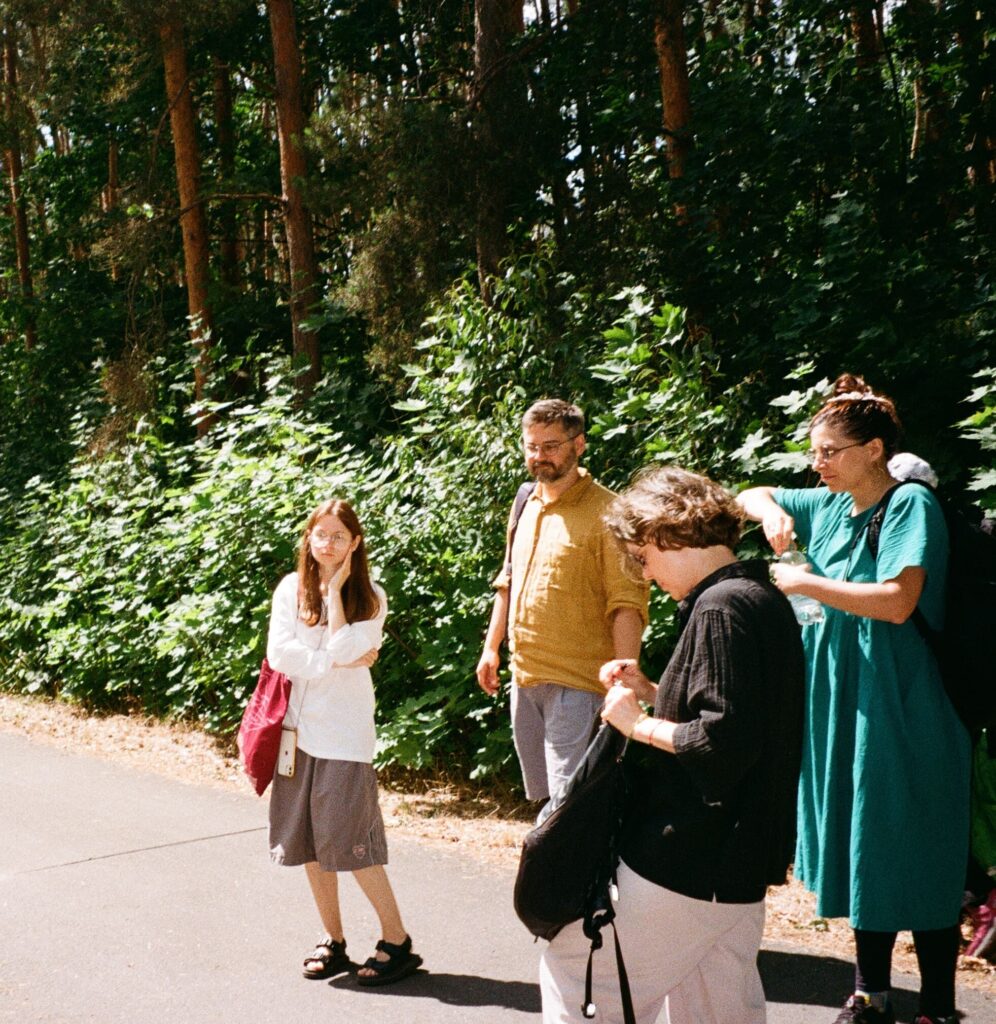
At 12:55 p.m., the group was warned that they would soon leave Berlin and find themselves in Brandenburg. At 12:58 p.m., the border was crossed.
The second stop took place at 1:15 p.m. A participant opened a Chinese envelope and read the inscription: The time has come, because there is no future.
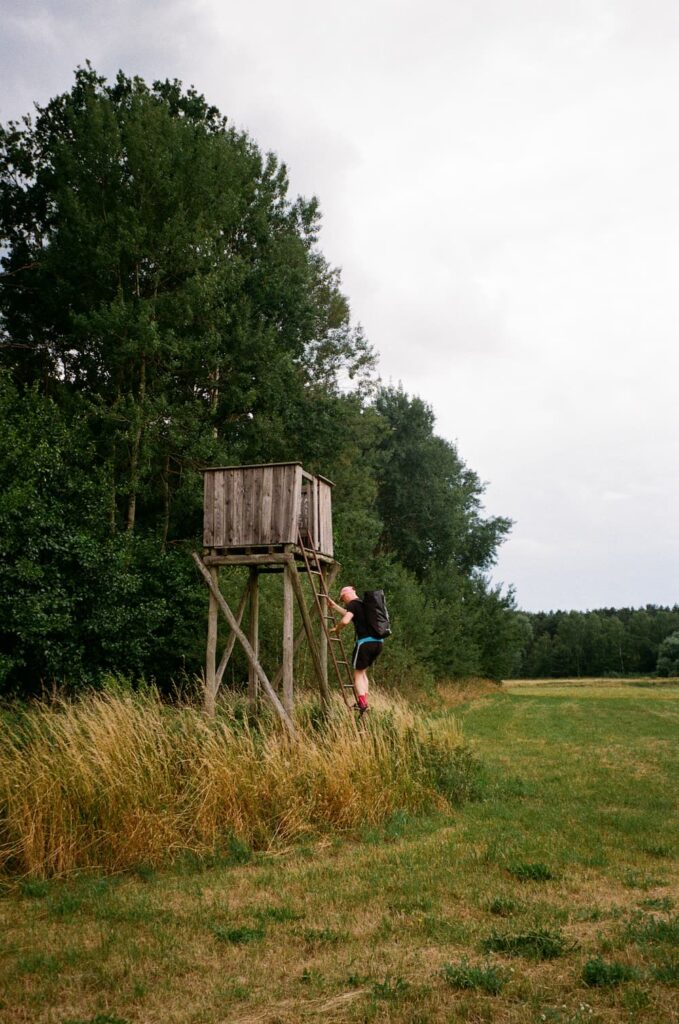
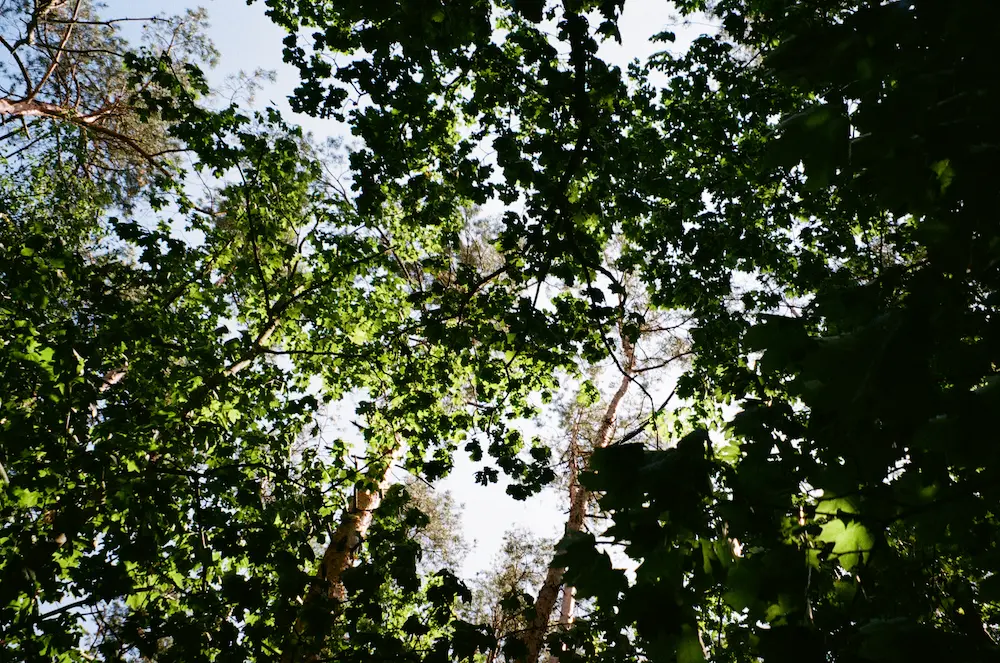
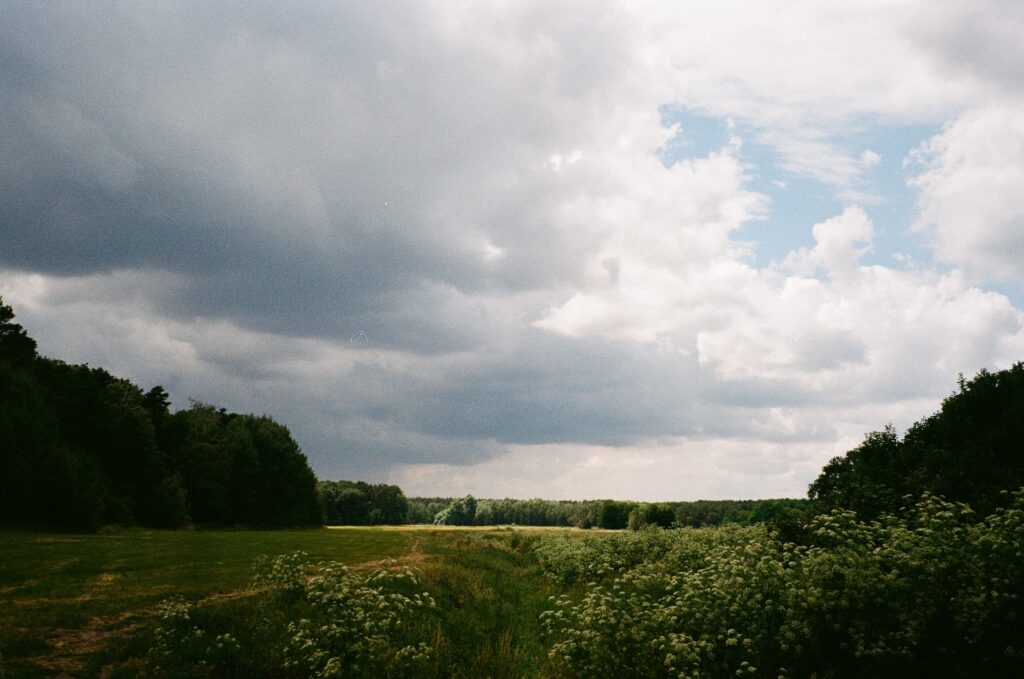
We continued our journey through the Das Naturschutzgebiet Erpetal nature reserve, located in the municipality of Hoppegarten, Märkisch-Oderland district, Brandenburg.
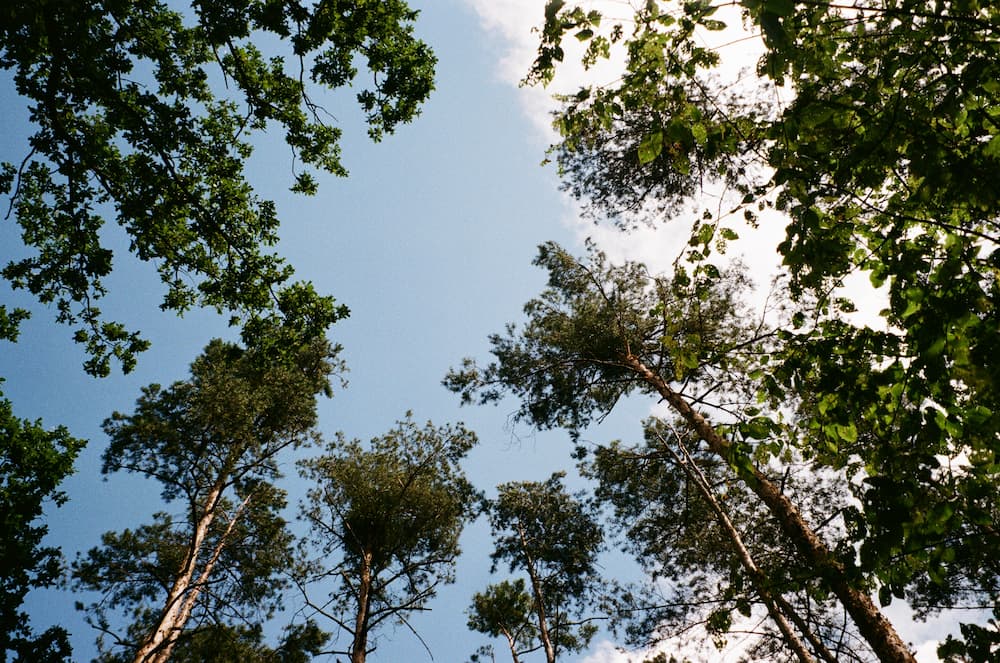
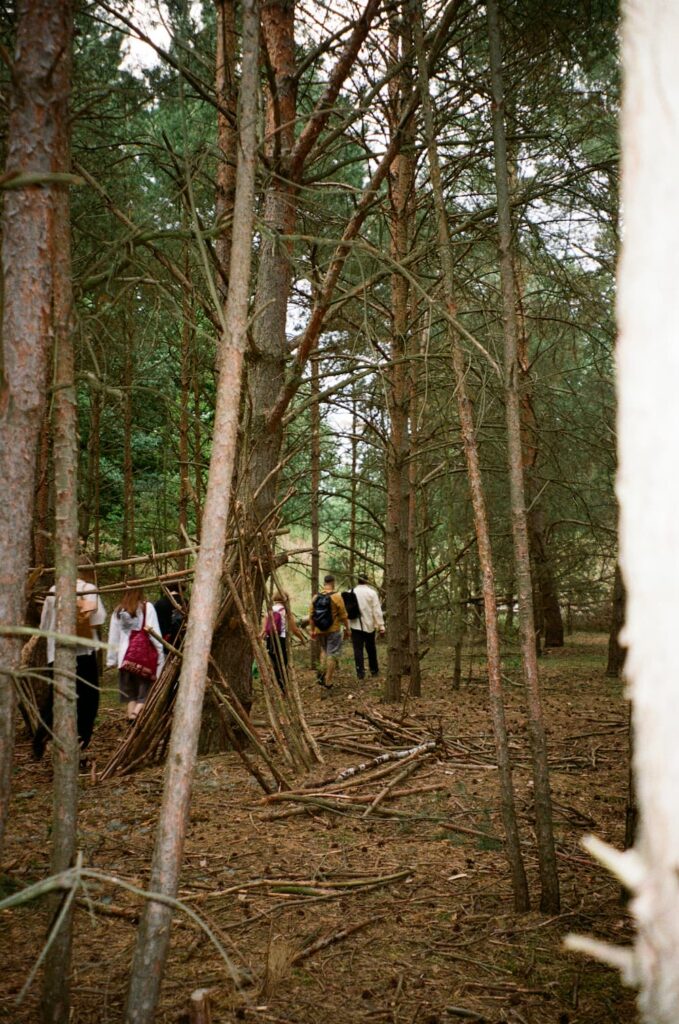
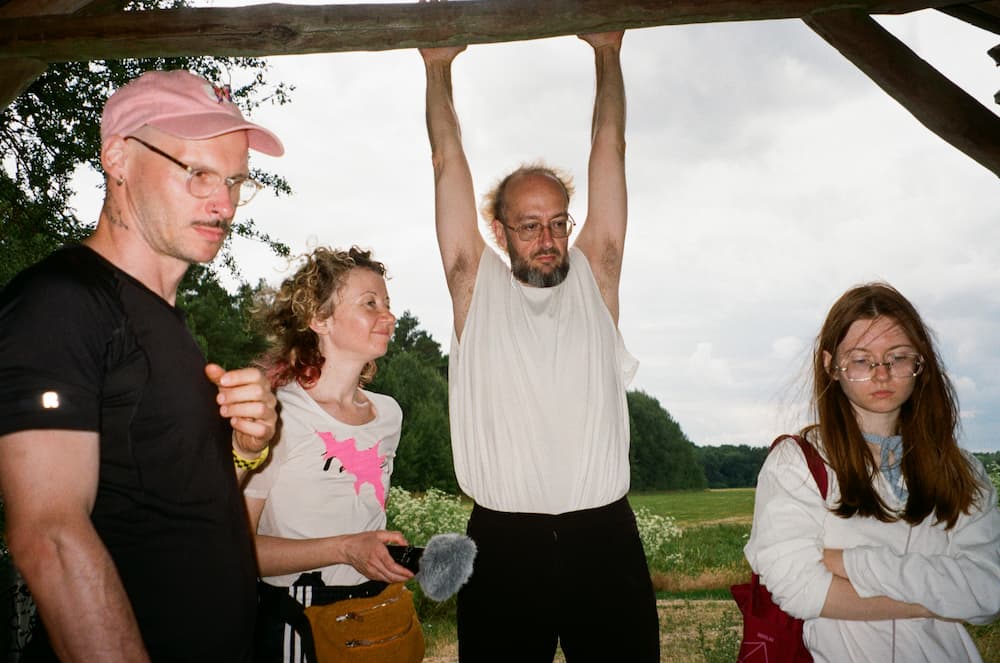
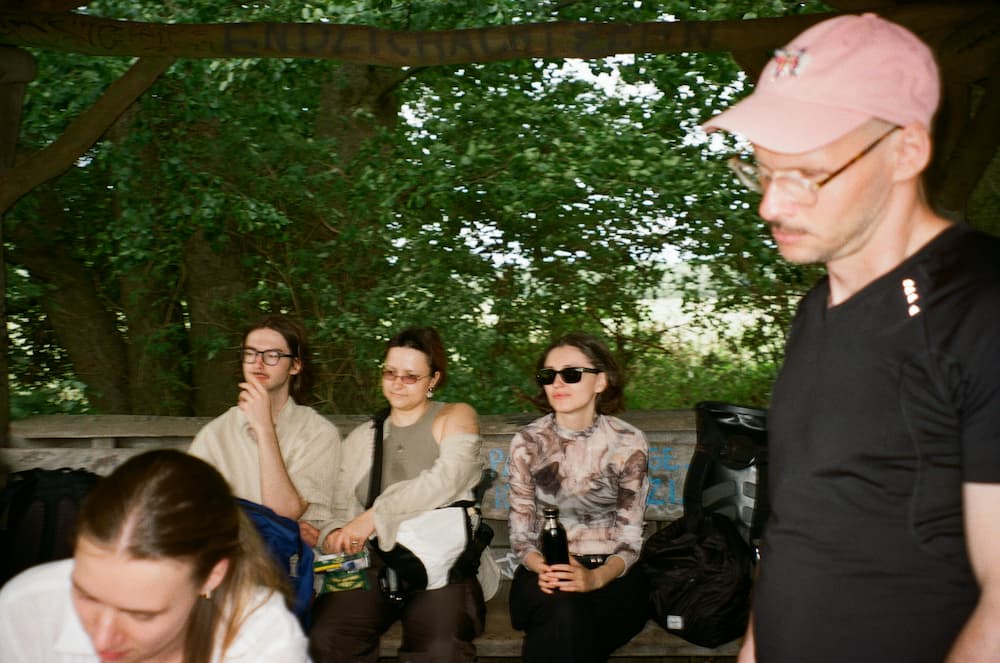
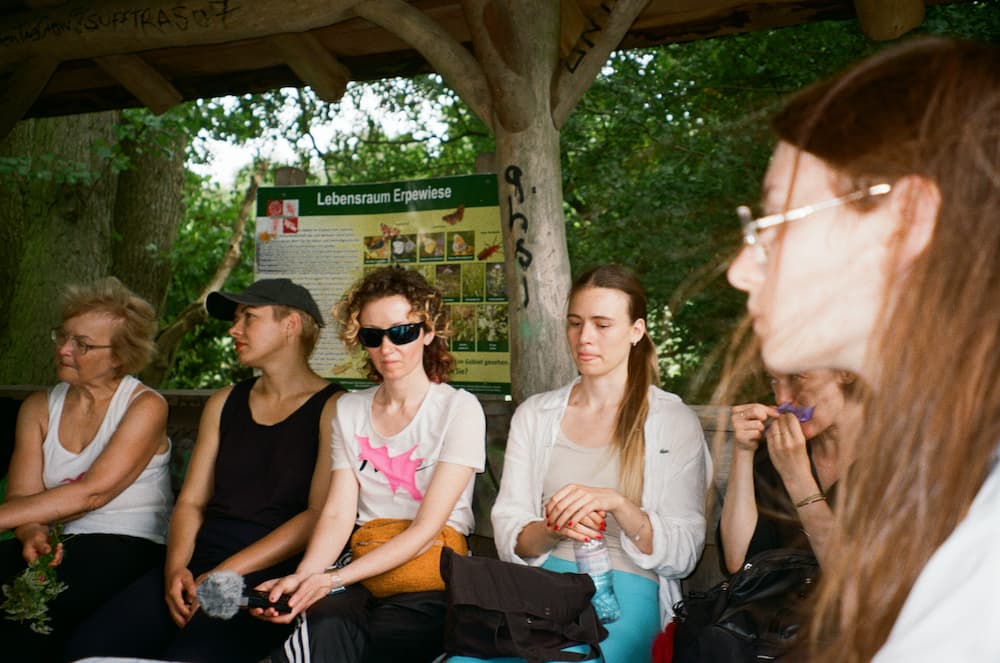
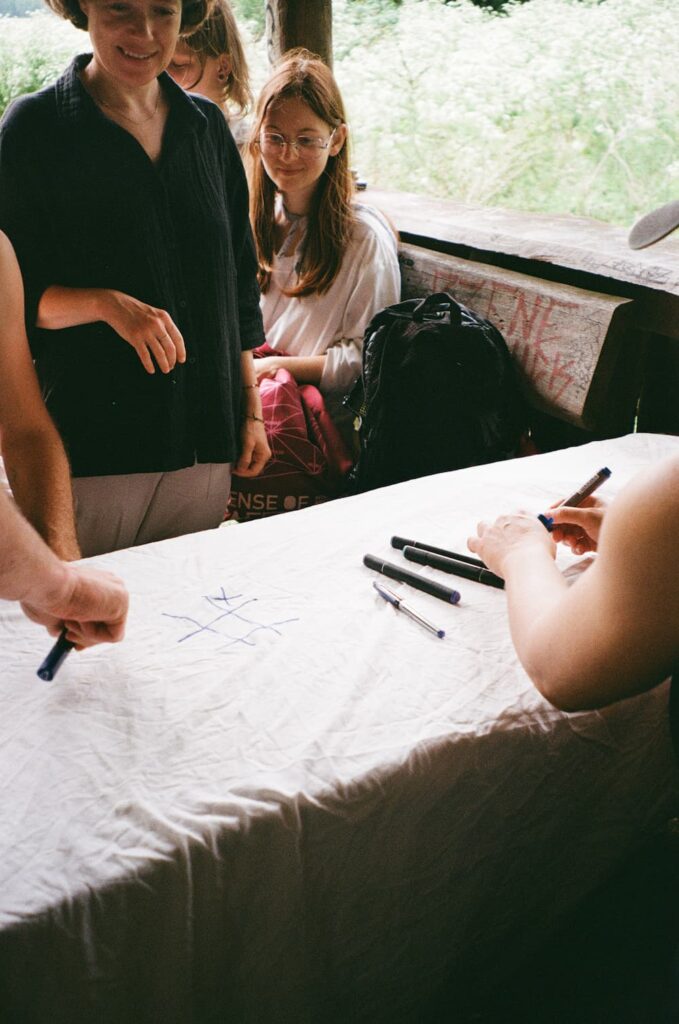
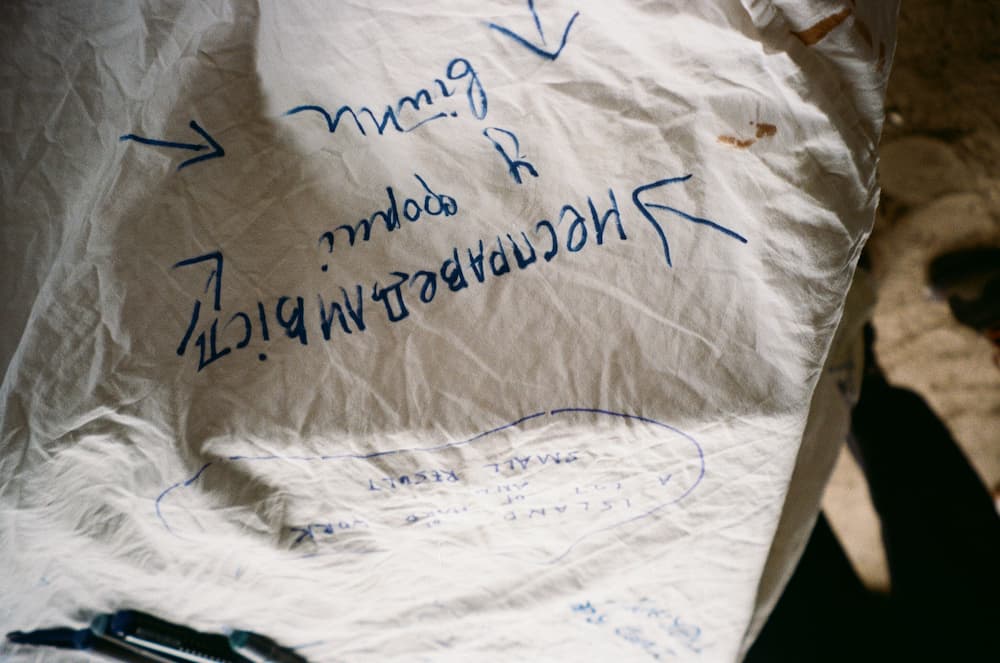
At the third stop, in a pavilion near a map of the reserve, the group was given blue and light blue markers, as well as a white sheet on which the participants created a ‘Map of Claims.’ The group walked along the edge of the forest and soon entered the thicket. Here, the fourth stop took place, at which Yevgeniya Belorusets read the text: ‘I am afraid of the approaching darkness.’ The fifth stop was in the middle of the forest, where the whole group silently thought about the other two groups for one minute.
After walking a little further, we made our sixth stop at 2:35 p.m. to practise singing together. This singing was supposed to start at 14:55 Berlin time, simultaneously with two other groups — in Kyiv and Reading — in the hope that they would also be on time and start singing with us: at 13:55 London time and 15:55 Kyiv time.
Maksym Yaromlenko rehearsed with the group and explained how to work with the score. Three sounds from German were used — Ä, ö, ü; three sounds from English — θθ, ðð, ww; and three from Ukrainian — ґ, і, г.
At 14:55, simultaneously with the groups in Kyiv (15:55) and London (13:55), the singing began. It lasted 5 minutes.
After singing together, the group set off to find a place to bury the letters and the seventh stop. The participants searched for a suitable place for about 15 minutes. Oleksandra Kadzevych found a place for the burial and put it to a vote. The location was chosen by joint vote — the vote was held twice. After choosing the location and preparing the holes, Tereza Yakovyna suggested that anyone who wanted to could say a final word for the letters. Several more participants joined in this ritual. Serhiy refused to bury the letters, preferring to burn them and scatter the ashes over the forest.
The last stop, the eighth, took place at 15:45. Here, Maksym Yaromlenko’s poem “In the world of evil” was read, and Valeria Broitman placed a statuette of Achilles on the ground, which she had received from Oleksandra Kadzevych during the walk — as a mark, as an intention to start the next walk from here.
Coordinates: 52°28’17.7‘N 13°38’38.2’E.
This marked the end of walk No. 4. Antarctica, drift, timecode and schizoanalysis.
Hosts: Harri Kraievets, Maksym Yaromlenko
Video documentation: Oleksandra Kadzevych
Participants: Seryozha Morzhov, Tereza Yakovyna, Yana Isaienko, Luk Polleit, Olha Sytnyk, Iryna Loskot, Alina Bolotskikh, Evgeniya Belorusets, Maryna Semenkova, Dzina and Kolja, Valeria Broytman, Andrėja Šaltytė, Anna Zinchenko, Ivan Oleksiak, Diego Agullo, Anna Zinchenko
Психоісторична подорож №4. Антарктида, дрейф, таймкод і шизоаналіз
29 червня 2025 року. Берлін.
О 12:00 учасники берлінської групи зібралися біля майстерні з ремонту годинників U. Rödiger Uhrmacher (Schmausstraße 45, 12555 Berlin), поруч зі шлагбаумом, що позначає вхід до лісу. Гаррі Краєвець і Максим Яромленко озвучили правила прогулянки: не користуватися мобільними телефонами та не розмовляти між зупинками. Були роздані інструменти: плівковий фотоапарат — Аліні, маленький блокнот — Серьожі, для фіксації подій. Одна з учасниць отримала запечатаний китайський конверт з написом, який слід було прочитати рівно о 13:15.
Одночасно з берлінською групою вирушили ще дві: у Києві (Пуща-Водиця) під керівництвом Teta Tsybulnyk та в англійському Редінгу Pavlo Kerestey. Гаррі Краєвець попросив усіх тримати в голові ці два простори та намагатися йти на захід. Було зачитано вступний текст Гаррі Краєвця “Антарктична мова”. О 12:15 група рушила в ліс.
О 12:40 — перша зупинка. Андрея прочитала свій текст: «я Одномовна».
О 12:55 групу попередили, що незабаром вони покинуть межі Берліна й опиняться у Бранденбурзі. О 12:58 було перетнуто кордон.
Друга зупинка відбулася о 13:15. Учасниця розпечатала китайський конверт і зачитала напис: час прийшов, бо майбутнього не існує.
Ми продовжили рух територією природоохоронної зони Das Naturschutzgebiet Erpetal, що розташована в громаді Гоппегартен, район Märkisch-Oderland, Бранденбург.
На зупинці в альтанці (третя) біля карти заповідника групі було роздано сині та блакитні фломастери, а також біле простирадло, на якому учасники створили «Карту Претензій». Група пройшла вздовж узлісся й невдовзі заглибилася в хащі. Тут відбулася четверта зупинка, на якій Євгенія Бєлорусець прочитала текст: «Я боюсь насування темряви». П’ята зупинка була посеред лісу, де вся група мовчки думала про дві інші групи протягом однієї хвилини.
Пройшовши ще трохи, ми зробили шосту зупинку — для тренування спільного співу звуків — о 14:35. Цей спів мав розпочатися о 14:55 за берлінським часом одночасно з двома іншими групами — в Києві та Редінгу, з надією, що вони теж встигли вчасно й почали співати разом з нами: о 13:55 за лондонським часом і 15:55 за київським.
Максим Яромленко провів з групою репетицію й пояснив, як працювати з партитурою. Використовувалися три звуки з німецької мови — Ä, ö, ü; три звуки з англійської — θθ, ðð, ww; і три з української — ґ, і, г.
О 14:55, одночасно з групами в Києві (15:55) та Лондоні (13:55), розпочався спів. Він тривав 5 хвилин.
Після спільного співу група рушила шукати місце для поховання літер і сьомої зупинки. Приблизно 15 хвилин учасники шукали відповідне місце. Олександра Кадзевич знайшла місце для поховання та запропонувала на голосування. Шляхом спільного голосування було обрано місце — голосування проводилося двічі. Після вибору місця й підготовки ямок Тереза Яковина запропонувала: кожен, хто хоче, може сказати останнє слово для літер. До цього ритуалу долучилися ще кілька учасників. Сергій відмовився ховати літери, віддавши перевагу їх спаленню та розвіюванню попелу над лісом.
Остання зупинка, восьма, відбулася о 15:45. Тут було зачитано вірш Максима Яромленка “In the world of evil”, а Валерія Бройтман встановила на землю статуетку Ахілеса, яку їй під час прогулянки передала Олександра Кадзевич — як мітку, як намір розпочати наступну прогулянку саме звідси.
Координати: 52°28’17.7″N 13°38’38.2″E.
На цьому було оголошено завершення прогулянки №4. Antarctica, drift, timecode and schizoanalysis.
Ведучі: Гаррі Краєвець, Максим Яромленко
Відео-документація: Олександра Кадзевич
Учасники: Seryozha Morzhov, Tereza Yakovyna, Yana Isaienko, Luk Polleit, Olha Sytnyk, Ірина Лоскот, Аліна Болотських, Евгения Белорусец, Maryna Semenkova, Dzina and Kolja, Valeria Broytman, Andrėja Šaltytė, Anna Zinchenko,Іван Олексяк, Diego Agullo, Anna Zinchenko
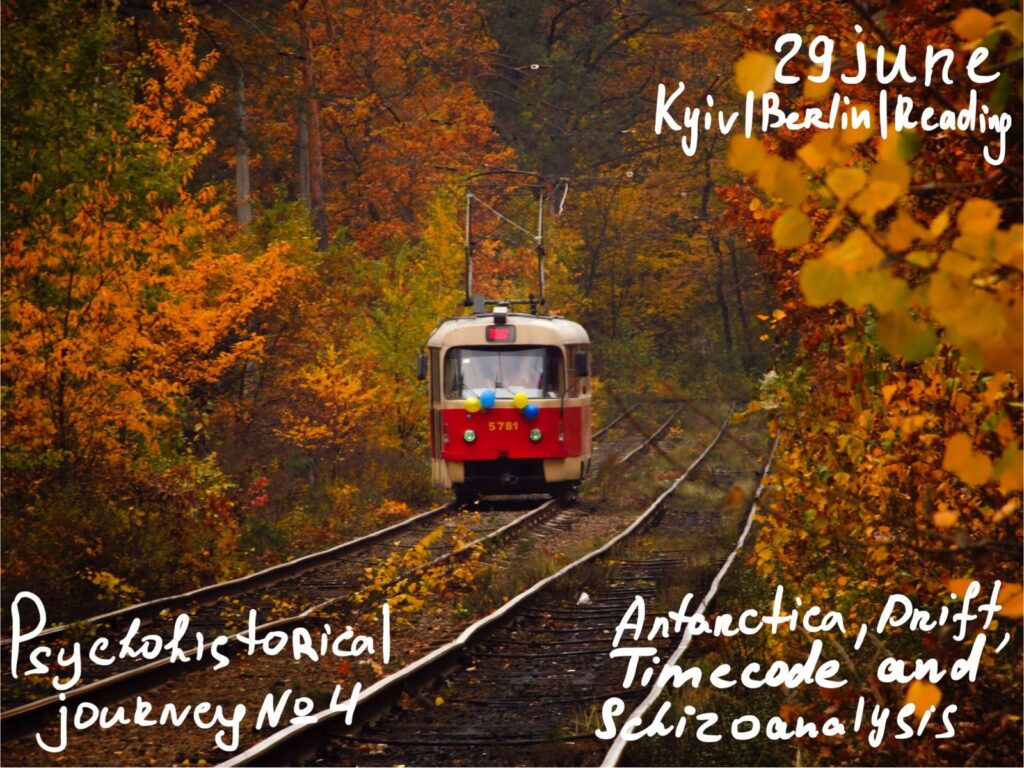
Documentation of the Berlin journey
Documentation of the Kyiv journey
Documentation of the Reading journey
On 29 June 2025, at 12:00 Berlin time, three groups started a synchronised psychohistorical journey in different cities: in Berlin (Mittelheide) led by Harri Kraievets, in Kyiv (Pushcha-Vodytsia) with Teta Tsybulnyk, and in Reading (Lousehill Copse, Great Britain) with Pavlo Kerestei.
The groups started simultaneously, each in their own time zone, but all oriented in a common spatial vector — towards the West. Participants had to keep in mind the spaces of the other groups, as if walking through three landscapes at once.
The journey was built around the concept of Antarctica — the last territory on Earth that is collectively managed by scientists. This image served as an imaginary backdrop and framework for reflections on alternative forms of community, language, and memory.
At 14:55 Berlin time (13:55 in London and 15:55 in Kyiv), the groups found a way to connect without using modern means of communication — singing simultaneously from a pre-written score, which became an act of intuitive synchronisation and a temporary merging in a shared choral gesture.
Each group developed its own form of research:
Kyiv — through practices of free association, collective dreaming, psychotic speech, and sound improvisation — participants explored the unconscious landscape of Pushcha-Vodytsia.
Berlin — immersion in psychohistorical texts, schizoanalytic practices, and bodily liberation from the shackles of language, a shared imaginary space was constructed.
Reading — through the collection of words, gestures, and fragments that speak for untold stories, a temporary mosaic installation was created in the forest.
During the trip, various methods of documentation were used: note-taking, plant collecting, analogue photography, sound recording, and video recording. A week after the event, at the same time, each group discussed their experiences.
The result of three psychohistorical journeys became a video work:
«Phonopedic exercises for the regeneration of Antarctic fauna».
Ukrainians’ text below↓
The group gathered at Neuhelgoländer Weg 9, 12559 Berlin (https://goo.gl/maps/5jaxjL2YZLAQXS6B9) in the parking lot at 11:00 AM.
Harri Kraievets announced the rules of the walk: mobile phones were prohibited and talking was forbidden outside of designated activities. Participants could stop participating at any moment. The importance of water consumption throughout the route was emphasized.
First Stop. Working with markers.The group spontaneously formed a circle and began passing markers to each other. Gradually, participants were chaotically eliminated from the game by the facilitators and had their markers taken away. The last participant was also deprived of their marker, completing this part of the ritual.
Second Stop. In the invitation to the walk, participants were told to bring a pumpkin, but the purpose was not revealed. After the group gathered, everyone had to find an arbitrary stick and carry it throughout the route. Then began the search for a place to bury the pumpkins.
Third Stop. Searching for a place to dig. The group collectively searched for a suitable location. The first three or four location proposals were rejected, after which the facilitators imposed their own choice. The group rejected it. Participants could not reach agreement on a suitable location for a long time, which caused significant stress and tension. The uncertainty of choice and the symbolic nature of the future burial of the pumpkin in the ground created psychological pressure. Eventually, the group decided to resort to collective divination using Tarot cards to make a decision about the place of ritual burial.
At the chosen location, participants were given time to bury their pumpkins. Those who did not manage to complete the burial ritual lost their pumpkins—they were taken by the facilitators. The next day, these pumpkins could be brought and placed in the center of the circle.
Fourth Stop. Exit to the lake.The group chose two participants: one to read a scientific text, another to read a text about Kai. Collective listening to the texts took place on the shore of the water body.
Fifth Stop. Field, second lake.The culminating part of the walk: participants had to arbitrarily choose someone from the group and ask for their forgiveness, explaining the reasons. It was necessary to name at least three motives: conscious, subconscious, and «true» unconscious. This practice created space for deep group catharsis and reflection on hidden relationship dynamics.
The walk concluded at the second lake, where the group spent time in silent reflection on the path traveled and the internal processes that occurred during the ritual passage through the glacial valley.
Duration of the walk: 4 hours.
Conductors: Harri Kraievets, Maxim Yarmolenko
The Berlin Glacial Valley, part of the Warsaw-Berlin Glacial Valley, was formed at the end of the last ice age approximately 18,000 years ago. It served as a spillway for meltwater from internal ice during the Frankfurt ice margin period. The valley trajectory extends from Eisenhüttenstadt through Berlin to Friesack, where it connects with the Eberswalde Glacial Valley.
The valley consists of powerful sands over 20 meters high that serve as groundwater reservoirs. During the Weichselian glacier, many ice blocks formed, which melted and today form lakes and swamps—Müggel, Tegel. In the Middle Ages, ice valleys were natural transportation obstacles; merchants chose narrow places for crossing, where they founded cities like Cologne and Berlin.
Start at 11:00 AM. Address: galerie weisser elefant (Auguststraße 21, 10117 Berlin).
The second day took place in the format of a classical psychoanalytic group, in which there was an opportunity to reflect on the new experience lived through in the psychohistorical journey, as well as to explore revealed gaps in old movement patterns. Group work helped notice around which repetitive actions anxiety focuses and how it transforms under the influence of the local group.
The walk revealed the fundamental paradox of the Glacial Valley: at the moment of attempting to perceive it as it is in itself—beyond symbolic distortions—the ice evaporates into nothingness. This Ice paradox involves temporal feedback: the cause does not exist before its consequences, but is retroactively established by them through repetition and echoes in the structure of the signified.
The ritual with pumpkins and sticks revealed the impossibility of a direct approach to the traumatic core. If one tries to understand the Glacial Valley directly, independently of its subsequent consequences, only a meaningless factum brutum remains—a crude fact that has no direct impact on the psyche. Only through echoes in the symbolic structure does this fact retroactively acquire an Icy character and become a Cause.
The final forgiveness ritual at the second lake allowed participants to experience this retroactive establishment of trauma through three levels: conscious, subconscious, and unconscious—where the latter proves to be the true place of the Glacial cause.
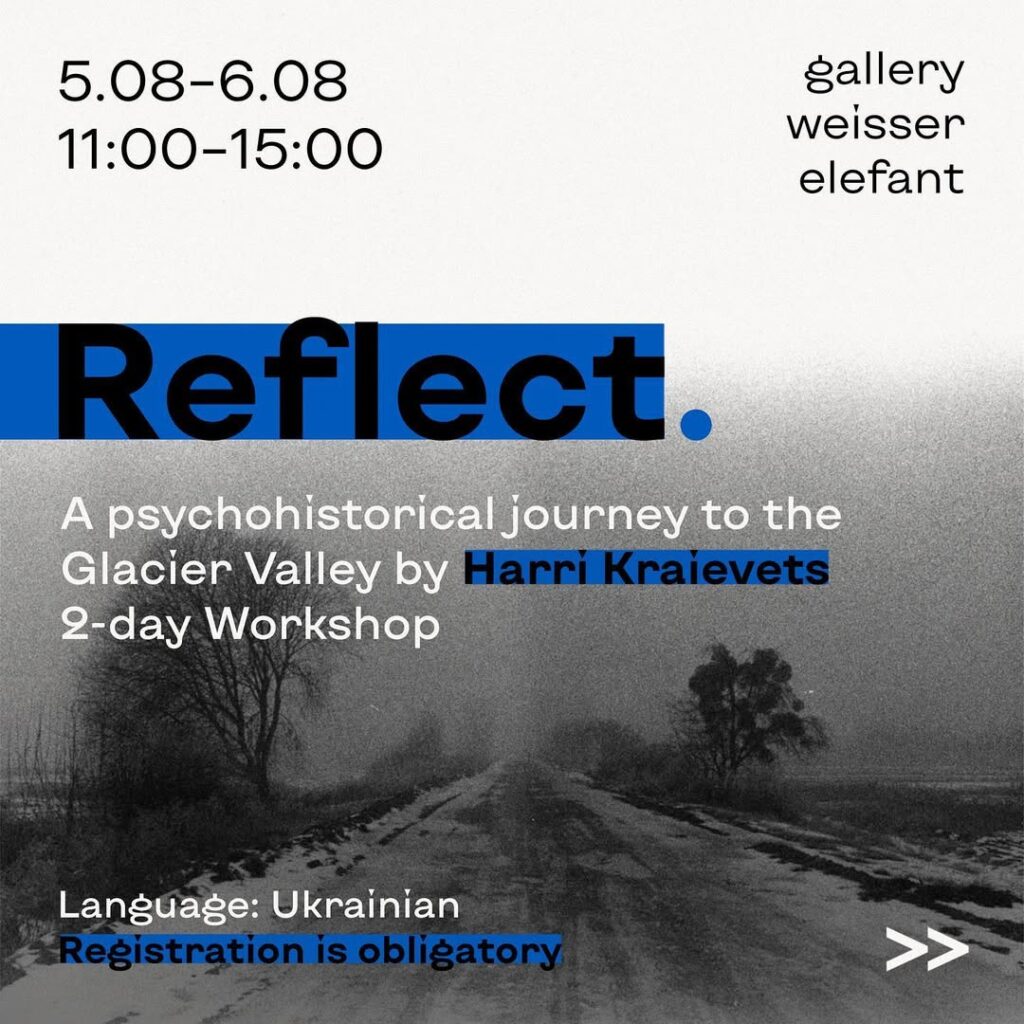
Психоісторична подорож №2 Подорож до Льодовиковій долині
5.08-6.08.2023, Берлін
Група зібралася за адресою Neuhelgoländer Weg 9, 12559 Berlin (https://goo.gl/maps/5jaxjL2YZLAQXS6B9) на парковці о 11:00.
Гаррі Краєвець оголосив правила прогулянки: заборонено користуватися мобільними телефонами та розмовляти поза межами визначених дій. Учасники могли в будь-який момент припинити участь. Було наголошено на важливості споживання води протягом маршруту.
Перша зупинка. Робота з маркерами. Група довільно утворила коло і розпочала роздавання маркерів один одному. Поступово учасники хаотично виключалися з гри ведучими та в учасників забирали маркер. Останнього учасника також позбавили маркера, завершивши цю частину ритуалу.
Друга зупинка. У запрошенні на прогулянку учасникам було сказано взяти з собою гарбуз, але мета не розкривалася. Після збору групи кожен мав знайти довільну палицю й нести її протягом маршруту. Далі розпочався пошук місця для закопування гарбузів.
Третя зупинка. Пошук місця для копання. Група спільно шукала підходящу локацію. Перші три-чотири пропозиції щодо місця були відхилені, після чого ведучі нав’язали власний вибір. Група його відхилила.Учасники не могли довго дійти згоди щодо підходящої локації, що спричинило значний стрес і напруження. Невизначеність вибору та символічна природа майбутнього поховання гарбуза в землю створили психологічний тиск. Зрештою група вирішила вдатися до колективного ворожіння на картах Таро, щоб прийняти рішення про місце ритуального поховання.
На обраному місці учасникам було надано час для закопування своїх гарбузів. Ті, хто не встиг завершити ритуал закопування, втрачали свої гарбузи — їх забирали ведучі. Наступного дня ці гарбузи могли бути принесені й покладені в центр кола.
Четверта зупинка.Вихід до озера. Група обрала двох учасників: одного для читання наукового тексту, іншого — для читання тексту про Кая. Відбулося колективне прослуховування текстів на березі водойми.
П’ята зупинка. Поле, друге озеро. Кульмінаційна частина прогулянки: учасники мали довільно обрати когось із групи і попросити в нього прощення, пояснивши причини. Необхідно було назвати мінімум три мотиви: свідомий, підсвідомий і «справжній» несвідомий. Ця практика створила простір для глибокого групового катарсису та рефлексії над прихованими динаміками взаємин.
Прогулянка завершилася біля другого озера, де група провела час у мовчазній рефлексії над пройденим шляхом та внутрішніми процесами, що відбулися протягом ритуального переходу через льодовикову долину.
Тривалість прогулянки: 4 години.
Ведучі: Гаррі Краєвець, Максим Ярмоленко
Історична довідка: Берлінська льодовикова долина, частина Варшавсько-Берлінської льодовикової долини, сформувалася наприкінці останнього льодового періоду близько 18 000 років тому. Вона слугувала водозливною доріжкою для талої води внутрішнього льоду в період Франкфуртського краю льоду. Траєкторія долини простягається від Айзенгюттенштадту через Берлін до Фрізака, де з’єднується з Еберсвальдською льодовиковою долиною.
Долина складається з потужних пісків висотою понад 20 метрів, що служать резервуарами підземних вод. Під час Вейсельського льодовика утворилося багато трупців льоду, які відтанули й сьогодні формують озера та болота — Мюггель, Тегель. У Середньовіччі льодові долини були природними перешкодами для транспорту; торговці обирали вузькі місця для переправи, де й заснували міста Кёльн та Берлін.
Другий день
Початок о 11:00. Адреса: galerie weisser elefant (Auguststraße 21, 10117 Berlin).
Другий день відбувався у форматі класичної психоаналітичної групи, в якій була можливість відрефлексувати новий досвід, пережитий у психоісторичній мандрівці, а також дослідити виявлені розриви у своїх старих рухових паттернах. Робота в групі допомогла помітити, навколо яких повторюваних дій фокусується тривога і як вона трансформується під впливом локальної групи.
Спільний висновок групи:
Прогулянка розкрила фундаментальний парадокс Льодовикової долини: у момент спроби сприйняти її такою, якою вона є в самій собі — поза символічними спотвореннями — лід випаровується у нікуда. Цей парадокс Льоду передбачає часовий зворотний зв’язок: причина не існує перед своїми наслідками, а ретроактивно встановлюється ними через повторення та відгомони в структурі означуваного.
Ритуал з гарбузами та палицями виявив неможливість прямого підходу до травматичного ядра. Якщо намагатися розібратися у Льодовиковій долині безпосередньо, незалежно від її подальших наслідків, залишається лише безглуздий factum brutum — грубий факт, який не має прямого впливу на психіку. Лише за відгомонами в символічній структурі цей факт ретроактивно набуває Льодяного характеру і стає Причиною.
Кінцевий ритуал прощення біля другого озера дозволив учасникам пережити це ретроактивне встановлення травми через три рівні: свідомий, підсвідомий і несвідомий — де останній виявляється справжнім місцем Льодовикової причини.
Together with five participants of the Zwischenstopp* project, a psychohistorical journey was organized. The participants were already familiar with each other through monthly two-day (three-hour) group therapy sessions held at a psychotherapy practice on Schönhauser Allee as part of the project.
After six sessions, it was decided to move the exploration of group dynamics from the office into the public space — in order to examine changes in the group’s bodily and psycho-emotional perception while in motion and in interaction with the natural environment. The aim was also to trace the forest’s spatial topology and its influence on the group’s unconscious. The route through Volkspark Humboldthain became an attempt at a shared bodily and symbolic shift.
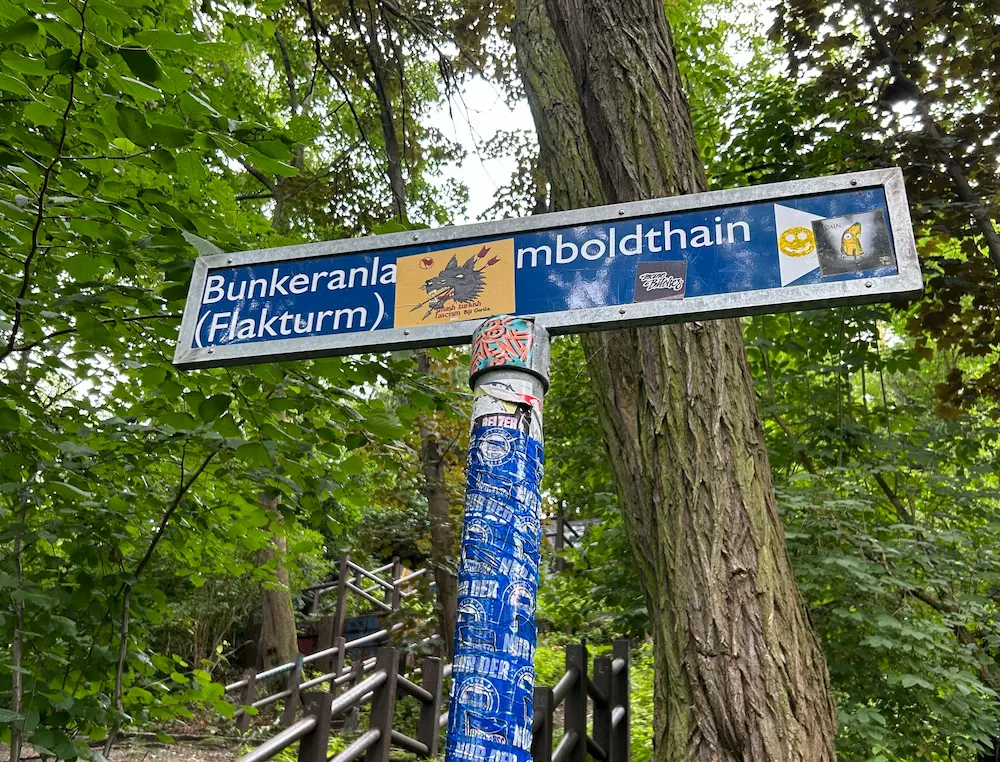
Volkspark Humboldthain was chosen for the route — a historically charged site where Luftwaffe flak towers stood during the Second World War.
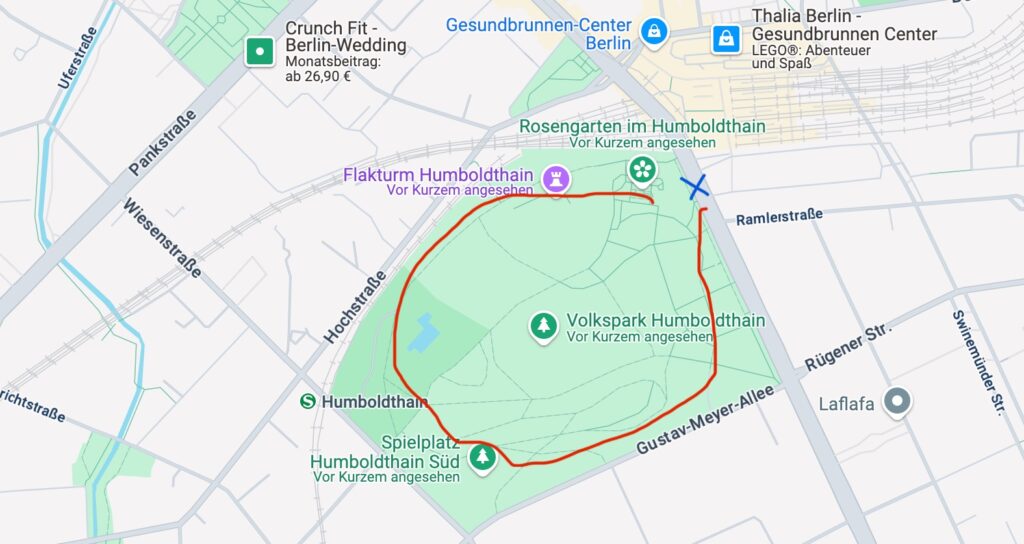
The meeting began at 11:00 at Korn Bäckerei (Brunnenstraße 104).
The walk started at 12:00 at the archaeological window of the Alte Himmelfahrtkirche.
Without stopping, the group proceeded through the park to the northern flak tower, now known as Humboldt Heights. On the benches near the viewing platform by the Memorial to German Unity, a 50-minute group conversation took place on a topic proposed by one of the participants: “Integration into German society.” The discussion touched on bodily and emotional aspects of adaptation, everyday strategies of inclusion, barriers, and invisible boundaries.
The entire walk was documented and became part of the film Zwischenstopp.
Conductor: Harri Kraievets
Cinematographers: Andrėja Šaltytė, Tomi Hazslinszky
*A documentary film about group therapy for Ukrainian refugees in Berlin
Historical Note:
In 1941–1942, two Luftwaffe flak towers were constructed in the park. After the war, the southern tower was destroyed and buried, while the northern one partially survived and today serves as a viewing platform known as Humboldt Heights. These massive concrete structures, once built for air defense, have become symbols of layered memory and spatial transformation.
Психоісторична прогулянка №3. Гумбольдтська висота
3 липня 2024 року, Берлін
Разом із п’ятьма учасницями проєкту Zwischenstopp* була організована психоісторична прогулянка. Учасниці вже були знайомі завдяки щомісячним дводенним (тригодинним) груповим терапевтичним зустрічам, що проходили у психотерапевтичній практиці на Шенхаузер-алеї в рамках проєкту. Після шести сесій було вирішено перенести дослідження групової динаміки з кабінету на вулицю, щоби вивчити зміну тілесного та психоемоційного сприйняття групи в русі та у взаємодії з природним середовищем. А також — простежити топологію лісового простору та його вплив на несвідоме групи. Маршрут через Фолькспарк Гумбольдтхайн став спробою спільного тілесного та символічного зсуву.
Місцем маршруту було обрано Volkspark Humboldthain — простір, насичений історією, де в роки Другої світової війни розташовувалися зенітні башти люфтваффе.
Зустріч відбулася об 11:00 у кафе Korn Bäckerei (Brunnenstraße 104).
Початок маршруту — о 12:00 біля археологічного вікна Alte Himmelfahrtkirche.
Група без зупинок пройшла через парк до північної зенітної башти, нині відомої як Гумбольдтська висота. На лавках біля оглядового майданчика поряд із Меморіалом Єдності Німеччини відбулася 50-хвилинна групова розмова на тему, запропоновану однією з учасниць: «Інтеграція в німецькому суспільстві». Обговорювалися тілесні та емоційні аспекти адаптації, повсякденні стратегії включення, бар’єри та невидимі кордони.
Вся прогулянка була задокументована і стала частиною фільму Zwischenstopp.
Ведучий: Harri Kraievets
Оператори: Andrėja Šaltytė, Tomi Hazslinszky
*Документальний фільм про групову терапію українських біженок у Берліні
Історична довідка:
У 1941–1942 роках на території парку було зведено дві зенітні башти люфтваффе. Після війни південну башту було знищено й засипано, а північна частково вціліла і нині слугує оглядовим майданчиком під назвою Гумбольдтська висота. Ці масивні бетонні споруди, що колись були елементами протиповітряної оборони, стали символом нашарованої пам’яті та трансформації простору.